Bakalar na bijelo: the Christmas Eve rite of Dalmatian kitchens
In Croatia there is a dish whose smell means exactly one day of the year. When the house fills with the scent of cooked cod (bakalar), garlic and olive oil — it is Christmas Eve. White bakalar, a creamy blend of beaten dried cod with potato, oil and garlic, is the ritual meatless dish of Christmas Eve dinner from Dalmatia to Zagreb, a dish that is not prepared in half an hour but — like the holiday itself — is awaited for days, while the hard, dried fish is patiently soaked and brought back to life.
It is an unusual story: a fish from the icy northern seas became the heart of the holiest supper of a Mediterranean country. And yet it was precisely cod, once brought by ship from distant ports, that fit perfectly into the meatless tradition of Christmas Eve and into the Dalmatian cuisine of olive oil and garlic. In this recipe we present the classic white bakalar, along with everything recipes rarely write down: how to choose, soak and beat the cod so that it turns out silky rather than tough.
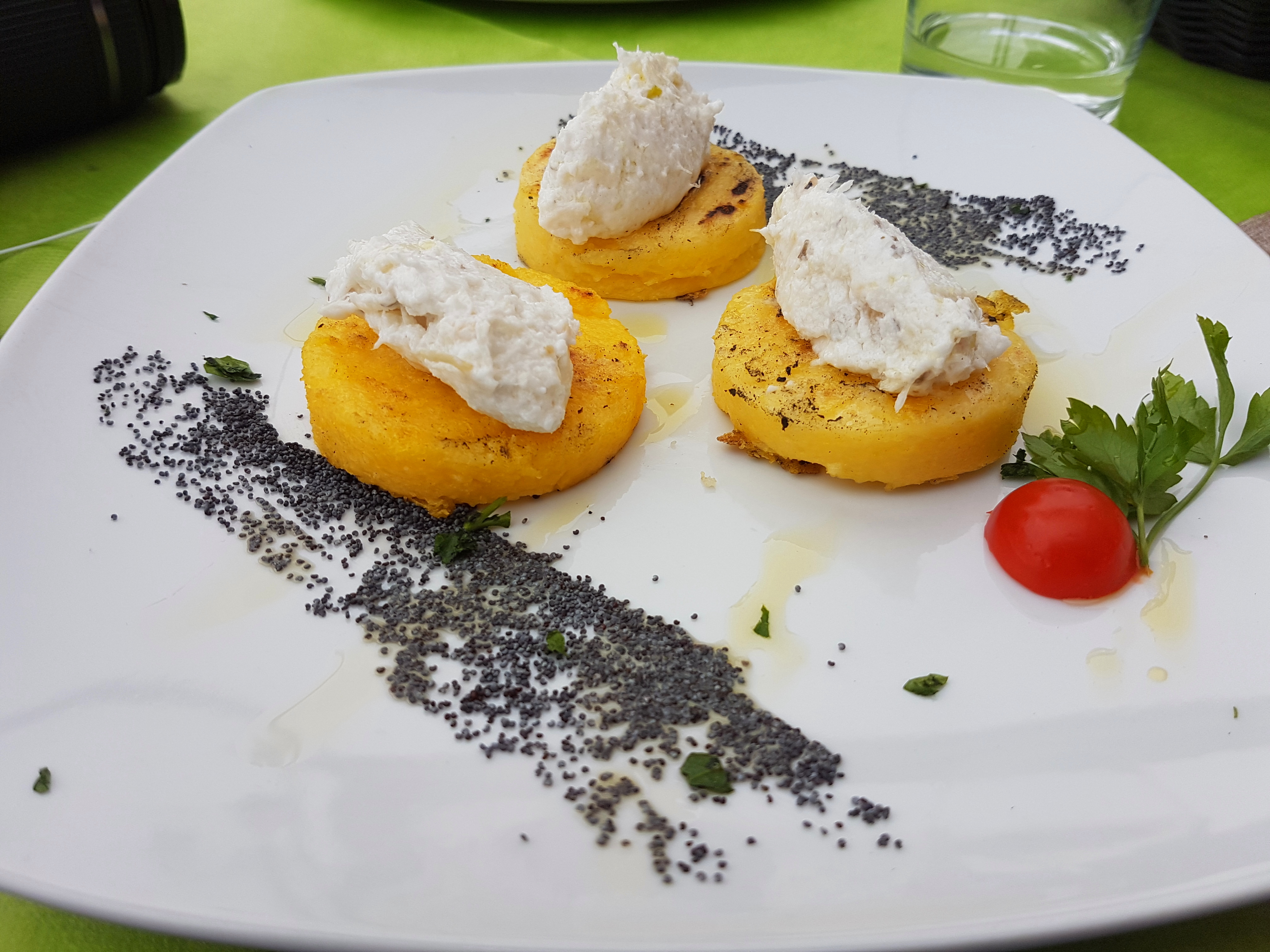
 Creamy white bakalar. Photo: Wikimedia Commons (source file)
How a northern fish conquered the Adriatic
Bakalar — the dried cod of the northern seas (stockfish) — was brought to the Mediterranean by Venetian seafarers as early as the 15th century, and legend ties the beginning to captain Pietro Querini, whom a shipwreck carried all the way to the Norwegian Lofoten islands, where he discovered wind-dried fish that could travel for months without spoiling. By way of Venice, cod reached our coast too — and stayed forever.
In a region where the Church prescribed fasting days, and fresh fish did not always reach the hinterland, dried cod was perfect: durable, nourishing and lean. So over time it became the ritual dish of Christmas Eve — the day when one fasts, and yet supper must still be festive. Today hundreds of tonnes of cod are consumed in Croatia each year, almost all in the week before Christmas, and in many homes beating the cod is a job of special status, reserved for the father or grandfather.
White or brudet-style?
Cod is prepared in Croatia in two main ways. Brudet-style (red) — in a tomato sauce with potato, like a thick stew — and white: beaten with boiled potato, olive oil and garlic into a smooth, creamy blend that is spread on bread or eaten with a spoon. Many families make both on Christmas Eve, but the "white" is considered the nobler — it is a relative of Venetian baccalà mantecato and French brandade, and our addition of potato gives it fullness and a homely character.
For white bakalar the key is the beating: the cooked fish is beaten vigorously with oil (traditionally with a wooden mallet or by strong shaking in a closed pot) until the fibres break down and bind with the oil into an emulsion — like mayonnaise, only of fish. It is precisely this beating that separates the silky cod from a dry, crumbly mixture.
Ingredients
For 6 people:
- 500 g dried cod (the best quality you can find; the one marked as of Norwegian origin is prized)
- 700 g potatoes
- 2 dl good olive oil (and more, as needed)
- 5–6 cloves of garlic, pressed
- 1 large bunch of parsley, finely chopped
- 2 bay leaves, peppercorns
- salt, freshly ground pepper
- optional: a little of the cooking liquid to adjust the texture
Preparation
- Soak the cod (2–3 days ahead). Break or cut the hard cod into pieces that fit the container, rinse, then submerge it in plenty of cold water. Keep in the fridge for 2–3 days, changing the water at least twice a day. The fish is ready when it softens and swells.
- Cook the cod. Put the soaked cod in a pot of fresh water, add bay leaf and peppercorns, and simmer over low heat for 30–45 minutes, until the flesh begins to separate from the bones. Do not salt — cod carries its own salt.
- Boil the potatoes. At the same time boil the potatoes in their skins, peel them and coarsely mash them while hot.
- Clean the fish. Drain the cooked cod (save the liquid!), and while still warm carefully clean it of all bones and skin. Tear the flesh into fibres.
- Beat. In a wide bowl combine the cod and potato, and while vigorously stirring and "beating" with a wooden spoon (or short pulses of a mixer) gradually pour in the olive oil in a thin stream — as for mayonnaise. The blend should become creamy, airy and glossy. If needed, add a spoonful or two of the warm cooking liquid.
- Season. Stir in the pressed garlic, parsley and pepper; taste, and only then, if necessary, add salt. Serve warm or at room temperature.
Tips for perfect bakalar
- Soaking is half the job — under-soaked cod stays salty and hard; three days with regular water changes is the gold standard.
- Remove the bones while the fish is warm: then the flesh separates most easily, and the job is done in half the time.
- Add the oil gradually while beating constantly — only this way does that creamy emulsion form; oil tipped in all at once will stay "separated".
- Adjust the ratio of potato to taste: more potato makes a milder, cheaper dish; less potato — a more intense, "lordly" cod.
- Do not salt too early; add salt only at the end, after tasting.
What to serve with it
White bakalar is traditionally eaten with homemade bread or toasted slices rubbed with garlic, and polenta suits it excellently too. On the Christmas Eve table it is accompanied by meatless dishes — brudet-style cod, fritule, dried figs and walnuts — and a glass of white wine, pošip or malvasia.
Although it is the star of Christmas Eve, white bakalar is too good to eat only once a year: serve it as a spread with an aperitif or as a starter at any more festive meal, and it will always be the first to vanish from the table.
The most common mistakes
The greatest mistake is short soaking — the cod stays salty, hard and tough, and nothing can save it after that; plan ahead. The second is overcooking: fish cooked too long loses flavour and falls apart into a shapeless mass before beating. The third is rushing the oil — poured in suddenly, the oil does not emulsify and the cod turns out greasy instead of creamy; a thin stream and vigorous stirring are the law.
Be careful with the mixer too: a few short pulses help, but long blending turns the cod into a sticky, textureless paste. The goal is an airy cream with the fish fibres still recognisable — and that, say the old Dalmatians, is given only by hand and patience.
Conclusion
White bakalar is more than a recipe — it is a rite that makes Christmas Eve what it is: days of soaking, the smells of cooking, the beating that echoes through the kitchen and, at the end, a bowl of silky whiteness on the festive table. In it the northern seas and Dalmatian oil, Venetian trade and Croatian piety, patience and celebration all come together. Get a good piece of cod, give it three days and spare neither the oil nor your hands. When on Christmas Eve you spread the first slice of bread, you will know you are part of a tradition that, like this fish, is kept for a long time — and always returns richer than what was invested.