Dalmatian-style Swiss chard with potatoes: the Adriatic's simplest masterpiece
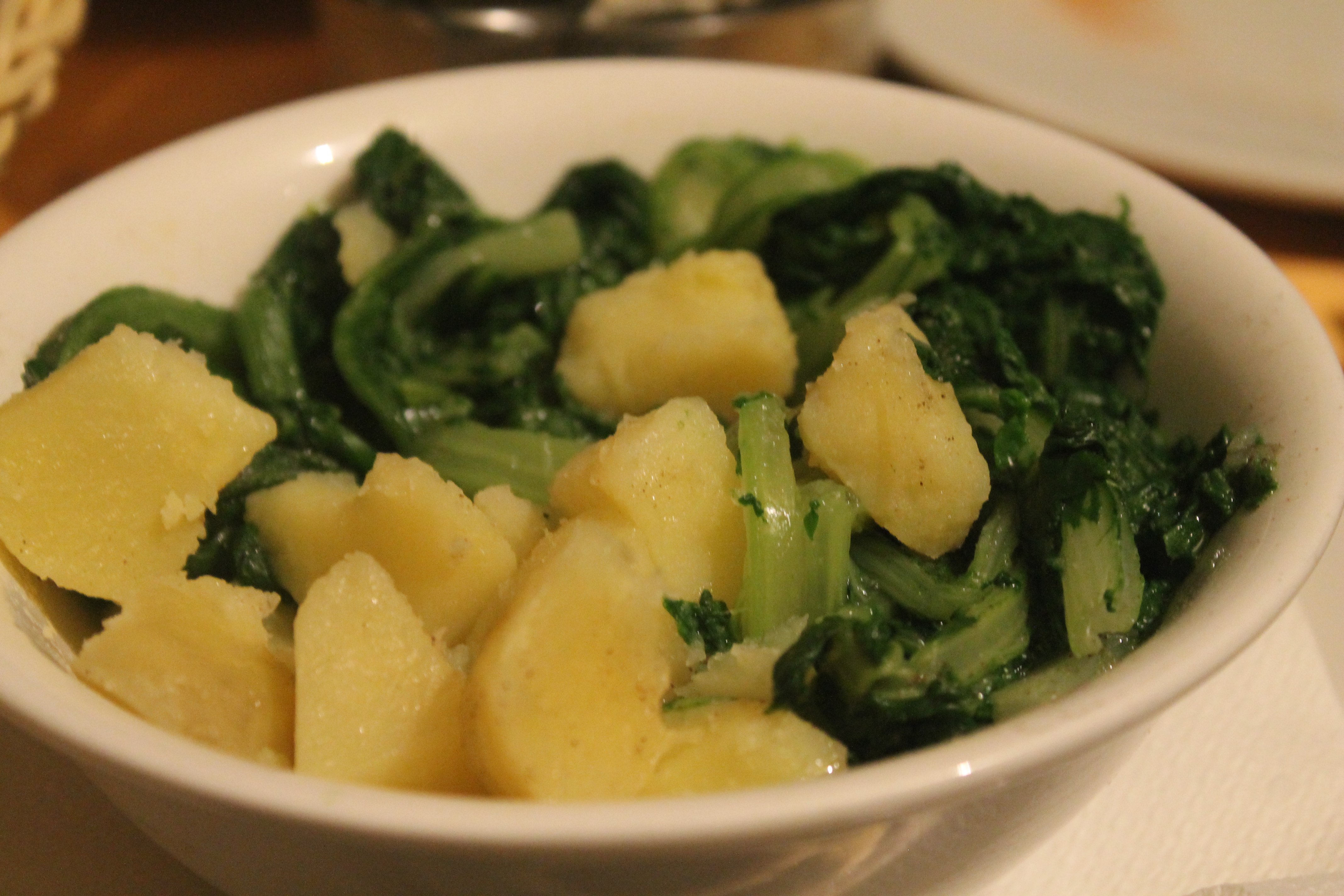
There are dishes that are not tasted — they are taken for granted. In Dalmatia that is Swiss chard with potatoes (blitva s krumpirom): with every grilled fish, with every fried smelt and every fillet, a green mound of chard with potato appears on the plate without asking, doused with olive oil and streaked with garlic. It is so self-evident that Dalmatians barely consider it a dish at all — and yet it is precisely this humble, quiet dish that is one of the pillars of Adriatic cuisine and of the Mediterranean diet in general.
Boiled chard (na leše) with potato is a perfect example of the Dalmatian culinary philosophy: few ingredients, but impeccable ones. Young chard from the garden, good potatoes, real olive oil and garlic — and nothing more. There is no technique hiding here, no spice to mask; there is only balance and respect for the ingredient. In this recipe we present the classic preparation, along with the small tricks that separate watery, bland chard from the real thing — fragrant, juicy and green.
 Swiss chard with potatoes, the faithful companion to every Dalmatian fish. Photo: Wikimedia Commons (source file)
The vegetable that fed the coast
Swiss chard was for centuries the daily bread of Dalmatian gardens. Hardy, generous and fruitful almost all year round, it grew beside every stone house from Istria to Konavle, and along with potato and oil it fed generations of labourers and fishermen. On islands such as Korčula and in Dubrovnik, chard entered even famous dishes like soparnik and green menestra — but its most common, everyday form was always this one: boiled, with potato.
That humble past has today become an advantage: chard is a nutritional jewel, full of iron, vitamins and fibre, and a dish made from it perfectly embodies the Mediterranean diet that UNESCO too has placed on the list of intangible heritage. What was once a poor man's dish is today the pride of every tavern.
The secret is in the balance
However simple it may be, chard with potato has its rules. First: the ratio — there should be more chard than potato; the potato is there to bind and soften, not to dominate. Second: short cooking of the chard — overcooked chard loses its colour, flavour and half its value; it goes into the pot only when the potato is half done. Third: the olive oil is not cooked but poured generously over the dish at the end, to keep its aroma.
And fourth, over which small family disputes are waged: the garlic. Some briefly fry it in oil and then "season" the dish with it (the "na padelu" version), others stir it in raw and pressed into the hot chard. Both schools are honourable; raw gives sharpness, fried gives softness. Try both and judge for yourself.
Ingredients
For 4 people (as a side dish):
- 1 kg fresh Swiss chard (younger leaves with stalks)
- 400 g potatoes, peeled and cut into larger cubes
- 4–5 cloves of garlic
- 1 dl good olive oil
- coarse salt, pepper to taste
Preparation
- Clean the chard. Wash the chard leaves in several changes of water (chard likes to hide soil), cut off the tough ends of the stalks, and tear the larger leaves. Do not throw away the stalks — cut them smaller, they are sweeter than the leaf.
- Start the potatoes. Into a large pot of salted boiling water drop the potato cubes and cook for 10 minutes, until half softened.
- Add the chard. Onto the potatoes add all the chard (it will wilt down), add a little water if needed and cook a further 8–10 minutes — until the potato is soft and the chard cooked but still vividly green.
- Drain — but not completely. Drain the contents of the pot so that just a little liquid remains — it forms, with the oil, that delicious "little broth" at the bottom of the plate that Dalmatians mop up with bread.
- Season. Return the hot chard and potato to the pot, add the pressed (or briefly oil-fried) garlic and douse generously with olive oil. Stir gently, partly mashing the potato with a fork so it binds with the chard. Salt to taste.
- Serve at once, hot, with fish or as a light standalone dish with a hard-boiled egg or a piece of cheese.
Tips for perfect chard
- Young chard, smaller leaf — older and coarser can be bitter and stringy.
- Do not overcook: the chard must stay green; grey chard is lost chard.
- Oil at the end, and without stinting — it is the seasoning, the sauce and the identity of the dish; here it pays to use the best oil you have.
- Mash some of the potato with a fork while stirring — this gives the dish that creamy cohesion.
- Leave a little liquid: dry chard is sad chard.
What to serve with it
Chard with potato is the born companion of fish — grilled, boiled or from the oven — and of squid and other seafood; that pair (fish + chard) is itself a summary of a Dalmatian meal. It goes equally well with meat, and served with olives, salted sardines or a boiled egg it becomes a complete light supper.
With it, of course, a glass of white wine or bevanda (wine with water) — and a piece of bread to mop up the oily broth from the bottom, which, for many, is the best part of the whole story.
The most common mistakes
The most common mistake is overcooking — chard left too long in the pot turns grey, slimy and bitter; cook it briefly and add it only when the potato is half done. The second is skimping on the oil: without generous olive oil the dish is just boiled vegetables, but with it it becomes a Dalmatian classic. The third is too much potato — the dish then becomes heavy and "potatoey", and the chard is an extra in its own dish.
Watch the garlic too: scorched in oil it turns bitter, so fry it only until fragrant. And finally — do not throw away the stalks; finely cut and cooked with the leaf, they are the sweet, crunchy secret of good chard.
Conclusion
Chard with potato is the best proof that a dish's greatness does not depend on the number of ingredients. Four ingredients, twenty-odd minutes — and on the plate is a flavour that defines Dalmatia as much as the sea and the stone. It asks for nothing and gives everything: health, simplicity and that quiet, everyday beauty of the Mediterranean table. Cook it with the next fish you have, douse it with the best oil you have and mop up the broth with bread. You will understand why in Dalmatia there is no arguing about chard — it is simply loved.