Brijuni National Park: islands of emperors, presidents and dinosaurs
There are few places in the world where, within a single afternoon's stroll, you can walk past a dinosaur footprint 115 million years old, the ruins of a Roman summer villa, a Byzantine fortress and a residence in which a president hosted nearly a hundred world statesmen and Hollywood stars. Brijuni is exactly such a place — an archipelago of fourteen islands and islets off the western coast of Istria, near Pula, where nature and history are interwoven more densely than anywhere else in Croatia.
Declared a national park in 1983, Brijuni is unlike any other Croatian park. There are no wild canyons or untouched wilderness here; on the contrary, every inch of the largest island, Veli Brijun, bears the mark of the human hand — from Roman times, through an Austro-Hungarian luxury resort, to the era when the islands were the summer residence of the Yugoslav president. Brijuni is, one might say, the gentlest and most cultivated of all the parks, a park-garden in which history is felt at every step.
 The manicured landscape of Veli Brijun. Photo: Wikimedia Commons (source file)
From malaria to the world stage
The story of modern Brijuni begins at the end of the 19th century, and rather unromantically — with mosquitoes. Back then the islands were plagued by malaria and almost uninhabitable. In 1893 they were bought by the Viennese industrialist Paul Kupelwieser, with a vision of turning them into an elite resort. To achieve this, he invited the famous microbiologist and Nobel laureate Robert Koch, who carried out research on Brijuni and, at the start of the 20th century, declared the islands free of malaria.
Freed of disease, Brijuni flourished. Luxury hotels sprang up, together with heated-seawater baths, tennis courts, a golf course, a park of exotic plants and a marina for yachts. The islands became one of the most fashionable destinations of the Austrian Riviera, a place where poets, actors and aristocrats spent their summers — even the writer James Joyce, it is said, enjoyed the local Brijuni cheese.
After the Second World War, Brijuni entered its most famous period. The Yugoslav president Josip Broz Tito turned the islands into his summer state residence and spent a large part of every summer there. Almost a hundred foreign heads of state, kings and emperors came to Brijuni, along with film legends such as Elizabeth Taylor, Richard Burton and Sophia Loren. In 1956 the islands entered world history: Tito, Egyptian president Nasser and Indian prime minister Nehru met here and laid the foundations of the Non-Aligned Movement, an alliance of countries that refused to line up with the Cold War blocs.
The safari park: gifts of a president
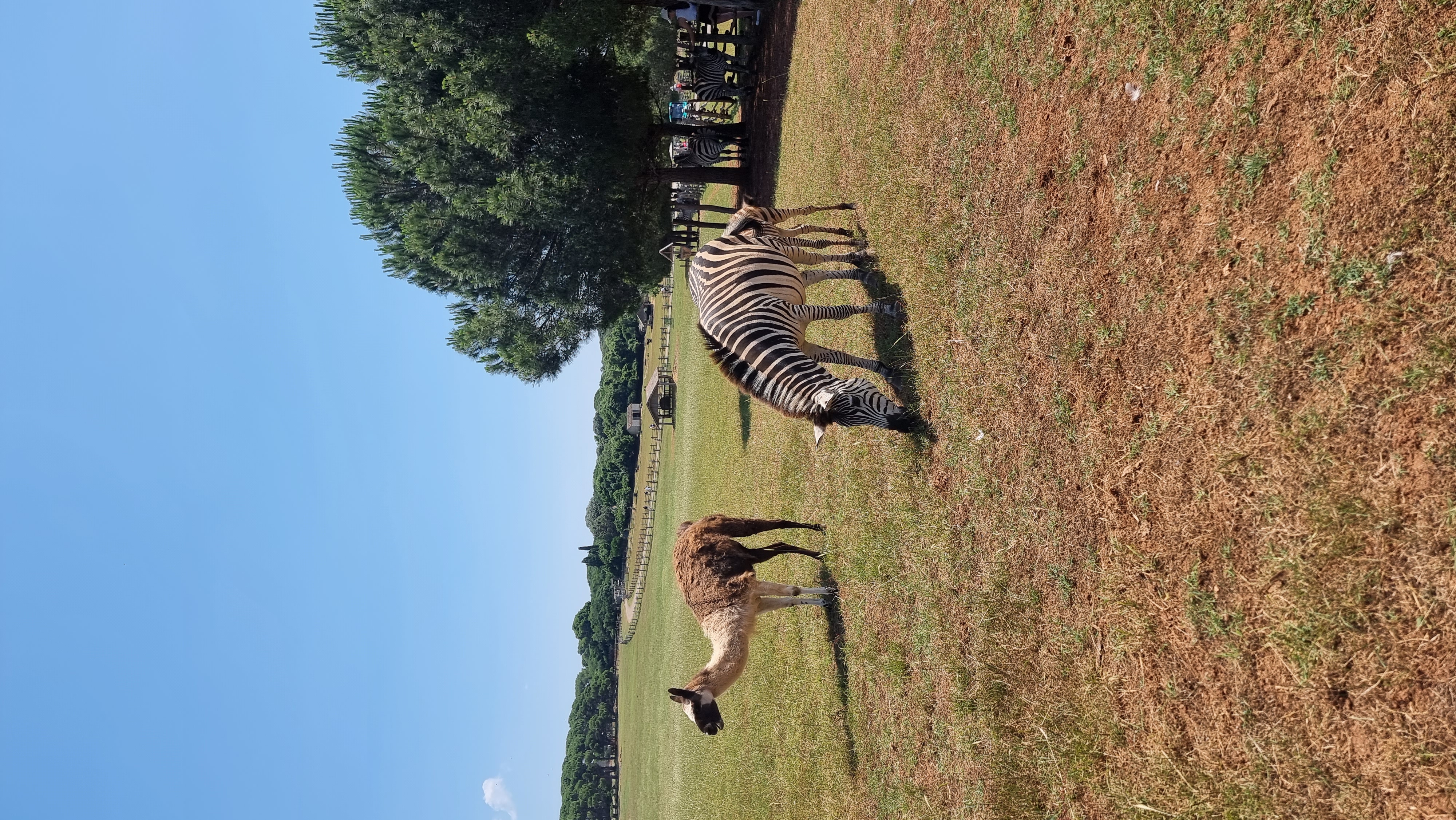
One of Brijuni's most unusual attractions is a direct consequence of Tito's diplomacy. The statesmen who visited him often brought exotic animals as gifts, and so a safari park grew up on Veli Brijun, where zebras, antelopes, Indian sacred goats and other inhabitants of distant continents still live today. The most famous among them were the Indian elephants Sony and Lanka, a gift from Indian prime minister Indira Gandhi — Sony lived to a very old age on the island.
Alongside the safari park, the island also hides an ethno-park with native Istrian farm animals — Istrian cattle (a descendant of the wild aurochs), the Istrian sheep, donkeys and goats — which preserves a picture of traditional Istrian husbandry. Deer, fallow deer and mouflon, introduced back at the start of the 20th century, also roam the islands freely, and their descendants graze peacefully today beside the roads travelled by the tourist train.
Dinosaur footprints: 115 million years back
While Tito's era gives Brijuni its glamour, the islands' true age is measured in entirely different figures. At several sites along the coast of Veli Brijun, dinosaur footprints roughly 115 million years old are preserved, from a time when this area was a warm, shallow coast trodden by herbivores and predators.
Those tracks, pressed into what was once mud and then turned to stone, are today one of the most valuable palaeontological finds in the Adriatic. Walking out to them is a particularly striking experience: you stand on the very rock across which, an unimaginably long time ago, a creature that no longer exists once stepped — while your eye at the same time falls on the blue sea and the manicured park behind you. Rarely is the depth of time felt so tangibly.
Roman and Byzantine layers
Between the dinosaurs and the presidents, Brijuni also preserves a rich ancient heritage. In Verige bay on Veli Brijun stretch the remains of a lavish Roman summer villa from the 1st century — an entire coastal complex with temples, terraces and fishponds, one of the most impressive finds of its kind on the eastern Adriatic. The Romans, like many after them, recognised Brijuni as a place for rest and pleasure.
Later centuries left behind a Byzantine castrum (fortified settlement) and early Christian churches, testimony that even in turbulent times the islands remained inhabited and defended. That succession of civilisations — Illyrian, Roman, Byzantine, Venetian, Austrian, Yugoslav and finally Croatian — makes Brijuni a kind of layered history textbook under the open sky.
Nature by the ruler, and a thousand-year-old olive tree
Although Brijuni is above all a cultivated landscape, its nature is nonetheless special. The islands have typical Mediterranean vegetation, but enriched with exotic species that arrived here as gifts or ornament — cedars, bamboo, various palms. On Veli Brijun some six hundred native plant species have been recorded, and the manicured lawns and groves give the island the look of a vast English garden in the middle of the Adriatic.
The oldest inhabitant of the island is not an animal but a plant: an olive tree about 1,800 years old, which still bears fruit today. Planted in late antiquity, this ancient olive is one of the oldest trees in the Mediterranean and a living monument to a permanence that outlasts all the emperors and presidents who passed through the islands.
Numerous birds circle the skies of Brijuni, and the shallow sea around the islands is rich with life — which is why both the seabed and the shoreline are part of the park's protected area.
How to visit Brijuni
Unlike the mainland parks, you cannot simply come to Brijuni as you please. The islands are protected, and access is possible only in an organised way, by official boat from Fažana (or as part of authorised excursions). The ride from Fažana takes about fifteen minutes, and sightseeing on the island is done by tourist train, bicycle, electric vehicle or on foot — private cars are not permitted.
A standard tour of Veli Brijun includes a train ride through the safari park, a visit to the archaeological sites, a look at the thousand-year-old olive tree and the museum exhibitions devoted to the island's history. For a deeper experience it is worth booking a full-day stay or an overnight in one of the island's hotels, when — after the day-trippers have left — Brijuni falls quiet and reveals its most peaceful face.
A playground of the world's powerful
Few corners of Europe have seen so many famous faces in such a small space. In Kupelwieser's day polo also took root on Brijuni, an aristocratic sport whose island tournament has roots reaching back to the 1920s and was later revived. The Slovenian architect Jože Plečnik designed a pavilion for the island, and the hotels hosted poets, painters and actors from both sides of the Europe of the time.
In Tito's day the glamour reached its peak. The islands became a stage for high diplomacy, but also a place where world politics and the film industry met. Photographs from that period — statesmen in light summer suits, actresses under parasols, exotic animals in the background — are kept today in the island's museum exhibitions and offer an unusual insight into a bygone age. For a visitor who loves 20th-century history, Brijuni is a kind of time capsule: a place where the Cold War, for a moment, turned into a summer idyll.
Why Brijuni is different from all the rest
If you have visited Plitvice, Krka or Paklenica, you will come to Brijuni with the wrong expectations — and that is a good thing. The other Croatian parks celebrate wilderness; Brijuni celebrates the coexistence of people and nature. Here beauty is tamed, arranged, combed: the lawns are mown, the paths paved, and among them wander deer accustomed to people.
That gentleness is not a flaw but a distinction. Brijuni shows that protected nature need not necessarily mean untouched wilderness — it can also mean a landscape shaped with care over centuries, in which every layer of history has been preserved and become part of the whole. That makes it an ideal park for families with children, for older visitors and for anyone who wants history and nature without strenuous hiking. On Brijuni you do not conquer a summit; on Brijuni you walk through time.
A few curiosities to close
Brijuni abounds in details that sound almost unbelievable. The archipelago is made up of fourteen islands and islets, yet nearly all tourist life takes place on the largest, Veli Brijun. The thousand-year-old olive tree still bears fruit, and a symbolic quantity of oil is occasionally produced from it. Sony the elephant, a gift from Indira Gandhi, lived out almost his entire life on the island and became a kind of favourite of generations of visitors. And the dinosaur footprints and the Roman villa are separated by just a few kilometres of path — so on Brijuni you can literally, in a single day, step from the age of dinosaurs to the age of emperors.
All this makes Brijuni a park equally fascinating to lovers of nature, history and pop culture. Rarely does any place offer a chance to see so many different worlds in one afternoon — and rarer still does it offer them on islands bathed in Adriatic sun.
Through the seasons
Brijuni is pleasant almost all year round, but each season has its own character. Spring wakes the parks and lawns into fresh green, temperatures are pleasant for walking and cycling, and the islands are not yet crowded. Summer is the height of the season — warm sea, long evenings and full boat capacities, so booking is essential. Autumn brings a soft, golden light and calm, ideal for sightseeing without the crowds. Winter is quiet and introspective; there are fewer departures, but the islands then breathe a special, almost melancholic serenity.
A practical guide to visiting
- Getting there. Brijuni is reached by organised boat from Fažana, where the park administration and ticket sales are also located. Fažana is only about ten kilometres from Pula.
- Reservations. It is wise to book boat tickets and time slots in advance, especially in summer when departures fill up. Arriving on your own vessel at Veli Brijun is not permitted without authorisation.
- Getting around the island. Cars are not allowed; the island is toured by tourist train, rented bicycle, electric vehicle or on foot. Plan for comfortable shoes and sun protection.
- Not to be missed. The safari park, the dinosaur footprints, the Roman villa in Verige bay, the Byzantine castrum, the thousand-year-old olive tree and the museum exhibitions on the island's history.
- Length of visit. A half-day trip is enough for a basic tour, but a full-day stay or overnight lets you experience the island without crowds and at sunset.
- Rules. Movement is allowed only on marked paths and with a guide where required; feeding the animals, picking plants and leaving litter are not allowed.
- Combine with the surroundings. Pula with its ancient Arena, Fažana with its fishing tradition and Istrian gastronomy (truffles, olive oil, prosciutto) make a perfect setting for a visit.
Conclusion
Brijuni is a park without equal in Croatia — not because it is the wildest or the most sublime, but because on one small island it brings together what elsewhere lies scattered across museums, textbooks and legends. Here dinosaurs, Roman emperors, Austrian magnates and presidents share the same shore, and over them all watches an olive tree that remembers nearly two millennia. To leave Brijuni is to carry away the feeling that, in a single day, you have walked through the whole of history — from the dawn of life to yesterday's headlines.