Dalmatian pašticada with gnocchi: the queen of the Dalmatian table
If there is a dish that embodies the soul of Dalmatian cuisine, it is pašticada. It is not an everyday lunch but a festive dish — the one made for weddings, holidays, patron-saint feasts and the most important Sundays, a dish around which the whole family gathers and for which, quite literally, you must have time. Preparing pašticada takes days: the meat is larded, marinated overnight, and then braised slowly for hours until it melts on the tongue, immersed in a thick, dark sauce in which sweet and salty, wine and dried plums are interwoven.
It is precisely that patience and the flavour built up layer by layer that make pašticada the "queen" of the Dalmatian table. Every family guards it as a treasure, and the recipes are passed down from generation to generation, with the ever-same claim — that it is grandma's, mum's or nonna's pašticada that is the best. In this recipe we will go through the whole process, from larding the meat to homemade gnocchi, so that you too can prepare this magnificent dish.
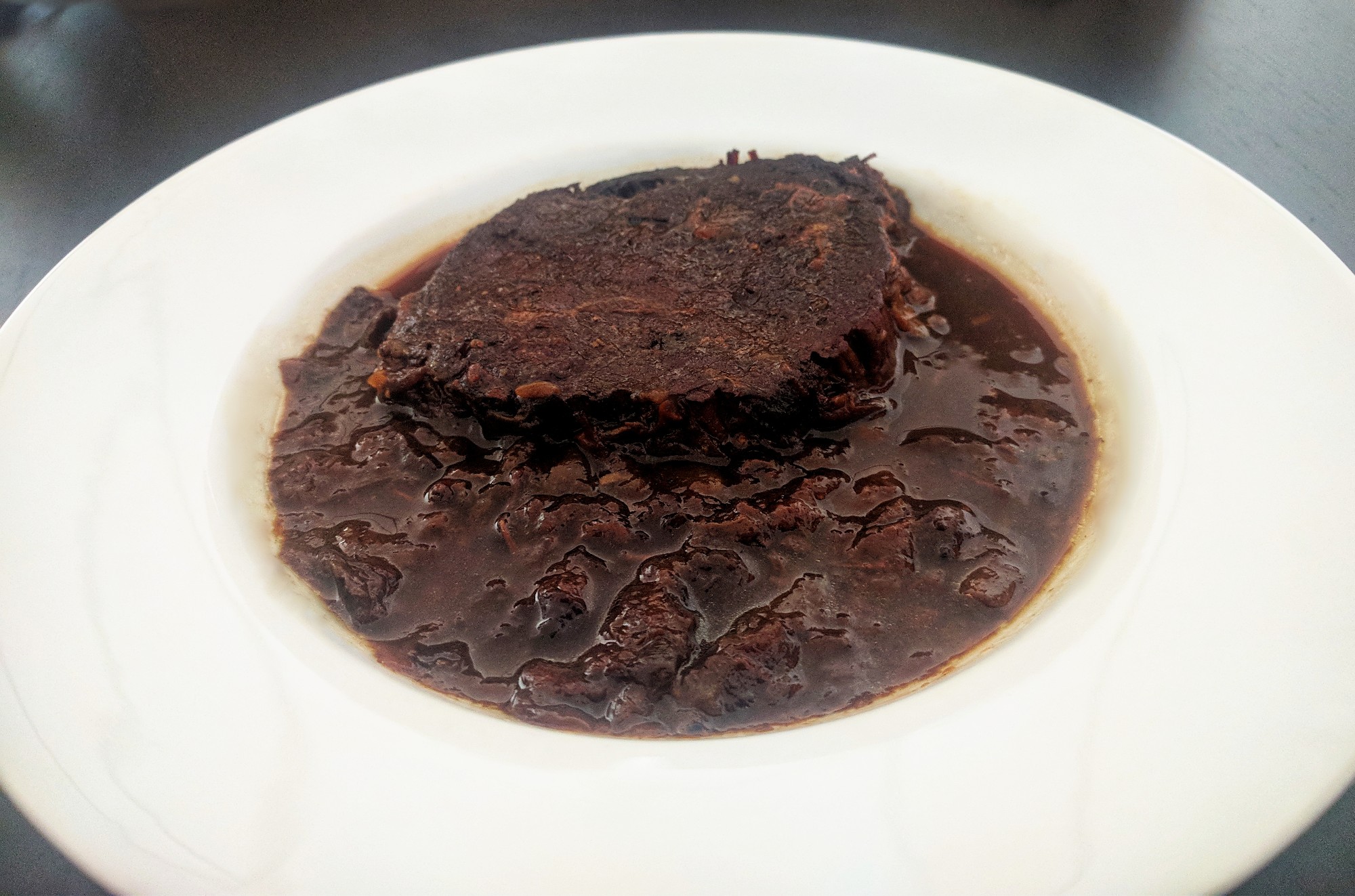
 Dalmatian pašticada with gnocchi. Photo: Wikimedia Commons (source file)
A dish with history
Pašticada is a dish of long history, whose roots reach into the Dalmatian coast under the influence of Venetian cuisine — as the name itself suggests, derived from the Italian term for braised meat. Over the centuries, however, it became fully Dalmatian, adapted to local ingredients: prošek, homemade red wine, dried figs and plums, Mediterranean herbs.
It was and remains a dish for special occasions. In times when meat was a rarity, pašticada was made only for the greatest feasts, and its demanding, multi-day preparation was a mark of respect for the guests and the occasion. Even today, when pašticada appears on the table it means something important is being celebrated — and the smell that spreads through the house is, for many Dalmatians, the smell of childhood and holidays.
The secret is in patience
What sets pašticada apart is not some exotic ingredient but — time and method. The meat is first larded: pieces of bacon, garlic, carrot and cloves are pressed into it, which during the long braising season it from within and make it juicy. Then it is marinated overnight in wine vinegar and wine with vegetables and spices, giving it its characteristic depth of flavour.
Only after that comes the long, slow braising — several hours over low heat, until the meat becomes so tender it can be cut with a fork. During this process the sauce thickens and darkens, and the sweetness of the dried plums and prošek balances perfectly with the depth of the wine and meat. No step may be hurried; it is precisely patience that is the main ingredient of a true pašticada.
Regional variants
As with every great traditional dish, the recipe for pašticada differs from house to house and from place to place. Some add tomato or paste for a richer colour of sauce, others stick to the "white" version without tomato. Someone achieves sweetness with dried plums, someone with dried figs, and someone with the addition of prošek or even a little sugar or homemade jam.
The side dish differs too: the classic is homemade potato gnocchi, but pašticada is also served with homemade pasta, polenta and even bread. Whatever the variant, the essence stays the same — tender, larded beef in a thick, sweet-and-salty sauce. Below we present a tested, classic version that you can adapt to your own taste.
Ingredients
For the pašticada (for 6 people):
- 1.2–1.5 kg beef topside (frikando or a whole piece of round)
- 100 g bacon (pancetta), cut into strips
- 4–5 cloves of garlic, sliced into slivers
- 1 carrot, cut into sticks (for larding)
- a few cloves
- 2 large onions, chopped
- 2 carrots, cut
- 1 stalk of celery, cut
- 2 tablespoons tomato paste
- 2 dl prošek (or other sweet dessert wine)
- 3 dl dry red wine
- 1 dl wine vinegar (for the marinade)
- 6–8 dried plums (pitted)
- 2–3 dried figs (optional)
- 1 bay leaf, a sprig of rosemary, a little nutmeg
- olive oil, salt, pepper
- 1 tablespoon plum jam or a teaspoon of sugar (optional)
For the gnocchi (for 6 people):
- 1 kg potatoes (floury)
- 250–300 g plain flour
- 1 egg
- a pinch of salt
Preparing the pašticada
- Larding. With a sharp knife make incisions in the piece of meat and press into them strips of bacon, slivers of garlic, sticks of carrot and the odd clove. Salt and pepper the meat.
- Marinade. Put the meat in a bowl, pour over the wine vinegar and part of the red wine, and add a little onion and spices. Leave in the fridge to marinate overnight (or at least 6–8 hours), turning it occasionally.
- Sear the meat. Remove the meat from the marinade and dry it well. In olive oil, in a wide pot or pan, sear it on all sides until it gets a nice brown crust. Remove it.
- The sauce base. In the same fat sauté the chopped onion, carrot and celery until they soften and lightly caramelise. Add the tomato paste and sauté briefly.
- Braising. Return the meat to the pot, pour over the prošek and the remaining red wine, and add the dried plums, figs, bay leaf, rosemary and nutmeg. If needed, add a little water or stock so the meat is almost covered.
- Slow and long. Cover and braise over the lowest heat (or in the oven at about 150 °C) for 3–4 hours, turning the meat every half hour and adding liquid as needed. The meat is done when it cuts easily with a fork.
- The sauce. Remove the meat and let it cool a little. Blend the sauce with a stick blender into a smooth, thick sauce; if it is too thin, reduce it a little more, and if it is too sour, balance it with a spoonful of jam or a pinch of sugar. Cut the meat into slices about 1 cm thick and return it to the sauce to soak.
Preparing the gnocchi
- Boil the potatoes in their skins, peel them while hot and rice (mash) them while still warm. Let them cool a little.
- Add the egg, salt and gradually the flour, and lightly knead a soft, smooth dough. Do not knead too long or the gnocchi will become tough.
- Roll the dough into thin ropes, cut into pieces and, if you like, press them with a fork.
- Cook them in boiling salted water; they are done the moment they float to the surface. Drain them and mix with a little sauce.
Tips for perfect pašticada
- Do not rush. Pašticada is not made quickly — the longer and quieter it braises, the better. It is ideal to make it a day ahead; left overnight, it is even tastier.
- The sweet-salty balance is key. Taste the sauce toward the end and adjust it: a little jam or dried plums for sweetness, a drop of vinegar or wine for freshness.
- The meat should be a cut suited to long braising (round, frikando); too-dry or too-lean meat will not achieve that juiciness.
- Cook the gnocchi just before serving and do not overcook them; the moment they float, they are ready.
What to serve with it
With pašticada the traditional drink is homemade red wine, preferably the same one the dish was made with — Dalmatian plavac or a similar fuller red suits the thick sauce and meat perfectly. As a starter, Dalmatian soup or prosciutto is often served, and after the pašticada comes a light dessert, such as rožata or fruit.
Pašticada is a dish for sharing, for a long, relaxed meal in good company — exactly the way it has always been eaten in Dalmatia.
The most common mistakes
Although pašticada is not complicated, a few small things can decide whether it turns out perfect. The most common mistake is rushing — too-short braising leaves the meat tough, because the collagen has not had time to turn into the gelatine that gives that melting tenderness. Equally important is to sear the meat well before braising; that step creates the foundation of flavour and the colour of the sauce, so never skip it.
Another common trap is an unbalanced sauce. Too much vinegar or wine will make it sour, and too little sweetness flat; so always taste it toward the end and adjust with dried plums, jam or a drop of wine. With the gnocchi, the biggest mistake is over-kneading the dough and adding too much flour — then they become tough and rubbery. Work with warm potato, add just enough flour for the dough to bind and cook the gnocchi just before serving. With a little care, the result will be worthy of any Dalmatian nonna.
Conclusion
Pašticada is not a dish made in a hurry, and that is precisely its beauty. It demands time, attention and love — and in return it gives one of the most magnificent dishes of Croatian cuisine, rich in flavour, history and emotion. Make it for a special occasion, gather those you love around the table and let the scent of prošek, wine and meat fill the house. When you first take a fork to the tender meat in the thick sauce, with homemade gnocchi, you will understand why pašticada is rightly the queen of the Dalmatian table.