Fritule: the fragrant little balls of the holidays and the sea
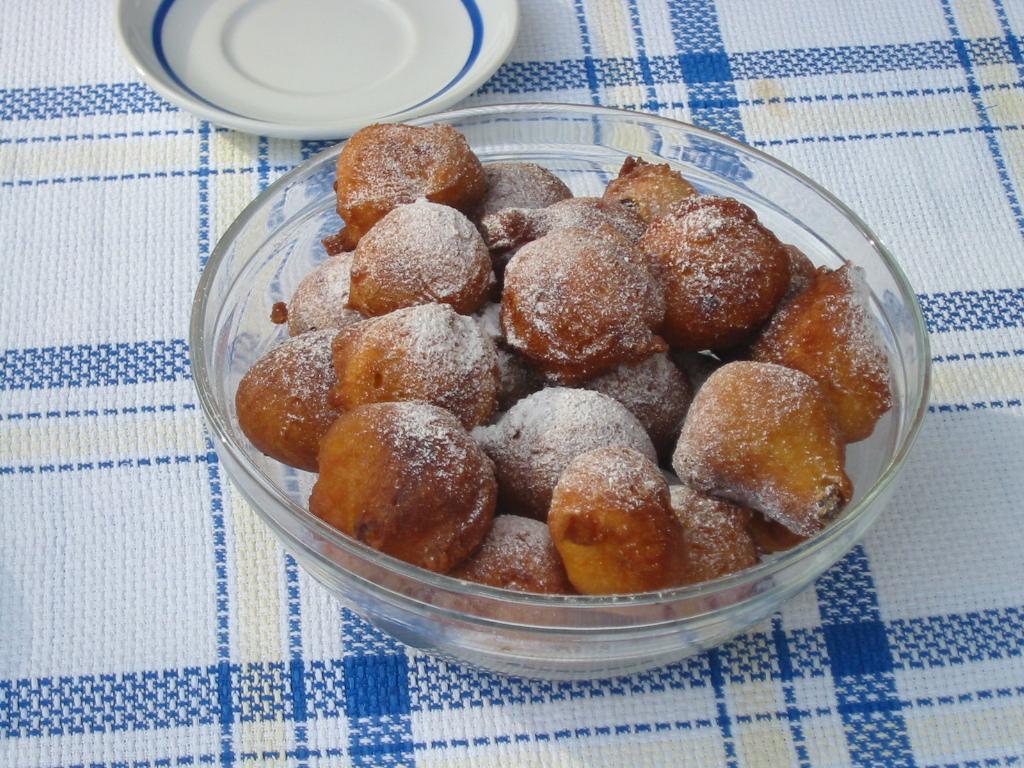
There is a smell that in December fills every Dalmatian, Istrian and Kvarner home — the smell of fried dough, lemon zest and brandy. That is fritule being made: small, golden, irregular balls of sweet dough, dusted with icing sugar, that vanish from the plate faster than they can be fried. Fritule are the dessert of Christmas Eve and Christmas, of Carnival and festivities, of Advent stalls and grandmothers' kitchens — the merriest bite of Adriatic cuisine.
Their charm is in their simplicity: a dough of flour, eggs and milk, enriched with raisins, lemon and a drop of homemade brandy, is dropped by the spoonful into hot oil and in a minute or two turns into golden balls. But like all simple dishes, fritule too have their secrets — from the thickness of the dough to the temperature of the oil — that separate the average from the perfect: light and full of holes. In this recipe we reveal them all.
 Fritule, golden balls dusted with sugar. Photo: Wikimedia Commons (source file)
A sweet heritage of the Adriatic
Fritule belong to the great Mediterranean family of fried sweets — they are close relatives of the Venetian frìtole, from which they probably got their name in the days when the Adriatic lived under strong Venetian influence. On the Croatian coast, however, they have put down such deep roots that they have become an inseparable part of the local heritage: from Istria, where they are gladly made with apples, through Kvarner to Dalmatia, where raisins soaked in brandy are always added to the dough.
For centuries they were a sweet of special days — they were made for Christmas Eve, Christmas, Carnival and feasts, because eggs, sugar and fat were once precious. Today fritule are the stars of Advent stalls and summer festivities, but their true home is still the home kitchen, where they are fried "by eye", with the family circling the pan and stealing the still-hot balls.
The little secrets of great fritule
The first secret of good fritule is a dough of the right thickness — thicker than pancakes, thinner than bread; such that it drops lazily off the spoon. Too-thin dough soaks up oil, too-thick gives hard dumplings. The second is rising: whether with yeast or with baking powder and well-beaten eggs, the dough must get air so the fritule are light and full of holes.
The third secret is brandy — a spoonful or two of grappa, herbal brandy or rum in the dough is not there (only) for the aroma: the alcohol prevents oil absorption during frying, so the fritule are lighter. And the fourth, decisive one: the temperature of the oil. Too-hot oil gives dark fritule raw inside; too-cool soaks them in fat. Ideal is a medium-hot oil in which a fritula floats up immediately, sizzles merrily and lazily turns itself over.
Ingredients
For about 40 fritule:
- 500 g plain flour
- 2 eggs
- 3 tablespoons sugar + vanilla sugar
- 3 dl milk (a little more if needed)
- 1 sachet baking powder (or 20 g fresh yeast for the risen version)
- zest of 1 lemon and 1 orange (grated)
- 100 g raisins, soaked in 0.5 dl brandy (grappa, herbal brandy or rum)
- a pinch of salt
- optional: 1 grated apple (the Istrian touch)
- oil for frying (about 1 l)
- icing sugar for dusting
Preparation
- Soak the raisins. Pour the brandy over the raisins and leave them to soak for at least half an hour.
- Beat the batter. Beat the eggs frothy with the sugar and vanilla sugar. Add the milk, the lemon and orange zest, the salt and the raisins together with the brandy. Stir in the flour mixed with the baking powder and stir until you get a smooth, thick pouring batter that comes off the spoon slowly. (With yeast: activate the yeast in warm milk with a teaspoon of sugar, then stir it in; leave the dough 45–60 min to rise.)
- Rest the dough. Even the baking-powder version should rest 20–30 minutes — the fritule will be softer.
- Heat the oil. In a deeper pot heat plenty of oil to a medium-high temperature (about 170 °C). Test: a piece of dough should float up and sizzle immediately, but not darken in a second.
- Fry. With two teaspoons (or a hand moistened in oil) shape and drop balls into the oil, without overcrowding the pot. Fry for 2–3 minutes, until the fritule turn themselves over and become golden brown all around.
- Drain and dust. Lift them out with a slotted spoon onto kitchen paper, then, while still warm, dust them generously with icing sugar. Serve at once — although they rarely last until "at once".
Tips for perfect fritule
- Two teaspoons are the best tool: with one you scoop, with the other you push the dough into the oil — the balls come out more regular.
- Do not overcrowd the pan: too many fritule at once sharply cool the oil and they soak up fat.
- The first fritula is a test — cut it open: if it is raw inside, lower the heat; if it is pale and greasy, raise it.
- Do not skip the brandy even in a children's version — the alcohol evaporates in frying, and the fritule stay lighter.
- Serve them warm, the same day; fritule are a sweet of the moment, not of leftovers (though there are never any leftovers anyway).
What to serve with them
Fritule are traditionally eaten with the hands, still warm, with icing sugar — and more modern gourmands also love melted chocolate, plum jam or vanilla cream for dipping. On Christmas Eve they are served with dried figs and walnuts, and at Advent with mulled wine; in summer at festivities they go perfectly with coffee or a glass of prošek.
In many homes kroštule are fried alongside the fritule — crunchy, crumbly bows of similar dough — and together they make the classic festive sweet duo of Adriatic cuisine.
The most common mistakes
The most common mistake is the wrong oil temperature: too hot gives dark fritule raw inside, and too cool greasy and heavy ones — so always sacrifice the first fritula for a test. The second is too-thin or too-thick dough; aim for a texture that comes off the spoon lazily but smoothly. The third trap is impatience with the rising — dough that has not rested gives dense balls without that airy, holey centre.
Take care not to add the raisins dry either — un-soaked, they draw moisture out of the dough and scorch on the surface. And finally: dust the fritule with sugar while they are warm, because that way it "takes"; on cold ones it just slides off. With these small touches, even your first batch will turn out like something from an Advent stall — only better, because it is homemade.
Conclusion
Fritule are proof that great joy needs no great celebration — a bowl of dough, a pan of hot oil and a little patience are enough. They are the smell of Christmas Eve and the sound of Carnival, a sweet that is not eaten in silence but in the circle of the family, while still hot and snatched from the plate. Make a double batch (a single one is never enough), dust them with icing sugar and serve them with mulled wine or prošek. Because when the house smells of fritule, lemon and brandy — the holidays have officially begun, whatever the date.