Gregada: the oldest fish pot of the Adriatic
If brudet is the red, temperamental face of the Adriatic fish pots, then gregada is its white, calm and older face. This way of preparing fish — with potato, onion, garlic, olive oil and white wine, without a trace of tomato — is considered the oldest fish dish of the Adriatic, whose roots reach back to the ancient Greeks who founded their colonies on Hvar and Vis more than two thousand years ago. And the very name, they say, keeps the memory of those ancient cooks: gregada — "in the Greek way".
The homeland of gregada is Hvar, where for centuries it was the everyday dish of fishermen: into a single pot went the fish from the morning's catch, potato, onion and oil, and the sea provided the salt. From that fisherman's simplicity arose a dish that today ranks as one of the most refined ways to prepare top-quality white fish — for in gregada nothing is hidden: every ingredient must be impeccable. In this recipe we present a classic Hvar gregada.
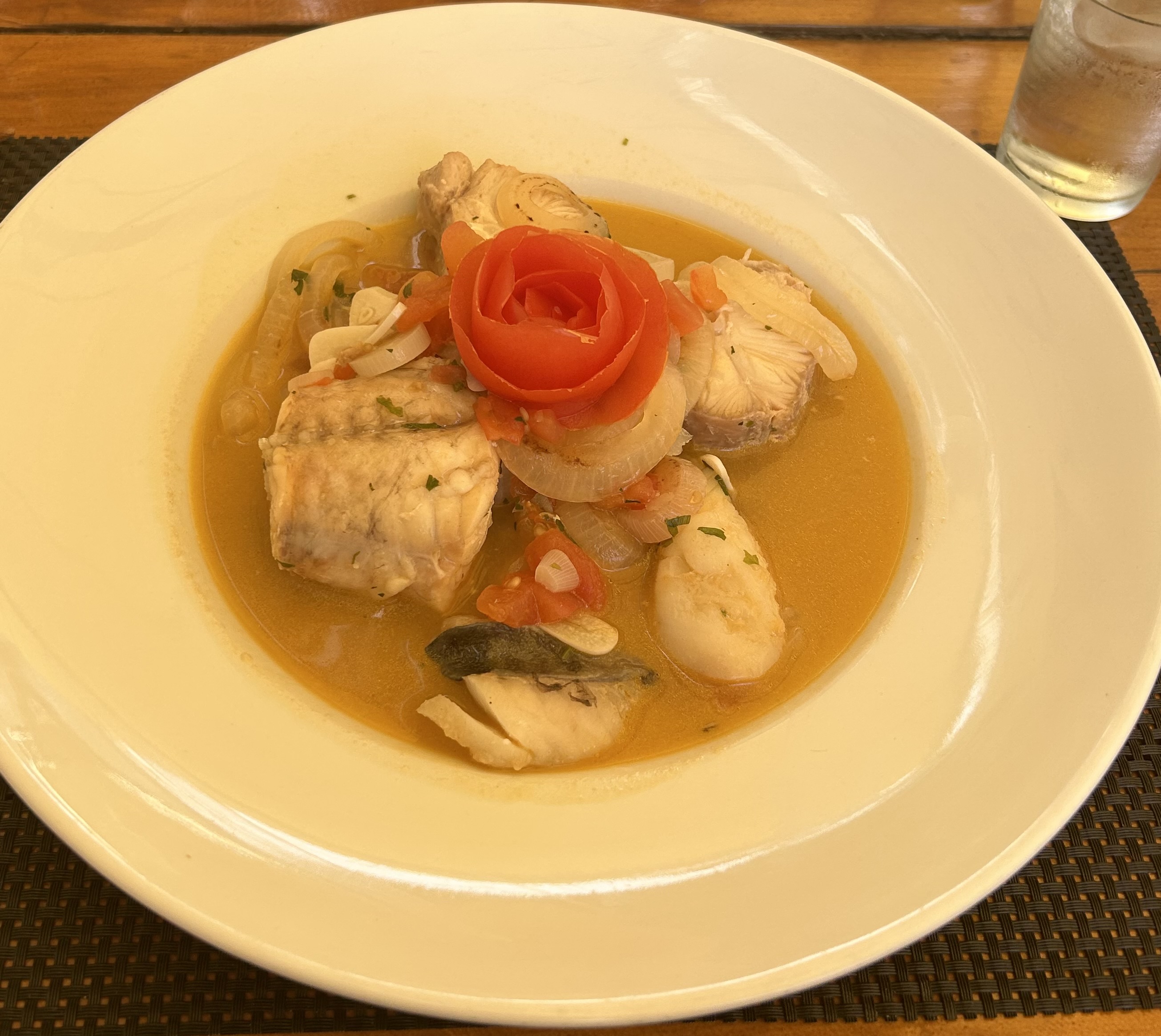
 Gregada — fish and potato in a white, fragrant pot. Photo: Wikimedia Commons (source file)
Older than brudet
While brudet arrived with Venetian influence, gregada belongs to an older layer of Adriatic cuisine — the one left by the Greeks, the first great seafarers of this sea. Their colonies Pharos (Stari Grad on Hvar) and Issa (Vis) are among the oldest towns in Croatia, and with them, it is believed, arrived the custom of simmering fish in oil, wine and onion, without any later additions such as tomato, which reached Europe only after the discovery of the Americas.
That ancient simplicity has remained the essence of gregada to this day. In it there is no hiding behind strong sauces: only fish, potato, onion, garlic, parsley, good oil and wine. That is why it is said that gregada is a dish of truth — if the fish is fresh and the oil real, the result is magnificent; if not, there is no seasoning that will hide it.
Which fish goes into gregada
For gregada one traditionally chooses quality white fish of firm flesh: scorpionfish is the queen, and monkfish, dusky grouper, dentex, and even cheaper species such as conger eel or pouting are excellent too — Hvar fishermen cooked gregada from whatever the net gave, and therein lies its democracy. Many also add a prawn or langoustine for sweetness and mussels for the aroma of the sea.
The fish is cut into thick steaks or left whole if small, always with bones and skin — because it is precisely these, together with the head, that give the broth that gelatinous fullness by which a good gregada is recognised. As with brudet: more species of fish means richer flavour.
Ingredients
For 4–6 people:
- 1.5 kg white fish (scorpionfish, monkfish, dentex, conger eel…), cleaned and cut into steaks
- 1 kg potatoes, peeled and cut into thicker slices
- 3 large onions, cut into thin wedges
- 5–6 cloves of garlic, coarsely cut
- 1 bunch of parsley, chopped
- 1.5 dl good olive oil
- 2 dl dry white wine (bogdanuša or pošip, if you want to stay on Hvar)
- 3–4 dl water or light fish stock
- coarse salt, peppercorns, 1 bay leaf
- optional: a few prawns or a handful of mussels
Preparation
- Salt the fish. Salt the fish steaks and set them aside while you assemble the pot.
- Layer. Into a wide, shallow pot (or deeper pan) pour half the olive oil, then layer: a layer of onion, a layer of potato, half the garlic and parsley, a little salt — and over it all arrange the fish steaks. Cover with the rest of the onion, garlic and parsley.
- Pour in. Add the bay leaf and peppercorns, pour over the remaining oil, the wine and the water — the liquid should reach the top edge of the potato, not cover the fish.
- Simmer without stirring. Cover and cook over low heat for 35–40 minutes. Like brudet, gregada is not stirred with a spoon — the pot is only shaken occasionally so nothing scorches.
- Shellfish near the end. If you use mussels or prawns, add them in the last 10 minutes.
- Check. Gregada is done when the potato is soft and soaked, the fish separates from the bone, and a thick, white, fragrant broth remains in the pot. Taste and add salt if needed.
- Rest and serve. Let it rest for 10 minutes, scatter with fresh parsley and serve straight from the pot.
Tips for perfect gregada
- Do not skimp on the olive oil — gregada is a dish of oil as much as of fish; it binds the broth and gives it silkiness.
- Potato in thicker slices: thin ones fall apart, while thick ones soak up all the flavours and many consider them the best part of the dish.
- Do not stir, shake — the golden rule of all Adriatic pots applies here too.
- Fish with bones and head gives fullness; fillets are for other dishes.
- Good wine in the pot, the same in the glass: cook with wine you would also drink.
What to serve with it
Gregada is a one-pot dish — fish, potato and broth make a complete meal, with the obligatory homemade bread for dipping. With it goes cold white wine, ideally Hvar's bogdanuša or pošip. Before the gregada only something light is served, such as salted sardines or cheese in oil, and afterwards — fruit or carob cake.
On Hvar gregada is traditionally eaten slowly and quietly, with respect — because, as the old fishermen say, in it you can hear the sea. Do not rush it either.
The most common mistakes
The greatest mistake is poor or frozen fish — gregada has nothing to mask a lack of freshness, so the quality of the fish is everything. The second is too little oil and onion: without them the broth stays watery, and the gregada without its silky fullness. The third is stirring with a spoon — the fish and potato fall apart; only shake the pot.
Watch the liquid too: gregada is not a soup, so add water moderately — a thick, white, slightly gelatinous broth is the goal you are aiming for. And finally, do not touch the recipe by adding tomato "for colour": with that gregada ceases to be gregada and becomes — brudet. And brudet you already have on the menu.
Conclusion
Gregada is a dish that unites two and a half thousand years of Adriatic history in a single pot — from the Greek colonists of Hvar to today's taverns. Its strength is in its honesty: fresh fish, good potato, real oil and patience, nothing more. Cook it from the best fish you can find, serve it with bread and cold white wine and eat it slowly, the way it has always been eaten on the islands. In that white, fragrant broth you really can hear the sea — and understand why the oldest dishes often remain the best.