Plum dumplings: the sweet little pillows of a continental childhood
Few dishes in continental Croatia stir up as much nostalgia as plum dumplings (knedle sa šljivama). Soft dumplings of potato dough that hide a whole, juicy plum in their centre, boiled and then rolled in golden breadcrumbs toasted in butter with sugar and cinnamon — that is the taste of grandma's kitchen, of school canteens and of late summer, when the blue bistrica plums bend the branches. Dumplings are that rare dish that is both a lunch and a dessert: in many homes they are served as a sweet main course, on a plate from which no one rises sad.
Their charm is in the contrast: neutral, soft dough, a sour-sweet hot plum that turns to jam in the centre, and crunchy, butter-soaked crumbs on the outside. In this recipe we present the classic dumplings as they have always been made — with the tricks for a dough that does not fall apart and a plum that melts exactly as much as it should.
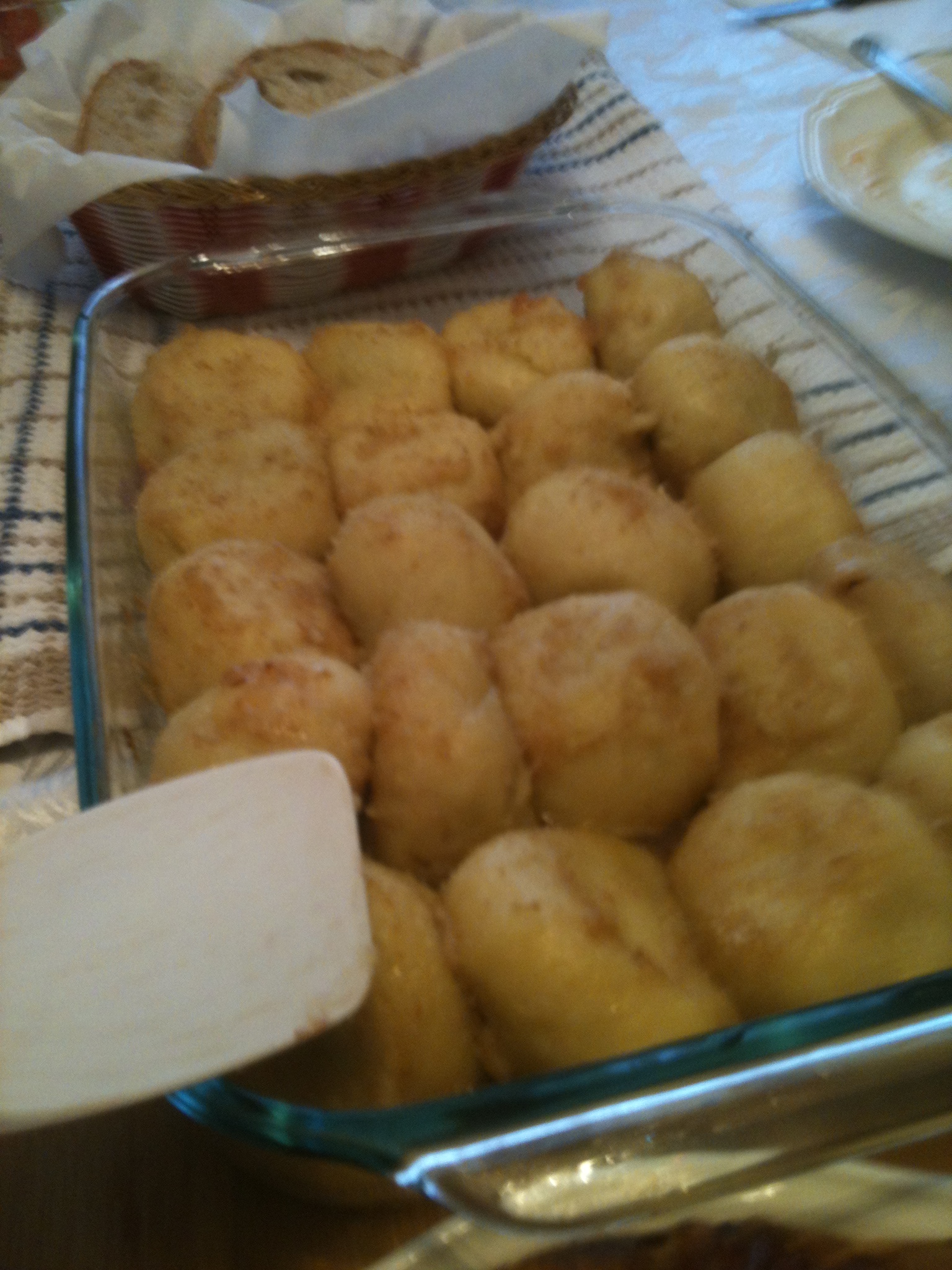
 Dumplings rolled in toasted breadcrumbs. Photo: Wikimedia Commons (source file)
Central European heritage with an orchard at its heart
Plum dumplings are part of the same Central European cuisine from which štrukli and strudels come — a dish of the space of the former Monarchy, where under various names (Zwetschgenknödel, szilvás gombóc) it is made from Vienna to Vojvodina. They reached Croatia by those same routes and fit perfectly with a local abundance: the plum, a fruit that has for centuries been the backbone of continental orchards, from which brandy is distilled, jam is cooked and "prunes" are dried.
Traditionally dumplings were a dish of late summer and early autumn, when the bistrica ripen — small, blue plums that separate easily from the stone and have a perfect ratio of sweet and sour. In winter they were replaced by dumplings filled with jam, and today, with frozen plums, they are made all year round — although the August ones, with a just-picked plum, remain unmatched.
The secret is in the dough
Everything stands or falls on the potato dough — the very same one gnocchi are made from, only in large format. There are three rules. First: floury potato, boiled in its skin and riced while hot — such potato soaks up the least water and needs the least flour. Second: just enough flour for the dough to bind; every extra spoonful makes the dumpling harder and more rubbery. Third: do not knead too long — the dough just comes together and it is done.
For the plum there is one sweet trick up grandma's sleeve: instead of the stone, into each plum goes a sugar cube (dipped in rum or with a pinch of cinnamon, if you like). During cooking the sugar turns, with the plum's juice, into a hot, fragrant syrup — a little surprise at the heart of every dumpling.
Ingredients
For 16–20 dumplings (4–6 people):
Dough:
- 1 kg floury potatoes
- 250–300 g plain flour
- 1 egg
- 30 g butter, softened
- a pinch of salt
- 2–3 tablespoons semolina if needed
Filling:
- 16–20 smaller plums (bistrica), pitted
- 16–20 sugar cubes (with a drop of rum or a pinch of cinnamon, if you like)
Coating:
- 150 g breadcrumbs
- 80 g butter
- 3–4 tablespoons sugar + 1 teaspoon cinnamon
- icing sugar for serving
Preparation
- Boil the potatoes. Boil the potatoes in their skins until soft, peel them hot and rice them (or mash without lumps). Spread them out to cool and let the steam escape.
- Make the dough. To the cooled potato add the egg, butter, salt and gradually the flour, and lightly knead a smooth, soft dough that does not stick (add a spoonful or two of semolina if needed). Do not knead longer than you must.
- Prepare the plums. Halve the plums just enough to remove the stone, and into each, in its place, insert a sugar cube and close it.
- Shape the dumplings. Roll out the dough (or stretch it with your hands) to a thickness of a centimetre and cut squares of about 8×8 cm. On each place a plum, lift the edges and carefully close it, then shape a smooth ball without cracks between your palms.
- Cook. Drop the dumplings into a large pot of gently boiling salted water. When they float up, cook them a further 7–8 minutes over low heat. Lift them out with a slotted spoon and drain briefly.
- Toast the crumbs. In a wide pan toast the breadcrumbs in butter to a golden colour, stir in the sugar and cinnamon.
- Roll and serve. Roll the hot dumplings in the crumbs until coated on all sides. Serve at once, dusted with icing sugar.
Tips for perfect dumplings
- Boil the potatoes in their skins and work with them while warm — that is half the battle against excess flour.
- Close without cracks: every little hole in cooking becomes a window through which the plum escapes into the water.
- The water simmers gently, does not boil — a wild boil breaks the dumplings apart.
- A test dumpling before the whole batch: if it falls apart, knead in a little more flour; if it is tough, work faster and thinner.
- Crumbs in butter, generously — dry, pale crumbs are half the experience less.
What to serve with them
Plum dumplings are served hot, as a sweet main course or a lavish dessert — in the continental tradition often after a light soup or stew, as the "crown" of lunch. With them goes a glass of cold milk (the children's version), coffee, or — for adults — a shot of plum brandy, with which the plum's circle is festively closed.
If any are left (rarely, but it happens), the next day they are excellent fried in butter, with an extra spoonful of crumbs — a version some claim is even better than the original.
The most common mistakes
The greatest mistake is too much flour — the dough becomes rubbery and heavy; work with warm, dry potato and add the flour gradually. The second is a poorly closed dumpling: a crack means the plum in the water and an empty ball on the plate — smooth the ball between your palms until the seam disappears. The third is too-fierce cooking; dumplings demand a patient simmer, not waves.
Watch the size too: too-large dumplings overcook on the outside before the plum in the centre warms through. And do not skimp on the crumbs — a dumpling stingily rolled in pale crumbs has lost half its identity. Golden, buttery, cinnamon-scented — that is how every childhood remembers them.
Conclusion
Plum dumplings are a dish that needs no modernising, deconstructing or improving — it is enough to make it the way grandmothers did: good potato, a little flour, a ripe plum with a sugar cube instead of a heart and plenty of golden crumbs. In them hides all the warmth of continental cuisine: simplicity, season and generosity. Make them at the end of summer, when the plums fall from the branches on their own, serve them hot and watch as silence descends at the table — the good kind, in which you hear only a spoon searching for the melted plum in the centre.