Lastovo Archipelago Nature Park: the Adriatic's darkest sky and the island of fumari
Far in the southern Adriatic, set apart from the mainland and the main sea routes, lies one of the most hidden and best-preserved parts of Croatia — the Lastovo Archipelago. This archipelago of some forty islands and islets, with the island of Lastovo at its centre, was long beyond the reach of mass tourism, partly because it was a closed military zone for decades. It was precisely that isolation that preserved its exceptional beauty: dense forests, a crystal-clear sea, quiet villages and a sky so dark that beneath it the whole splendour of the stars can be seen.
Protected as a nature park since 2006, the Lastovo Archipelago is one of the most valuable marine and terrestrial areas in the country. Its sea is among the cleanest and richest in the Adriatic, its slopes are among the most forested of the Croatian islands, and its sky — far from the light pollution of cities — is among the darkest in Europe. Lastovo is, in short, an island for those seeking peace, nature and the feeling of having reached the end of the world.
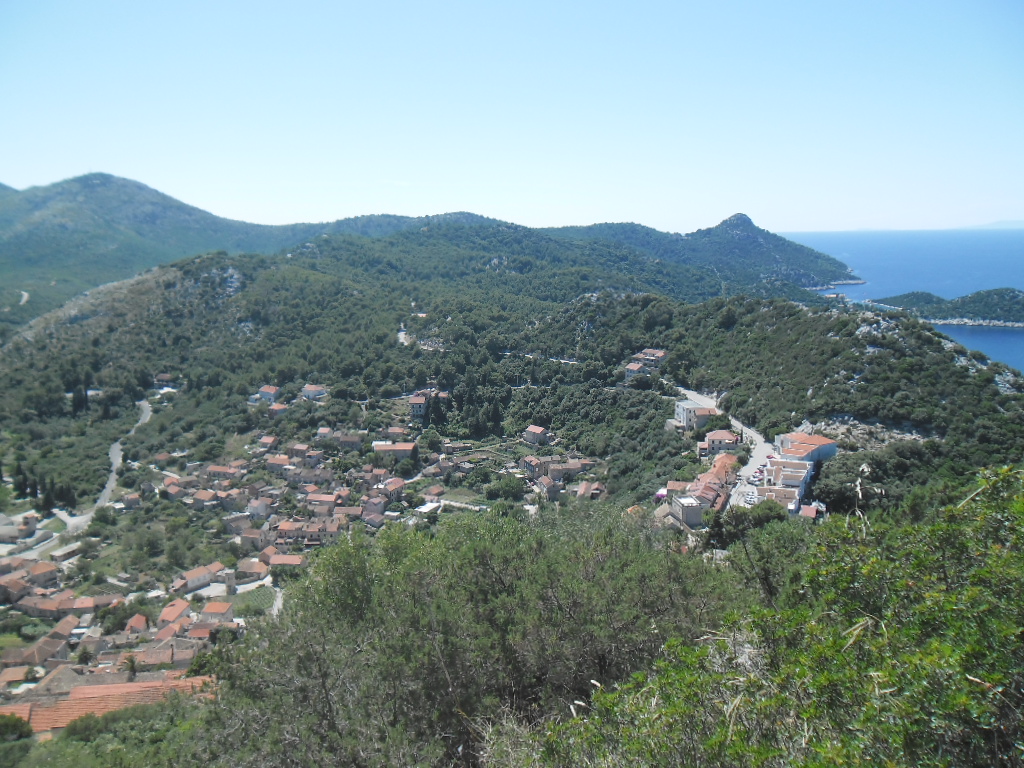
 The settlement of Lastovo with its recognisable stone houses. Photo: Wikimedia Commons (source file)
An archipelago of 44 islands
The Lastovo Archipelago Nature Park covers the whole archipelago — about forty-four islands, islets and rocks, of which the largest and the only larger inhabited island is Lastovo. Alongside it, the park also includes the island groups of Lastovnjaci and Vrhovnjaci and the distant, solitary island of Sušac with its historic lighthouse. Most of those islets are entirely uninhabited, covered with maquis and surrounded by clear sea.
That indentedness makes the archipelago a true paradise for exploring by boat, kayak or sailboat. Every islet hides its own cove, beach or underwater world, and many are almost untouched by human hands. The protection of the whole archipelago, both land and sea, ensures that this pristineness remains preserved — that the Lastovo Archipelago continues to be one of the last true island wildernesses of the Adriatic.
A sky full of stars
What has made Lastovo especially shine in recent years is — its night sky. Because of its distance from large cities and the almost complete absence of light pollution, Lastovo has one of the darkest and cleanest night skies in all of Europe. On a clear night, here you can see with the naked eye what has long been inaccessible to city dwellers: thousands of stars, planets, and even the bright band of the Milky Way stretching across the whole vault.
Because of this Lastovo has become a favourite destination for lovers of stargazing and astrophotographers, and the park nurtures that value by guarding the darkness as a natural asset. There are few places in Croatia where the night is experienced so powerfully; on Lastovo a look at the sky is as much a part of the experience as a look at the sea. For many visitors it is precisely that starry night that is the strongest memory of the island.
Fumari: the ornate chimneys of Lastovo
The settlement of Lastovo is one of the most picturesque on the Adriatic, and its emblem is the fumari — richly decorated stone chimneys that rise from the roofs of the old houses. These chimneys, shaped like little towers or domes, are unique to Lastovo and have no equal elsewhere in Croatia. They were once also a sign of a family's wealth: the larger and more ornate the fumar, the more distinguished the house.
The Lastovo houses are, moreover, built in an unusual way — turned with their backs to the sea and clustered on the slope, like an amphitheatre facing the interior of the island. A walk through the narrow, steep lanes of old Lastovo, among the stone houses crowned with fumari, is like a journey through the centuries. Alongside them, the island hides dozens of old churches and chapels, witnesses to the long and pious history of this isolated community.
A sea full of life
The Lastovo sea is among the cleanest and richest in the whole Adriatic. Thanks to its distance from the mainland and its state of preservation, here the underwater meadows, coralligenous formations and fish are preserved in a condition ever rarer elsewhere. For divers Lastovo is a true treasure — a world of steep underwater rocks, caves and wrecks, full of life and colour.
That wealth of the sea is no accident: a strict protection regime and traditional, sustainable fishing have helped preserve the pristineness. Alongside the fish and invertebrates, dolphins and other larger sea animals occasionally appear in the waters around the archipelago. The seabed of Lastovo is thus as valuable and protected a part of the park as its land — a hidden world revealed only to those who dive.
The green island
Unlike many bare, stony Adriatic islands, Lastovo is surprisingly green. A large part of the island is covered by dense forests of Aleppo pine and holm oak, which places it among the most forested Croatian islands. That green splendour, combined with fertile fields, vineyards and gardens in the interior, gives the island a lush, almost gentle character.
The forests and fields of Lastovo are home to a rich plant and animal world, including birds and other species adapted to the Mediterranean environment. That combination of dense vegetation, clean air and silence makes Lastovo especially pleasant for hiking and cycling — an island where, alongside the sea, one enjoys the greenery and peace of the interior too.
An end of the world preserved by isolation
Few Croatian islands owe so much to their isolation as Lastovo. Distant from the mainland and long under a special regime, the island was for decades hard to reach, and for a time it was a closed military zone with strictly limited access. However hard that once was for the locals, it was precisely that seclusion that saved the island from the concrete and mass tourism that changed so many other parts of the coast.
Today that pristineness is Lastovo's greatest value. The island is reached only after a longer ferry crossing, which deters chance visitors but rewards those who persevere. To reach Lastovo is to come to a place that feels like the end of the world — quiet, green, starry and entirely its own.
Tradition and the Lastovo Poklad
Lastovo also preserves a rich tradition. The best known is the Lastovo Poklad, a unique carnival custom centuries old, in which through ritual dance and the lowering of a puppet down a rope a victory over ancient invaders is symbolically marked. That rite, full of symbolism and pride, is one of the most distinctive carnival customs in all of Croatia and gathers the whole community.
Alongside the Poklad, the island nurtures traditional cuisine, fishing, olive-growing and viticulture. That living heritage, preserved thanks to the isolation, gives Lastovo a soul that surpasses its natural beauty — the feeling of a firm, proud island community that has lived for centuries in harmony with the sea and the land.
Through the seasons
Lastovo is a destination of a mild Mediterranean climate. Spring wakes the green forests and fragrant herbs, and the island is then quiet and in bloom. Summer brings a warm, crystal-clear sea and perfect conditions for swimming, diving and sailing, but also starry nights without equal. Autumn is the time of the harvest, a calm sea and warm colours. Winter is mild, but the island then falls quiet, accessible only to the rare, persistent visitors seeking complete peace.
Sušac and solitary lighthouses
Among the islands of the Lastovo Archipelago, Sušac is special — a distant, solitary island on the western edge of the park, known for its historic lighthouse and untouched wilderness. Surrounded by one of the cleanest and clearest seas of the Adriatic, Sušac is a true refuge for those seeking complete solitude, and its steep shores and hidden coves are among the most beautiful in this part of the sea.
Lighthouses are altogether an important part of the identity of the Lastovo Archipelago. Alongside Sušac, there is the famous lighthouse of Struga above Skrivena luka bay on Lastovo, one of the oldest and most beautiful on the Adriatic, which has guided ships through these waters for over a century and a half. These solitary lighthouses, on the edge of the sea and the night, perfectly embody the spirit of Lastovo — seclusion, silence and a bond with the sea that has lasted for centuries.
A few curiosities to close
The Lastovo Archipelago abounds in peculiarities. The archipelago counts about forty-four islands and islets, and its sea is among the cleanest in the Adriatic. Lastovo has one of the darkest night skies in Europe, making it a favourite destination for stargazing. Its ornate stone chimneys, the fumari, are unique in all of Croatia. The island is also among the most forested on the Adriatic, and it preserved its long pristineness partly because it was for decades a hard-to-reach, closed zone.
All this makes the Lastovo Archipelago a park that rewards effort — a place harder to reach than others, but which in return offers the rarest of things: a clean sea, silence, stars and the feeling of a true, untouched island wilderness.
A practical guide to visiting
- Getting there. Lastovo is reached by ferry or catamaran, most often from Split (via Korčula/Vela Luka) or from Korčula; the crossing is long, so plan the trip in advance.
- Tickets and information. An entrance ticket is charged for certain facilities; seek information, maps and advice from the park administration and visitor centres.
- Stargazing. Do not miss a clear night under the Lastovo sky; bring a blanket and, if possible, binoculars or a telescope.
- Sea and diving. The coves, beaches and seabed are true jewels; organise diving through authorised centres while respecting the protection.
- Getting around. The island is explored on foot, by bicycle, by boat and by car; renting a vessel allows you to tour the surrounding islets.
- Rules. Move on marked trails and sea routes, do not leave litter and protect the darkness of the sky by avoiding unnecessary light at night.
- Combine with the surroundings. The island of Korčula, the Pelješac peninsula with its wines and the islet of Sušac with its lighthouse make Lastovo part of an unforgettable southern-Adriatic journey.
Conclusion
The Lastovo Archipelago is one of the last true island refuges of the Adriatic — a place where isolation became a blessing, preserving a clean sea, dense forests, quiet stone villages and a sky full of stars. Here time slows, and nature and tradition still rule. Whether you wander the lanes of Lastovo beneath the ornate fumari, dive in the crystal-clear sea or lie under the darkest sky in Europe counting the stars, Lastovo gives you what is ever rarer elsewhere — the feeling of having truly escaped the world and arrived at a place that has stayed true to itself.