Lonjsko Polje Nature Park: Europe's stork village and the Sava floodplain wilderness
There is a region in the heart of Croatia where time seems to have stood still — where storks nest on the roofs of wooden houses, herds graze freely across flooded meadows, and the river Sava spreads its waters over endless plains every year. This is Lonjsko Polje, one of the largest and best-preserved natural floodplain areas in all of Europe, a vast kingdom of water, reeds, oak forests and the ancient coexistence of man and nature.
Protected as a nature park, Lonjsko Polje stretches over some five hundred square kilometres of the central Sava basin. It is at once a paradise for birds — with around two hundred and fifty species and one of the largest populations of white stork in the world — and a living museum of traditional life, with Sava wooden houses, native breeds and grazing of a kind hardly practised anywhere else in Europe. It is a Croatia few people know: flat, watery, slow and deeply connected to the rhythm of the river.
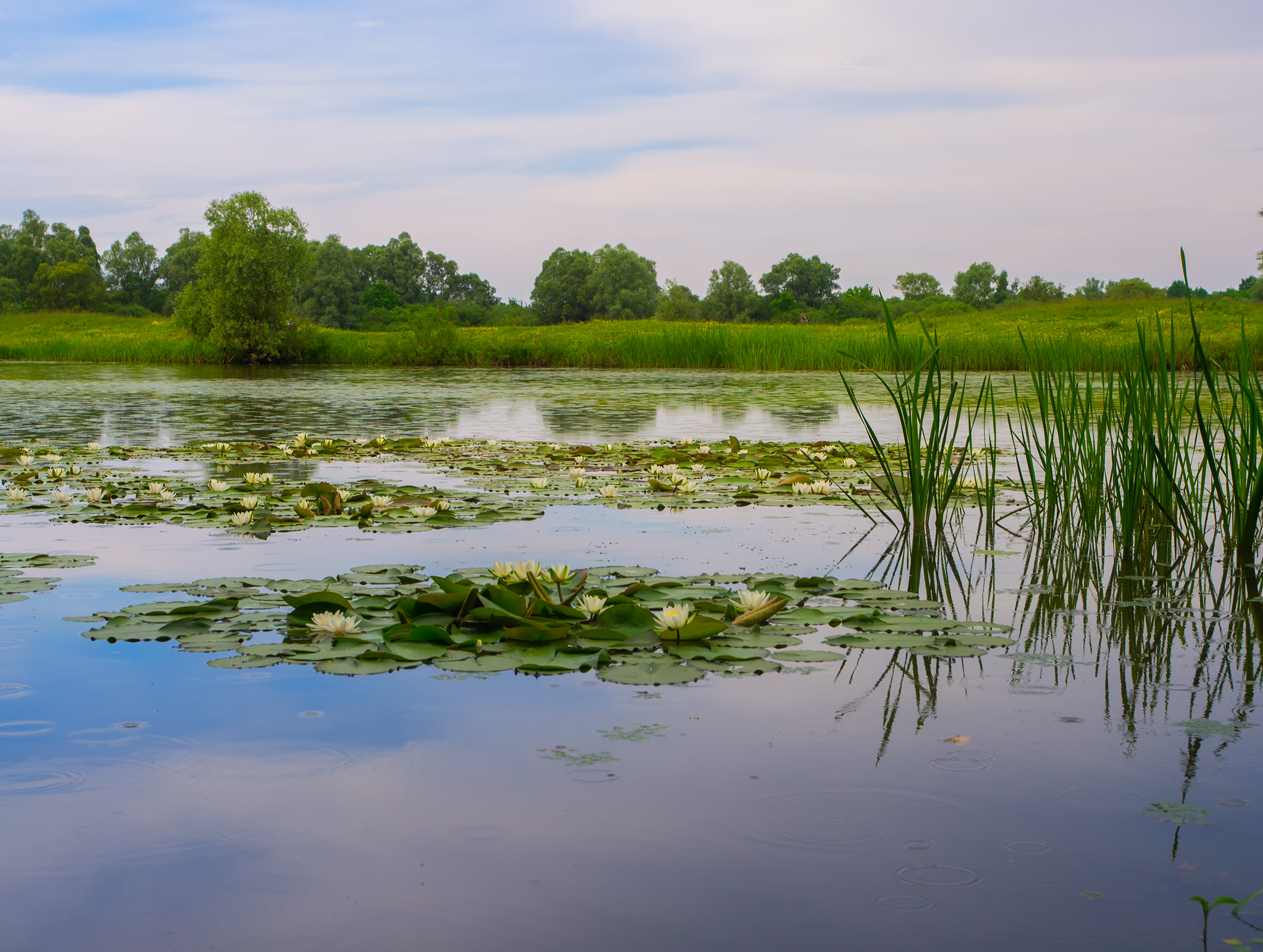
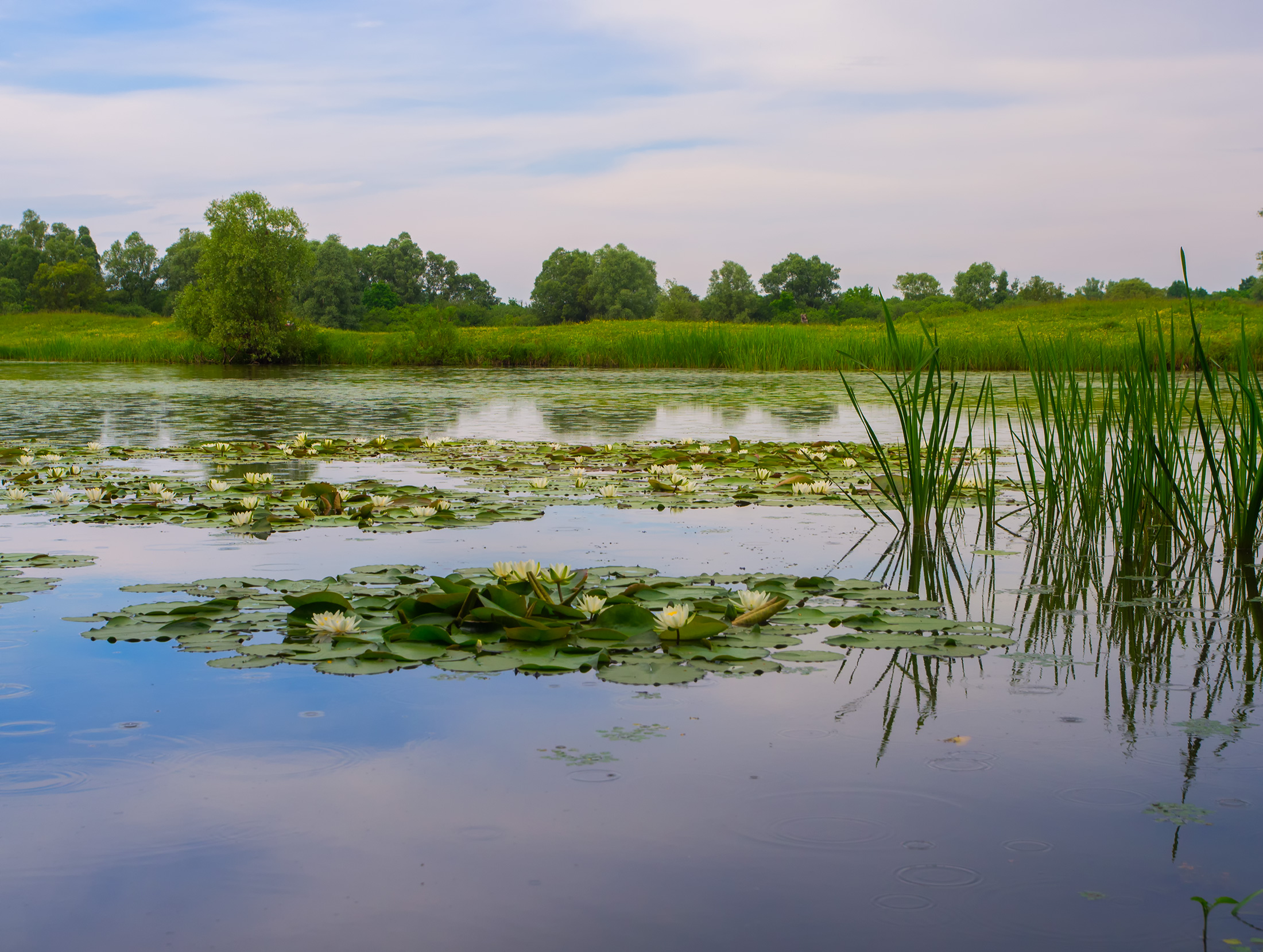 The flooded plains of Lonjsko Polje near Čigoč. Photo: Wikimedia Commons (source file)
Čigoč: the first European stork village
If Lonjsko Polje has a symbol, it is the stork — and its capital is the village of Čigoč. This small Sava village beside the old bed of the Sava was declared, back in 1994, the first European stork village, because more storks nest in it than there are households. On the roofs and chimneys of the wooden houses sit dozens of huge stork nests, and the sight of white birds clattering their beaks over the village has become the emblem of the whole park.
The storks were drawn here by the rich floodplain pastures and meadows, full of frogs, fish and other prey, but also by centuries of coexistence with people. The locals rejoice at their return every spring, notify experts when the first stork arrives and care for injured birds. That harmony between man and wilderness, nurtured over generations, makes Čigoč a unique place — a village where nature and people truly live together.
Wooden Sava houses
The beauty of Lonjsko Polje is inseparable from its traditional architecture. Villages like Čigoč and especially Krapje — protected as a "village of architectural heritage" — preserve some of the finest examples of Sava wooden houses, built from oak planks by old methods adapted to frequent flooding. Raised on rises and made of natural material, these houses withstood the water for centuries.
It is precisely these wooden houses, together with the stork nests on the roofs, that created the recognisable image of the park. They are not merely a tourist backdrop but a living heritage — many are still lived in today, and some are arranged as ethnographic collections or accommodation for visitors. A walk along the main street of Čigoč or Krapje is like a journey into the past, into a Sava village of the kind once typical of much of Central Europe.
The rhythm of the river Sava
The whole life of Lonjsko Polje is dictated by the river Sava and its tributaries. Usually from late autumn to early spring, the rivers swell and flood the field, turning it into an endless lake from which forests and villages emerge. When the water recedes, lush, mud-enriched meadows and pastures remain, on which traditional livestock-keeping begins.
That rhythm of flooding and drying is the heart of the whole ecosystem. It creates ideal conditions for birds, fish and plants and renews the fertility of the land. Unlike many European rivers that man has tamed with embankments and canals, the Sava here still breathes freely — and Lonjsko Polje is one of the last places where the natural rhythm of a great river takes place almost undisturbed.
A kingdom of birds
Lonjsko Polje is one of Europe's most important bird areas. Alongside the white stork, around two hundred and fifty bird species live or stop here, many of them rare or endangered. In two special ornithological reserves, Krapje Đol and Rakita, black storks, white-tailed eagles, herons, spoonbills and other species ever scarcer elsewhere in Europe nest.
Because of this value the park is included on the most important international lists of wetland and bird areas, including the Ramsar List. An important migration route for migratory birds also passes through Lonjsko Polje, for which the floodplain meadows and forests serve as a resting and feeding place on their long journey. For birdwatchers the park is therefore one of the richest destinations in this part of the continent.
Horses, pigs and grazing
Lonjsko Polje is not only wilderness but also a cradle of native breeds. Here old Croatian breeds of domestic animals arose and survive — the Croatian Posavina horse and the Turopolje pig — perfectly adapted to life in a damp, floodplain landscape. Their herds graze freely across the meadows and forests for much of the year.
That traditional grazing — free grazing of livestock on the common floodplain pastures and in the oak forests — is considered unique: Lonjsko Polje is one of the few, if not the only, areas in Europe where this ancient way of livestock-keeping is still practised. The sight of horses and pigs wandering freely across the flooded meadows is a picture of a former Central Europe, preserved here as a living monument to the past.
Oak forests and spawning grounds
A large part of the park is covered by centuries-old forests of pedunculate oak and narrow-leaved ash, adapted to periodic flooding. These floodplain forests, among the most valuable in Europe, are home to countless species and the foundation of the whole ecosystem, while their wood has for centuries also served to build the Sava houses.
The waters of Lonjsko Polje are equally rich. During the flooding, the field becomes one of the largest spawning grounds of freshwater fish in Europe — carp, pike, pikeperch and other species spawn here, and the fry grow up in the sheltered shallows. One village, Krapje, is even named after the carp (krap). This abundance of fish feeds the birds and other animals too, such as the otter and the beaver, closing the circle of this exceptionally rich aquatic world.
Watchtowers and a border past
A special history is woven through Lonjsko Polje too — it was once part of the Military Frontier, the border with the Ottoman Empire. From that time remain the čardaci, wooden watchtowers raised along the border, from which the border guards watched over the surroundings. Today some of them have been restored and turned into observation towers for birds.
That border past also shaped the settlement of the region: after the danger passed, the Sava basin began to fill with villages and farms built of Lonjsko oak. Thus history is inscribed in the landscape itself — in the layout of the villages, in the wooden houses and in the watchtowers that today, instead of guards, receive nature lovers with binoculars.
Through the seasons
Lonjsko Polje changes its face with the rhythm of the river. Spring brings the return of the storks, the awakening of life and the peak of bird nesting — for many the loveliest time. Summer, especially May and June, is the time of full nests and young storks learning to fly, but also of lush green meadows. Autumn brings bird migrations and the departure of the storks on their long journey south. Winter is quiet and often flooded, when the field becomes a lake and the wintering birds and the picture of a calm, sleepy Sava basin remain.
A living open-air museum
Lonjsko Polje is often described as a living museum — and for good reason. Alongside the wooden houses and native breeds, a whole treasury of traditional heritage is preserved here: folk costumes, looms, fishing tools such as fish traps, creels and nets, farming implements and objects of everyday life. Part of that heritage is exhibited in ethnographic collections in Čigoč, Krapje and Mužilovčica, where hundreds of objects from Sava life at the turn of the 19th and 20th centuries are kept.
Because of that exceptional interweaving of natural and cultural heritage, Lonjsko Polje has also been proposed for inclusion on the UNESCO World Heritage List. There are few places where a preserved natural landscape and a centuries-old way of life intertwine so completely — where the protection of nature and the preservation of tradition literally happen in the same house, on the same meadow, beside the same river. This makes Lonjsko Polje not only a park but also testimony to how people once lived in harmony with nature.
A few curiosities to close
Lonjsko Polje abounds in stories that surprise. The village of Čigoč was the first declared European stork village, and in it literally more storks live than people. The park is among the largest preserved floodplain areas in Europe and one of the largest freshwater fish spawning grounds on the continent. Native Croatian breeds arose here — the Turopolje pig and the Croatian Posavina horse — and the park is one of the few places in Europe where traditional free grazing is still practised. The storks of Čigoč fly thousands of kilometres every autumn, all the way to the south of Africa, using warm air currents.
All this makes Lonjsko Polje a park in which nature and tradition cannot be separated — a unique corner of Croatia in which river, bird and man have written the same slow, harmonious story for centuries.
A practical guide to visiting
- Getting there. The park lies in the Sava basin, south-east of Zagreb, between Sisak and Jasenovac. The entrances are at Čigoč (from Sisak) and at Krapje (from Jasenovac); it is easily reached by motorway and the Popovača exit.
- Tickets and information. Entrance tickets and guided tours are charged; begin the tour at one of the visitor centres (Čigoč, Krapje, Repušnica, Osekovo).
- When to see the storks. Storks are migratory — they stay in Čigoč roughly from late March to late August; May and June are the peak. In winter they are gone.
- Getting around. The park is explored on foot, by bicycle or by boat (in places solar-powered); do not miss the bird observation towers and the ethnographic collections.
- Gear. Bring binoculars, sun and mosquito protection and comfortable, moisture-resistant footwear.
- Rules. Move on marked trails, do not disturb the birds or the grazing livestock and respect the regime of the ornithological reserves.
- Combine with the surroundings. The Sava villages, traditional gastronomy and the town of Sisak with its fortress make Lonjsko Polje a perfect part of a slow, authentic journey through the heart of Croatia.
Conclusion
Lonjsko Polje is one of the last places in Europe where the river still freely shapes the landscape and man and wilderness live in genuine harmony. Here storks nest on wooden houses, herds graze freely across flooded meadows, and the Sava writes the same ancient rhythm of flooding and receding every year. Whether you watch the storks in Čigoč, walk through the wooden village of Krapje or listen to the silence of the flooded forest, Lonjsko Polje immerses you in a world of slow, authentic beauty — Europe's stork village and the last great floodplain wilderness of the continent.