Papuk Nature Park: the green heart of Slavonia and Croatia's first geopark
When Slavonia is mentioned, most people think of endless plains, wheat fields and vineyards. But in the north of that plain rises something unexpected — a green, forested mountain island that rises from the lowland like an oasis. This is Papuk, a Slavonian mountain covered with almost untouched forests, dotted with streams, waterfalls, caves and the ruins of old castles. For many visitors it is a discovery that Slavonia has a real mountain at all — and an even greater discovery how special that mountain is.
Protected as a nature park, Papuk is unique for its geological value: it has been declared the first UNESCO geopark in Croatia, because in its area are found almost all types of rock, from the oldest in the country to volcanic rarities. Almost ninety-five per cent of the park is covered by forest, which makes it one of the greenest and best-preserved protected areas in continental Croatia — the true green heart of Slavonia.
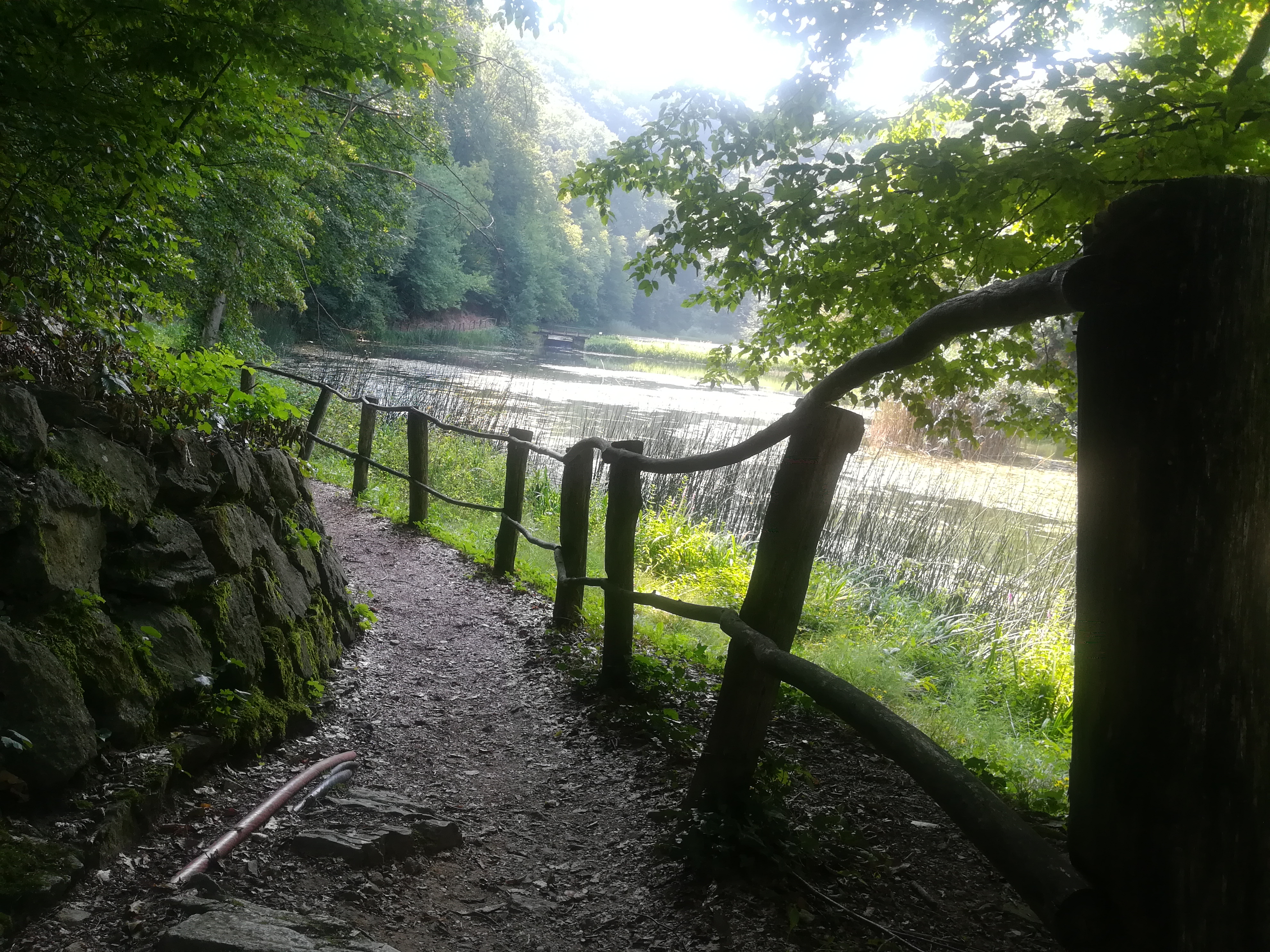
 The forest paradise of Jankovac in Papuk Nature Park. Photo: Wikimedia Commons (source file)
The geopark: a mountain written in stone
What makes Papuk of world value is its geological diversity. In a relatively small area, rocks from almost all geological periods meet here — from the Palaeozoic to the Quaternary — including the oldest rocks in all of Croatia, hundreds of millions of years old. Because of that exceptional geodiversity Papuk was included in the network of UNESCO geoparks, as the first of its kind in the country.
A geopark is not ordinary nature protection; it recognises areas where geological heritage is preserved, studied and brought closer to visitors. On Papuk this means that alongside the forests and waterfalls you can also read the story of the Earth's making — of ancient seas, volcanoes and mountains that rose and vanished. For lovers of nature and science, Papuk is therefore an open book of geological history.
Rupnica: stone that looks like an organ
Papuk's best-known geological jewel is Rupnica — a site where the rare sight of so-called columnar jointing of volcanic rocks can be seen. When the ancient lava cooled, it hardened into regular, upright columns, like a giant stone organ or a bundle of petrified beams. This sight has no equal in Croatia.
Because of its uniqueness Rupnica became, back in 1948, the first protected geological natural monument in Croatia. A short, easy trail leads to it, so a visit is accessible to all. To stand before those stone columns is to see a trace of Slavonia's volcanic past — proof that this now peaceful, forested region was once the stage of a fiery geological drama.
Jankovac: a forest paradise with a waterfall
If Papuk has a heart, it is Jankovac — a forest park and outing spot that many consider the loveliest corner of all Slavonia. In a deep, shaded valley surrounded by beech forests hide two small lakes, a crystal-clear stream and the waterfall Skakavac, which plunges over a tufa rock into the depths.
Through Jankovac runs the beautiful circular Count's Trail, named after Count Janković, who arranged this region in the 19th century and had his own tomb built in a nearby cave. A walk along that trail, past the lakes, the stream and the waterfall, is one of the most idyllic experiences in continental Croatia — a place so quiet and green it seems out of a fairy tale. Jankovac is to Papuk what Skradinski buk is to the Krka: the jewel by which the whole park is remembered.
The sea that vanished and the mountain that remained
Papuk's geological story reaches deep into the past. Its oldest rocks testify to times when whole mountains rose and vanished here, and later the whole region was covered by the vast Pannonian Sea, from which Papuk rose as an island. Traces of that sea can still be read today in deposits of limestone and fossils of shells and other marine organisms.
That layered past is the reason geologists consider Papuk a true treasury. On its trails, with a little knowledge, one can read how continental Croatia came to be — from volcanoes and ancient mountains to the sea that flooded Slavonia and finally receded, leaving a fertile plain and, above it, a green mountain.
Forests, birds and bats
Papuk is above all a kingdom of forest. Almost its entire surface is covered by dense forests of beech, oak and other species, some of which are protected as special reserves because of their preservation. These forests are home to a rich animal world — and birds and bats especially stand out, present here in great number and diversity.
The caves and pits of Papuk are important habitats for bats, one of the most endangered groups of mammals in Europe, while the forests ring with the calls of woodpeckers, owls and numerous other birds. Alongside them, roe deer, wild boar, foxes and other animals move through the mountain. That biological diversity, alongside the geological, makes Papuk doubly valuable — a place where both living and non-living nature are preserved.
Old castles and heritage
Papuk is not only nature but also history. On its slopes hide the ruins of medieval fortresses — among them Ružica grad, one of the largest and most impressive old fortresses in Slavonia, wrapped in legends. At the foot of the mountain, in Voćin, stands a large Gothic church, testimony to the former wealth of this region.
These old castles and churches give Papuk a cultural depth that complements its natural beauty. To walk its trails is to pass by walls that remember knights, nobles and wars — a reminder that this quiet, green mountain was for centuries also a strategic, inhabited area on the border of worlds.
Through the seasons
Papuk is beautiful at any time, but it has its peaks. Spring wakes the beech forests into fresh green, the streams swell, and Jankovac is then especially lush. Summer brings the pleasant shade of the deep forest, a perfect escape from the Slavonian heat, so it is ideal for walking and cycling. Autumn is for many the loveliest — the beeches blaze with gold and copper, and the Count's Trail becomes a walk through a fire of colours. Winter hushes the mountain and turns it white, transforming Jankovac into a quiet, snowy fairy tale.
The Count and his paradise
The story of Jankovac is inseparable from one man — Count Josip Janković, who in the mid-19th century fell in love with this hidden valley and turned it into his private paradise. He had trails laid out, lakes dug and a hunting lodge built, and in the nearby Vilinsko jezerce cave he prepared his own tomb, wishing to rest forever in a region he loved so much.
His name is still borne today by both the valley and the loveliest trail through it. That human story gives Jankovac a special warmth: it is not only a natural phenomenon but also a landscape shaped by one man's love of the forest, the stream and the silence. Walking the Count's Trail, you walk through someone's dream — proof that man can sometimes add beauty to nature rather than take it away.
A silence that heals
What visitors to Papuk most often remember is not some individual attraction but — peace. Unlike the busy Adriatic parks, Papuk is quiet, spacious and unhurried. Here you can walk forest trails for hours without meeting anyone but birds, a roe deer or the odd cyclist. The deep beech forest absorbs sounds and creates a feeling of complete isolation from the world.
It is precisely that silence that makes Papuk special. In an age of overcrowded destinations, it offers what is ever rarer — space for solitude, a slow pace and true rest. For many that is the greatest value of this park: a place you come to not to see something, but to find something — peace, breath, balance.
Why visit Papuk of all places
In Croatia, where attention almost always goes to the sea, Papuk remains unfairly neglected. And that is part of its charm. While thousands of tourists jostle on the coast, here you will find untouched forest, crystal-clear streams and geological rarities of world value — and all of it almost without crowds. Papuk is a park for those who love to discover, who enjoy nature and who appreciate not sharing the landscape with thousands of others.
In addition, a visit to Papuk is easily combined with discovering the real Slavonia — its gastronomy, wines, kulen sausage and hospitality. Papuk is thus not only a mountain but a ticket into a region many are yet to discover, the green heart of a region better known for plains than for mountains.
A few curiosities to close
Papuk abounds in details that surprise. It is the first UNESCO geopark in Croatia, and its Rupnica site is the first protected geological natural monument in the country, dating from 1948. In its area are found the oldest rocks in all of Croatia, hundreds of millions of years old. Almost ninety-five per cent of the park is covered by forest, making it one of the greenest protected areas in continental Croatia. And its caves are home to numerous bats, one of the most endangered groups of mammals in Europe.
All this makes Papuk a park that combines geology, forest, history and peace in a way few places can — proof that the greatest riches are sometimes hidden precisely where no one looks for them.
A practical guide to visiting
- Getting there. The park stretches between Slavonska Požega, Kutjevo, Velika and Voćin, in the heart of Slavonia. Marked roads lead to the main sites (Jankovac, Rupnica); the nearest larger towns are Požega and Virovitica.
- Tickets and information. Entry to the park is mostly free; seek information, maps and guided tours at the park and geopark visitor centres.
- Sights. Do not miss the Jankovac forest park with the Count's Trail and the Skakavac waterfall, the Rupnica geological site and the ruins of Ružica grad.
- Trails. Papuk offers a network of hiking, educational and cycling trails of all difficulties; the Count's Trail at Jankovac is easy and suitable for families.
- Footwear and gear. For the forest trails comfortable shoes are enough; bring water and, in the warmer months, protection against mosquitoes and ticks.
- Rules. Move on marked trails, do not touch the geological sites or the bats in the caves and do not leave litter.
- Combine with the surroundings. The vineyards of Kutjevo and Slavonian gastronomy, the town of Požega and the plains of Slavonia make Papuk a perfect part of a wider continental journey.
Conclusion
Papuk overturns the image of a flat, monotonous Slavonia. It is a green, forested mountain island in which hide volcanic rocks, crystal-clear waterfalls, the country's oldest rocks and the ruins of old castles. Whether you stand before the stone organ of Rupnica, walk beside the lakes of Jankovac or read the geological past from its rocks, Papuk surprises you with a wealth no one expects in the middle of the Slavonian plain — a green heart that beats quietly but strongly.