Turkey with mlinci: the holiday classic of northern Croatia
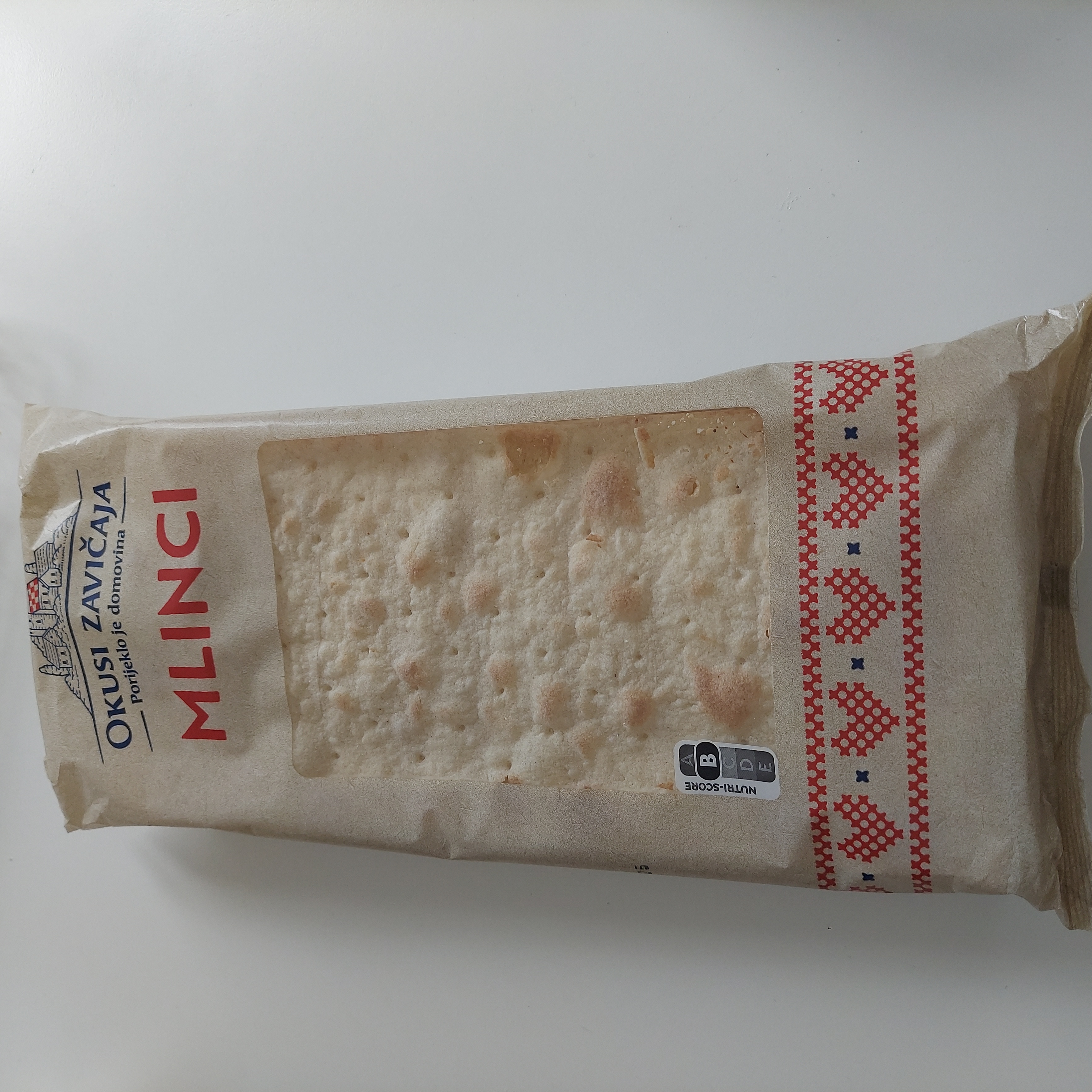
If in Zagreb and northern Croatia you ask what is eaten for Christmas, the answer comes without hesitation: turkey with mlinci. A golden-roasted turkey with crispy skin, and beside it mlinci — thin, twice-baked sheets of dough that are broken, briefly boiled and soaked in the roasting fat, absorbing all its juices. That combination, seemingly simple, is one of the most perfect in Croatian cuisine: juicy meat and mlinci that are at once soft, crisp at the edges and full of the flavour of the roast.
Turkey with mlinci (in Međimurje pura z mlinci) is the festive dish of Zagreb, Zagorje, Međimurje and the whole north — the backbone of the Christmas table, but also the star of St Martin's Day, when poultry is traditionally roasted alongside the new wine. In this recipe we present the classic method: from marinating the turkey, through patient roasting and basting, to mlinci prepared the way it is done in Zagorje homes — in the roasting fat.
 Mlinci — thin, twice-baked sheets of dough, the indispensable side to turkey. Photo: Wikimedia Commons (source file)
The turkey the Paulines brought
The story of turkey with mlinci reaches back centuries. It is believed that the raising of turkeys in northern Croatia was spread in the 16th and 17th centuries by the Paulines, monks devoted to education and agriculture. From that farming there arose over time a native breed as well — the Zagorje turkey — which, raised on free grazing in the Zagorje hills, is still considered a top-quality, protected product today.
The mlinci clung naturally to the turkey, an ancient peasant "bread" of flour, water and salt, rolled thin and baked on the stove plate. Their name comes from mlin (mill), recalling the time when freshly ground flour was the foundation of every household. Zagorje mlinci today carry a European protected geographical indication too, and the pairing of turkey and mlinci has become one of the most recognisable Croatian dishes of all.
A holiday dish: Christmas and St Martin's
In northern Croatia turkey with mlinci means a holiday. It is the centrepiece of Christmas lunch — in many families it is unthinkable that the turkey bought on Christmas Eve should be missing — but also the main dish of St Martin's Day (11 November), when the new wine is "christened" and the end of the harvest is celebrated, traditionally with roast poultry and mlinci soaked in its fat.
That holiday aura is part of the dish's charm: turkey with mlinci is not an everyday lunch but a celebration, a dish around which the extended family gathers, with noodle soup to start and Russian salad on the side. Its smell from the oven — of roast skin, marjoram and fat — is, for northerners, the smell of Christmas as much as the smell of pine.
Ingredients
For the turkey (6–8 people):
- 1 turkey of 4–5 kg (or large turkey drumsticks and thighs, about 3 kg)
- 100 g butter or lard
- 4–5 cloves of garlic
- 2 tablespoons marjoram or a bunch of fresh (the traditional turkey seasoning)
- coarse salt, pepper
- 2 dl white wine + 2 dl water or stock for basting
- 1 apple or onion (in the cavity, for juiciness)
For the mlinci:
- 500 g mlinci (shop-bought Zagorje or homemade: 500 g flour, 2.5 dl water, salt — rolled thin and baked on a dry plate/pan until bubbly)
- fat and juices from roasting the turkey
- salt
Preparing the turkey
- Marinate a day ahead. Wash the turkey, dry it and, inside and out, rub it with a mixture of salt, pepper, pressed garlic, marjoram and softened butter (carefully push some of the butter under the breast skin too). Cover and leave in the fridge overnight.
- Slowly into the oven. Put the turkey in a deeper roasting tray breast-side up, drop the apple or onion into the cavity, and baste with wine and water. Cover with foil or a lid and roast at 160–170 °C, allowing roughly 45 minutes per kilogram.
- Baste. Every 30 minutes pour the juices from the tray over the turkey — that is the secret of juicy meat. Add a little water as needed.
- Golden skin. For the last 30–45 minutes uncover the turkey, raise the heat to 200 °C and roast until the skin becomes golden and crisp, still basting.
- Rest the meat. Take out the roasted turkey, cover it with foil and let it rest for about 20 minutes before carving — the juices thus stay in the meat. Save the fat and juices from the tray for the mlinci.
Preparing the mlinci
- Break the mlinci into palm-sized pieces and put them in a large bowl.
- Pour over boiling salted water and leave just 2–3 minutes to soften — they must not overcook. Drain them.
- Soak in the fat. Transfer the drained mlinci into the tray with the fat and juices from roasting the turkey and stir well so each piece absorbs the flavour.
- Roast. Return the tray of mlinci to a hot oven for 10–15 minutes, so the edges lightly roast and take on a crisp crust. Serve at once, with the carved turkey.
Tips for perfect turkey with mlinci
- Marjoram is the dish's signature — it is precisely this that gives the turkey that recognisable northern smell; do not substitute it.
- Butter under the skin of the breast keeps the driest part of the turkey juicy.
- Do not rush the temperature: long, moderate roasting with basting gives both juicy meat and crisp skin.
- Mlinci love fat — the better you soak them in the roasting juices, the closer to perfection they are; dry mlinci are a missed moment.
- Rest the meat before carving; a turkey carved straight from the oven loses its juices on the board instead of on the plate.
What to serve with it
The classic accompaniment to turkey with mlinci is a green salad with pumpkin-seed oil or a cabbage salad, and on the holiday table often Russian salad too. Before the main course, homemade noodle soup is served, and with the turkey goes a glass of graševina, chardonnay or — on St Martin's Day — the new wine.
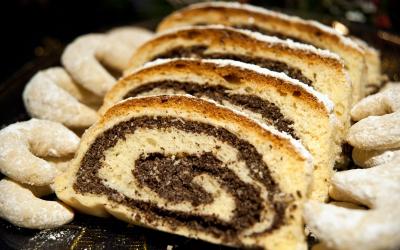
For dessert, the north of Croatia sticks to the classics: orehnjača, makovnjača or apple strudel. Such a composed lunch — soup, turkey with mlinci, salad and cake — is still the gold standard of the holiday table from Zagreb to Međimurje.
The most common mistakes
The most common mistake is a dry turkey — the result of too-high a temperature and too little basting. Roast patiently, covered most of the time, and baste regularly. The second is overcooking the mlinci: they are only briefly boiled (rehydrated) and then soaked in fat; too long in the water and they turn to mush. The third trap is too little seasoning — the turkey is a large bird and demands generous salting and marinating, best overnight.
And finally, do not throw away the roasting juices thinking the job is done: without them the mlinci stay ordinary boiled sheets of dough. It is precisely that fat, full of the flavour of turkey, marjoram and garlic, that makes the mlinci what the whole dish is remembered for.
Conclusion
Turkey with mlinci is a perfect example of how a great dish arises from few ingredients: a good turkey, flour, water and — most important — the roasting juices that bind it all together. It is the taste of northern Croatian holidays, of Christmas and St Martin's, a dish left to us by the Paulines and the Zagorje grandmothers, and one that still gathers families around the table today. Roast it slowly, soak the mlinci without stinting and serve with a green salad and a glass of graševina. When the skin crackles under the knife and the mlinci soak up the last drop of fat, you will understand why the north of Croatia says of this dish simply: there is no holiday without it.