Rožata: Dubrovnik's creamy pride with the scent of rose
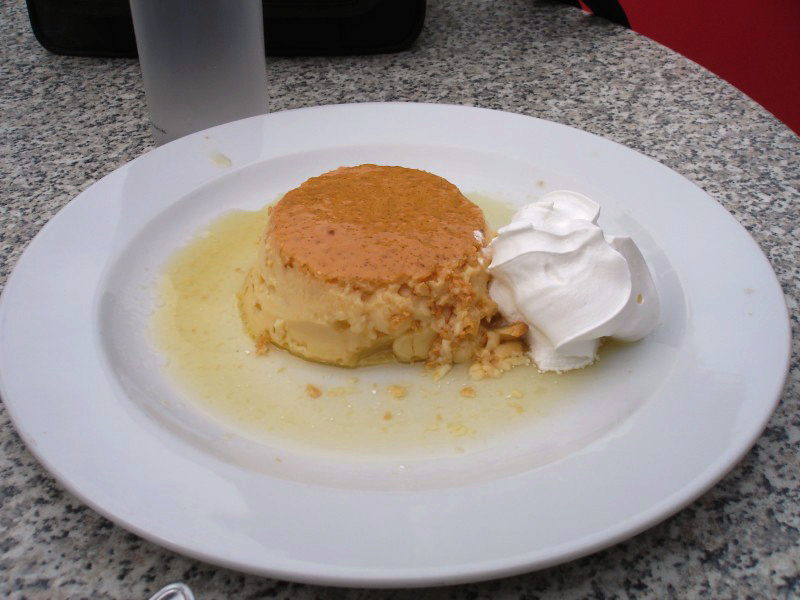
At the end of every proper Dubrovnik meal comes this: rožata — a trembling, silky custard of eggs and milk, crowned with a dark, amber caramel that streams in thin rivulets down its sides. At first glance a relative of French crème caramel or Spanish flan, rožata is nonetheless something all its own — and that thanks to one scent: rozalin, a local liqueur of rose petals, from which, they say, it got its name.
Rožata is a dessert of the old Dubrovnik gentry, a dish made in the City for centuries and mentioned in the cookbooks and households of the Republic of Ragusa. Its strength is in its simplicity — eggs, milk, sugar — and in patience: the custard is baked slowly, in a water bath, then chilled for hours before it is ceremoniously turned out onto a plate. In this recipe we present the classic Dubrovnik rožata, with instructions for a perfect caramel and a custard without bubbles.
 Rožata, the Dubrovnik caramel custard. Photo: Wikimedia Commons (source file)
A dessert of the old Republic
Rožata (in the City often "rozata" too) belongs to the family of caramel custards that spread across the Mediterranean along the sea routes — but Dubrovnik made it its own. In a city that was for centuries a wealthy maritime republic, with a cuisine where East and West met, rožata became the dessert of festive meals, weddings and the Sunday lunches of the better houses.
Its signature, rozalin (rozulin), is a liqueur that the Dubrovnik ladies made from rose petals picked in their own gardens, with brandy and sugar — a scent that once filled every house from Konavle to Pelješac. A drop of rozalin in the custard separates rožata from all its worldly relatives and gives it that gentle, floral tone by which it is remembered. If you have no rozalin, a homemade prošek version or a little rose water with a drop of rum will do — but a real rožata smells of rose.
The secrets of the custard and the caramel
Rožata is simple, but it does not forgive carelessness. The first secret is the caramel: the sugar is melted slowly, without stirring, to a deep amber colour — too pale is bland, too burnt is bitter. The hot caramel is poured immediately into the mould and swirled to coat the bottom and sides.
The second secret is a custard without air: the eggs are mixed with the sugar, not beaten — froth from over-whisking creates bubbles and a porous texture. The third is the water bath (bain-marie): the mould is baked in a dish of hot water, at a moderate temperature, so the custard thickens gently, without boiling — because a boiled rožata gets a "sponge" instead of silk. And the fourth: chilling. Rožata is turned out only once completely cooled, ideally after a night in the fridge — then the caramel slides and the custard stands firm and proud.
Ingredients
For 6 people (a ~1 l mould or 6 smaller ramekins):
Caramel:
- 150 g sugar
- 2 tablespoons water
Custard:
- 5 eggs + 2 egg yolks
- 120 g sugar
- 7 dl full-fat milk
- 1 sachet vanilla sugar or a vanilla pod
- grated zest of half a lemon
- 2–3 tablespoons rozalin (or: 1 tablespoon rum + a teaspoon of rose water)
- a pinch of salt
Preparation
- Caramelise the sugar. In a heavy-bottomed pan melt the sugar with the water over medium heat, without stirring (you may tilt the pan in a circle), until it gets a deep amber colour. Pour immediately into the mould and swirl it so the caramel coats the bottom and part of the sides. Leave it to set.
- Heat the milk. Heat the milk with the vanilla and lemon zest to just below boiling, then take off the heat and leave 10 minutes to infuse and cool.
- Mix the custard. Lightly mix the eggs, yolks, sugar and salt with a whisk — just to combine, without beating a froth. While mixing, gradually pour in the warm (not hot!) milk, then add the rozalin.
- Strain. Strain the custard through a sieve directly into the mould over the caramel — straining removes strands of white and excess bubbles.
- Bake in a bain-marie. Place the mould in a deeper tray, pour hot water to halfway up the mould and bake at 150–160 °C for about 45–55 minutes. Rožata is done when it is firm at the edges and still trembles gently in the centre; a knife stuck in near the edge comes out clean.
- Chill thoroughly. Cool at room temperature, then in the fridge for at least 4 hours, best overnight.
- Turn out. Run a knife around the edge, dip the mould briefly in hot water, cover with a plate and turn out decisively. The caramel will pour like a sauce. Serve cold.
Tips for a perfect rožata
- Watch the caramel, do not time it — a dark-amber colour is the sign; a second too long and it is bitter.
- Do not beat the eggs to a froth: rožata should be smooth and thick, and bubbles are its greatest enemy.
- The water in the bath must not boil — if it does, lower the oven; boiling "pierces" the custard.
- Strain the custard — a small step, an enormous difference in the silky texture.
- Patience with the chilling: turned out warm, rožata falls apart; left overnight — it is perfect.
What to serve with it
Rožata is served cold, on its own or with a little whipped cream and a cherry or rose petal to garnish. With it in Dubrovnik goes a glass of prošek or of rozalin itself, and with coffee it is the queen of every meal. On festive tables it is often found alongside dried figs, arancini (candied orange peel) and other Dubrovnik sweets.
As a dessert prepared a day ahead, rožata is also a perfect choice for guests: while you serve the main course, it waits patiently in the fridge for its famous moment of turning out.
The most common mistakes
The most common mistake is a porous, spongy custard — the result of over-beaten eggs, too hot an oven or a boiling bath; rožata loves gentleness and a low temperature. The second is a pale or burnt caramel: pale has no flavour, burnt is bitter — aim for deep amber. The third is turning out too early: a warm rožata has no firmness and breaks; chill it for hours.
And do not forget the rozalin or at least its fragrant substitute — a rožata without a floral note is technically a flan, and the people of Dubrovnik would only raise a reproachful eyebrow at that. With these small touches, success is guaranteed even the first time.
Conclusion
Rožata is proof that the noblest desserts are often the simplest — eggs, milk, sugar and a drop of scent from the Dubrovnik gardens. In its trembling custard and dark caramel hides the centuries-old elegance of the City, the patience of old kitchens and the scent of roses above stone walls. Make it a day ahead, chill it overnight and turn it out ceremoniously before your guests — that moment, when the caramel flows down the silky custard, is a little Dubrovnik theatre on your table. And the first bite will explain to you why the Republic, among all its treasures, also kept the recipe for rožata.