Northern Velebit National Park: the wild heart of Croatia's greatest mountain
Velebit is a mountain that occupies a place in the Croatian consciousness that no other has — nearly one hundred and fifty kilometres long, it is the country's spine, the border between the sea and the interior, a source of legends and a symbol of endurance. And if there is a place where Velebit shows itself in its wildest, purest form, it is its northern end: Northern Velebit National Park.
Declared only in 1999, this is the youngest Croatian national park — and, at the same time, one of the most preserved. In just 109 square kilometres an almost unimaginable diversity is crammed here: labyrinths of stone towers, some of the deepest caves in the world, ancient beech old-growth forests, a mountain botanical garden and vistas from which the Alps and the Adriatic islands can be seen at once. This is a park for those who do not merely look at wilderness, but step into it.
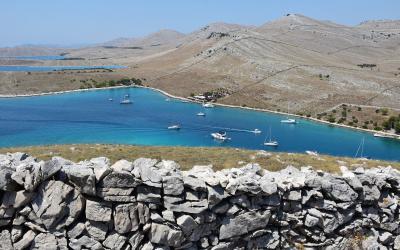
 The mountain landscape of Northern Velebit. Photo: Wikimedia Commons (source file)
The kukovi: a stone labyrinth in the heart of the park
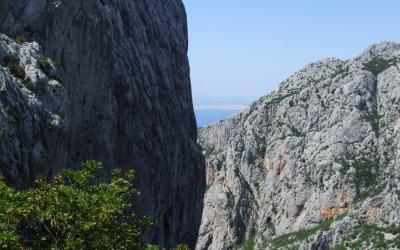
The heart of the park, and its most magnificent treasure, is formed by the Rožanski and Hajdučki kukovi — an unreal landscape of stone towers, spires and ridges that jut above the surrounding forest like petrified waves. "Kuk" is the folk name for such a solitary stone mass, and here there are dozens of them: the area counts around forty peaks higher than one thousand six hundred metres, interlaced with chasms, karren and hidden passages.
They are so valuable and sensitive that the Rožanski and Hajdučki kukovi have been declared a strict reserve — the highest category of protection in Croatia. This means that access is forbidden to ordinary visitors, and the reserve is open only for scientific research and, with an escort, for educational visits. Some parts of this stone labyrinth are so wild and inaccessible that, it is believed, no human foot has ever stepped on them. Along its edge, however, runs one of the most beautiful trails in the country — so the wilderness can be felt even without entering the reserve itself.
The Premužić Trail: a masterpiece of stone
If Northern Velebit has an artery, it is the Premužić Trail — a famous hiking path that many consider one of the most beautiful in the world. Built between 1930 and 1933, to the design and under the direction of the forestry engineer Ante Premužić, it runs a full fifty-seven kilometres along the ridge of Velebit, of which about sixteen kilometres pass through the national park itself.
What makes the Premužić Trail a masterpiece is not only its beauty but the building skill: the entire path was built with the drystone technique, without a single drop of mortar, so skilfully fitted into the terrain that it works its way, on a gentle gradient, even through the wildest parts of the mountain, including the edge of the kukovi. Because of its moderate difficulty it is accessible even to less experienced hikers, and from it open unforgettable views of the sea and islands on one side and the enormous stone towers on the other. The trail is today protected as a cultural asset as well.
Lukina jama: a glimpse into the abyss
Beneath the surface of Northern Velebit hides a world just as spectacular as the one on the peaks. In the area of the kukovi lies Lukina jama, one of the deepest caves in the world, with a depth of more than one thousand three hundred metres. It was discovered in 1992 and named after Ozren Lukić, a young speleologist and mountaineer who that same year, as a volunteer in the Croatian War of Independence, was killed by a sniper's bullet.
Lukina jama is not a tourist attraction — descending into it is a feat for top speleologists, and its depths hide ice halls and an underground world almost entirely unknown to man. But the very fact that one of the planet's deepest chasms opens beneath the feet of hikers on the Premužić Trail gives Northern Velebit a dimension that inspires awe. This end of Velebit is, in fact, a true treasury of caves and chasms, among the most significant for world speleology.
The Velebit Botanical Garden and endemic flora
At Zavižan, in the heart of the park, lies an unexpectedly delicate treasure — the Velebit Botanical Garden, founded in 1967 on the initiative of the botanist Fran Kušan. On two hectares of mountain meadows and screes, a large part of Velebit's flora is gathered here, neatly labelled, like a living classroom under the open sky. The garden is protected as a monument of garden architecture.
Velebit is otherwise a true kingdom of endemics — plants that grow only here and nowhere else in the world. Among them stands out the Croatian sibiraea (the Velebit degenia is its better-known relative from other parts of the mountain), for which the special Visibaba botanical reserve was established. This rich and unique flora is one of the main reasons Northern Velebit acquired national-park status in the first place.
Beech old-growth forests under UNESCO protection
Among the kukovi also hide primeval beech forests of a kind very few remain in Europe. In 2017 these old-growth forests, within the strict reserve of the Rožanski and Hajdučki kukovi, together with those in neighbouring Paklenica and in a number of other European countries, were inscribed on the UNESCO World Heritage List as part of the protected ancient beech forests of Europe.
These are forests untouched by man for centuries, in which the trees, exposed to abundant snow, low temperatures and strong winds, take on characteristic, bent shapes. These forests are not only beautiful but scientifically invaluable — in them is recorded the history of Europe's forests from the last ice age onward.
At the crossroads of sea and land
Like its southern neighbour Paklenica, Northern Velebit too stands at the border of worlds. The mountain here divides the mild, Mediterranean climate of the Adriatic from the harsh, continental Lika in the hinterland — so on a single ridge three climates meet: Mediterranean, continental and mountain. Because of this the vegetation changes abruptly: the seaward slope is bare, scoured by the bura, while the one facing the interior is densely forested.
It is precisely the bura — the fierce, cold northern wind that on Velebit reaches some of the highest speeds in Europe — that shaped this landscape and its character. The reward for the visitor who climbs the ridge on a clear day is a breathtaking view: on one side the blue Adriatic with the islands of Rab, Pag and Krk, on the other an endless stone sea of kukovi and, in the distance, mountain ranges all the way to the Alps.
Wild inhabitants
Northern Velebit is one of the last European refuges of large beasts. In its forests and kukovi live the bear, the wolf and the lynx, alongside chamois, red deer and roe deer. The golden eagle and falcons circle the sky, and the dense, quiet forests are home to the capercaillie and numerous other birds.
That wilderness is neither arranged nor tamed — it is real. A large part of the park has deliberately been left without roads and infrastructure, precisely so that nature can run its course. For the visitor this means an experience of rare authenticity: the feeling of walking through a landscape that belongs to the animals and the mountain as much as to people.
Through the seasons
Northern Velebit is a park of a short but intense hiking season. Spring arrives late — snow lingers deep into the year on the higher parts — and when it melts, the meadows around Zavižan bloom. Summer (from late June to September) is the main time for hikers: the days are warm, and the Premužić Trail and the botanical garden are at their most accessible. Autumn brings the golden colours of the beech forests and clear air, but also the first cold spells. Winter is harsh: snow, ice and the bura make most of the park inaccessible to all but the most experienced and best-equipped.
Why Northern Velebit is different from the other parks
Northern Velebit differs from most Croatian parks in one key decision: a large part of it has been deliberately left wild. There are no asphalt paths through a canyon here, no boats running to attractions; there is stone, wind, forest and trails that demand your own feet. It is a park that does not try to be comfortable — and that is precisely where its greatness lies.
While Plitvice and the Krka welcome millions of visitors, Northern Velebit remains a refuge of peace and solitude, a place where you can walk for hours without meeting anyone. For hikers, lovers of wilderness and everyone seeking an authentic, almost ascetic encounter with nature, this is perhaps the most rewarding of all the Croatian parks. It is not easy — but for that very reason it leaves the deepest mark.
A few curiosities to close
Northern Velebit abounds in facts that inspire awe. Although it is the youngest Croatian national park, it hides within it some of the deepest caves in the world and one of the most strictly protected reserves in the country, to which access is granted almost exclusively to scientists. The Premužić Trail, built in the 1930s solely with the drystone technique, is still considered one of the most beautiful hiking paths in the world. The bura that lashes its ridge reaches some of the highest wind speeds in Europe. And from that same ridge, on a clear day, the Adriatic islands and the distant peaks of the Alps can be seen at the same time.
All this makes Northern Velebit a park that is not toured in passing — but conquered, remembered and, almost always, longed to be repeated.
From reserve to national park
The protection of this part of Velebit was built up gradually, layer by layer. As early as 1967 and 1969 the most valuable areas of the kukovi were placed under strict protection as a reserve, and the Velebit Botanical Garden was founded in 1967. The whole of Velebit was given the status of a nature park, and scientists for decades pointed to the exceptional value of its northern end — the wealth of endemics, the untouched old-growth forests and the unique karst relief of the kukovi.
These efforts bore fruit in 1999, when the area was raised from the category of reserve to a full national park. With that, Northern Velebit became the eighth and youngest Croatian national park. Its value has been confirmed internationally as well: alongside UNESCO's protection of the beech old-growth forests, the park has also been recognised as a European destination of excellence, proof that preserved wilderness and responsible visits can be harmoniously combined.
A practical guide to visiting
- Getting there. The main entrance and central starting point is Zavižan in the heart of the park, reached by a mountain road from the direction of Krasno and Senj. The visitor centre House of Velebit is located in the village of Krasno.
- Tickets and information. Tickets are bought online or at the entrance; in Krasno and at Zavižan maps and information on trails, conditions and weather are available.
- Trails. For most visitors the core of the experience is part of the Premužić Trail and short tours around Zavižan (for example to the Vučjak peak) and a visit to the Velebit Botanical Garden. The strict reserve of the kukovi is not accessible without a special permit and escort.
- Footwear and gear. Hiking boots, layered clothing and wind protection are essential — the weather on Velebit changes suddenly, and the bura can be dangerous. Bring enough water and food, as the infrastructure is deliberately sparse.
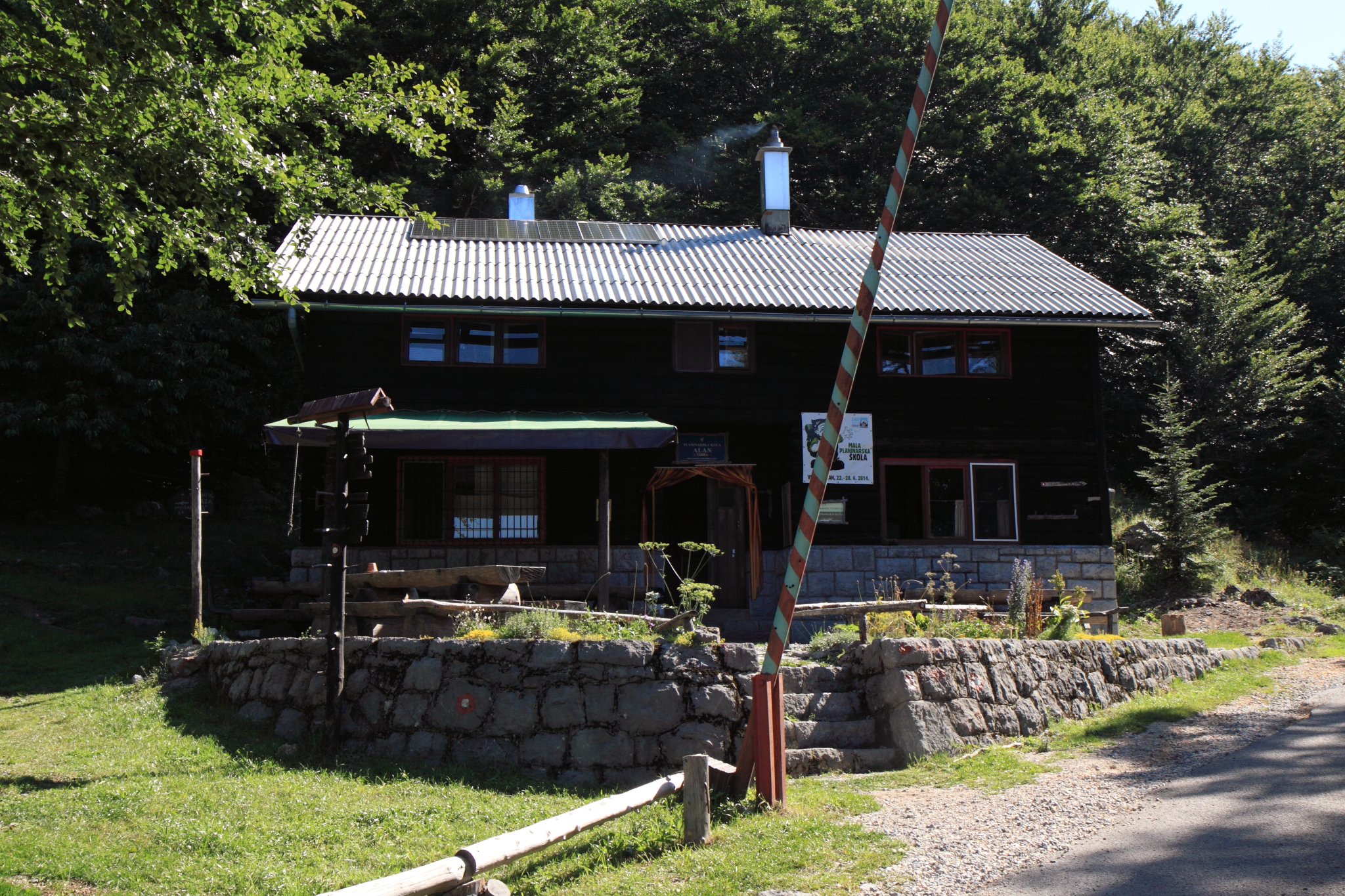
- Accommodation. Within and around the park there are mountain lodges and shelters (Zavižan, Alan) and accommodation in Krasno; capacities are limited, so booking is advisable.
- Rules. Move only on marked trails, do not enter the strict reserve, do not leave litter and bear in mind that you are in the habitat of large beasts.
- Combine with the surroundings. The proximity of Senj, Kvarner and the islands, and the neighbouring Paklenica National Park to the south, make it possible to experience the whole of Velebit as one great mountain journey.
Conclusion
Northern Velebit is the youngest Croatian national park, but by the impression it leaves it feels the oldest — like a piece of the world where time runs differently. Here wilderness is not served but earned: by the climb, the effort and patience. And the reward is unique — to walk the Premužić Trail while on one side stretches the blue sea and on the other a stone sea of kukovi is to feel Velebit as it truly is: vast, harsh, magnificent and entirely its own. Whoever once stands on that ridge does not easily forget the feeling of having stood, if only for a moment, on the roof of Croatia.