Langoustines na buzaru: the Adriatic king of bread-dipping
There are dishes eaten with cutlery, and there are dishes eaten with the hands, the heart and half a loaf of bread. Langoustines na buzaru are the undisputed king of the latter group. A handful of fresh Kvarner langoustines, olive oil, garlic, wine, parsley and breadcrumbs — fifteen minutes on the heat — and before you is a dish over which, in taverns from Opatija to Dubrovnik, no one talks: claws are sucked, fingers licked and bread dipped until the plate gleams.
"Buzara" is not a dish but a method — the quick simmering of seafood in its own juices with oil, wine and garlic. Mussels, clams and crabs go na buzaru too, but langoustines are its crown, especially the legendary Kvarner langoustines, which many consider the best in the world. In this recipe we present both classic versions — white and red buzara — and all the tricks for that thick, fragrant sauce in which half the pleasure lies.
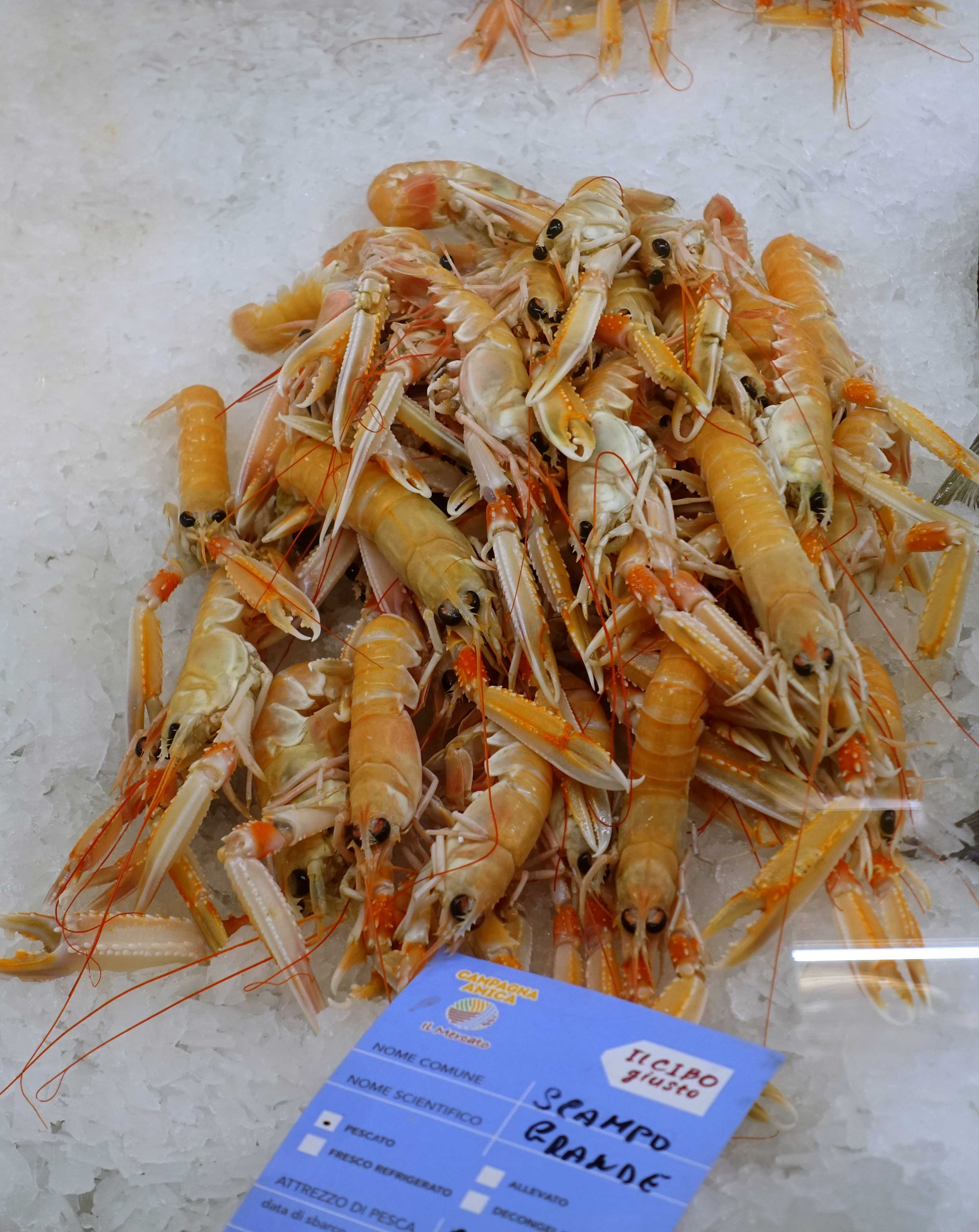
 Fresh langoustines — the foundation of every buzara. Photo: Wikimedia Commons (source file)
A dish of fisherman's speed
Buzara was born on the boats and in the fishermen's kitchens, where the fresh catch was prepared as quickly and simply as possible: in a single pan, with whatever was at hand — oil, garlic, wine and a handful of stale-bread crumbs to thicken the sauce. The name, they say, comes from the word for the vessel or for the simmering itself, and it spread across the whole northern Adriatic, from Istria and Kvarner southward.
It is precisely that speed that makes buzara special among the great Adriatic dishes: while brudet and gregada demand hours, buzara is done before the table is set. But do not let the speed fool you — buzara does not forgive poor ingredients. Its three pillars are fresh langoustines, good olive oil and real wine; everything else is a detail.
The Kvarner langoustine: the gold of the Adriatic
When one speaks of buzara, one speaks of the Kvarner langoustine (Nephrops norvegicus) — a crustacean of tender, sweetish flesh that lives in the muddy bottom of the Kvarner Gulf and that gourmets rank among the very best in the world. Their soft shell and juiciness are the reason they go into buzara whole, uncleaned: from the heads and shells all the sweetness of the sea enters the sauce.
If you do not have Kvarner ones, other fresh (or well-frozen) langoustines will do — but the rule remains: the fresher, the better the buzara. A fresh langoustine smells of the sea, is firm and has bright eyes; anything that smells "fishy" and milky, leave on the counter.
White or red?
There are two schools of buzara. White buzara — older and more puristic — is made only with oil, garlic, white wine, parsley and crumbs; its sauce is golden, winey and lets the langoustine be the main star. Red buzara adds a spoonful of tomato paste or peeled tomatoes, so the sauce is ruddy, fuller and sweeter — a favourite for dipping.
The debate over which is "the real one" has run for decades and will not end with this article either. Our advice: the first time make white, to get to know the pure flavour of the langoustine, and red the second time. The recipe below covers both — the difference is a single spoonful.
Ingredients
For 4 people:
- 1 kg fresh langoustines (whole, with head and shell)
- 1 dl good olive oil
- 5–6 cloves of garlic, finely chopped
- 2 dl dry white wine
- 2–3 tablespoons breadcrumbs (from homemade bread)
- 1 bunch of parsley, chopped
- freshly ground pepper, a little salt
- for red buzara: 1 full tablespoon tomato paste or 2–3 tablespoons peeled tomatoes
- optional: a pinch of chilli, a teaspoon of cognac or brandy for a "kick"
Preparation
- Rinse the langoustines. Briefly rinse the langoustines in cold water and drain. Do not clean them — they go into the pan whole.
- Scent the oil. In a wide pan (large enough for the langoustines to fit roughly in one layer) heat the olive oil and, over moderate heat, briefly fry the garlic — just until fragrant, never until it darkens.
- Add the langoustines. Drop in the langoustines and stir/shake for 2–3 minutes, until they turn red and begin to release their juices. (For red buzara: stir in the tomato paste now and fry it briefly.)
- Deglaze with wine. Add the wine (and the optional shot of cognac), raise the heat so the alcohol evaporates, then lower it and simmer covered for 5–6 minutes, shaking the pan.
- Thicken the sauce. Scatter with the breadcrumbs and most of the parsley, mix by shaking and simmer a further 2–3 minutes so the sauce thickens into a velvety sauce. Pepper; add salt only after tasting — the langoustines are salty from the sea.
- Serve at once. Scatter with the rest of the parsley and bring the pan straight to the table, with a mountain of bread. Buzara does not wait.
Tips for perfect buzara
- Langoustines whole, with heads — all the sweetness is in the heads; cleaned tails give a pale sauce.
- Do not overcook: a langoustine is done in about ten minutes; cooked too long it turns rubbery and "empty".
- Crumbs from homemade bread, not the breaded crumbs from a bag — they thicken the sauce and give it body.
- The pan is shaken, not stirred — a spoon breaks the claws and heads; a circular shake is the law.
- Prepare twice as much bread as you think you need. Seriously.
What to serve with it
Langoustines na buzaru are served in the pan or a deep plate, with the sauce, with obligatory homemade bread — and are eaten with the hands, with a bowl for the shells and moist napkins. With them goes cold malvasia, pošip or žlahtina (Vrbnik's, if you want to stay on Kvarner). Some also love polenta with buzara, onto which the sauce is spooned.
Buzara is a dish of company and mess: fingers are greasy, shells fly, conversation stops only while a langoustine head is being sucked. Whoever stays clean at the table — did not eat properly.
The most common mistakes
The greatest mistake is an overcooked langoustine — after ten-odd minutes on the heat the flesh tightens and loses its sweetness; buzara is a sprint, not a marathon. The second is scorched garlic: dark garlic is bitter and ruins the whole sauce; fry it only until fragrant. The third is too little sauce or too thin a sauce — do not skimp on the oil and wine, and add the crumbs gradually until the sauce coats the spoon.
Watch the salt too: langoustines, wine and crumbs all carry their own, so salt only at the end, if at all. And finally — do not serve buzara "neatly", with cleaned tails on a plate. Buzara without sucking the heads and dipping bread is not buzara; it is a missed opportunity.
Conclusion
Langoustines na buzaru prove that top-class cooking can be ready in fifteen minutes — if the ingredients are right and the hand is light. In that pan full of red langoustines and fragrant sauce fits the whole Adriatic: the freshness of the sea, olive oil, wine and that Mediterranean joy of a dish shared with the hands. Get the freshest langoustines you can find, do not skimp on the bread and wine and bring the pan to the middle of the table. The rest will happen on its own — as it has on the Adriatic for centuries.