Slavonian čobanac: the fiery cauldron of the plain
In Slavonia the most important things happen around the cauldron. When a fire is lit in the yard, a copper cauldron is hung and the smell of onion and paprika begins, it is a sign that something is being celebrated — a birthday, the harvest, a match or simply Saturday. And in that cauldron most often simmers čobanac: a thick, red, slightly spicy pot of several kinds of meat, a dish that grew out of the shepherd's daily life into a gastronomic symbol of all of Slavonia and Baranja.
Its name comes from the čobani — the shepherds who cooked it in the open for centuries, from whatever meat was at hand, with onion and paprika as the only seasonings. That is why a real čobanac still respects those rules today: several kinds of meat, plenty of onion, good homemade ground paprika, a cauldron and — time. In this recipe we present a classic Slavonian čobanac, along with a version for the kitchen if you do not have a cauldron and yard at hand.
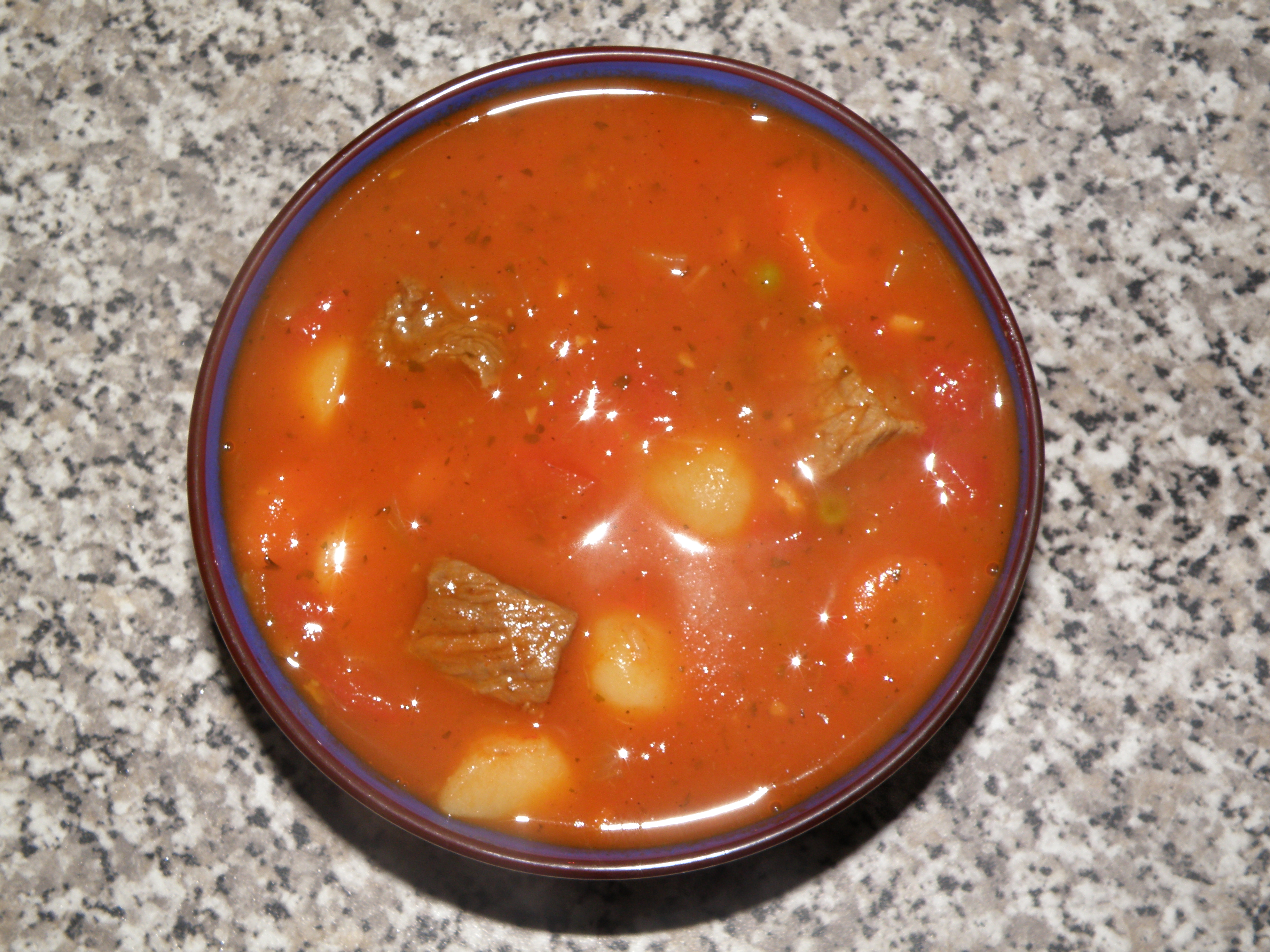
 A thick cauldron pot with paprika, as čobanac also is. Photo: Wikimedia Commons (source file)
A shepherd's dish with character
Čobanac belongs to the great Pannonian family of cauldron dishes, kin to Hungarian goulashes and bogrács — but Slavonians will tell you at once that čobanac is not goulash. The difference is in the spirit: goulash is an urban pot dish, and čobanac a shepherd's dish from the fire, thinner than goulash but thicker than a broth, always with several kinds of meat and always with a character given by homemade red paprika, often boosted with a hot pepper.
The shepherds cooked it from what they had: mutton, pork, beef, and when they could — game too. That rule of mixing meats has remained to this day: it is held that a real čobanac must have at least three kinds, because each gives its own — beef fullness, pork juiciness, mutton or game depth. In many recipes pork trotters are obligatory too, their gelatine giving the sauce thickness and sheen.
The cauldron, the fire and patience
Čobanac can be cooked on the stove too, but its true home is a cauldron hung over an open fire. The fire gives the dish a gentle smoky note, and cooking in the open turns the preparation into a social event: people stand around the cauldron, stir, taste, debate and toast for hours. Slavonia also holds numerous čobanac-cooking contests, where the "cauldron masters" defend the honour of their recipes.
The second rule is patience: čobanac simmers for two to three hours, slowly, with occasional stirring and topping up. The meat must soften until it falls apart, the onion melt completely into the sauce, and the paprika bind it all into that recognisable, deep red colour. A čobanac cooked in a hurry — is not čobanac.
Ingredients
For 8–10 people (a ~8 l cauldron or a large pot):
- 2.5–3 kg mixed meat: beef (the most), pork (shoulder/neck), mutton or game; optionally 1–2 pork trotters for thickness
- 1 kg onions (the rule: at least 300 g onion per 1 kg meat), coarsely chopped
- 4–5 cloves of garlic
- 3 tablespoons sweet ground red paprika (homemade, good quality)
- 1 tablespoon hot ground paprika + 1–2 dried hot peppers (to taste)
- 2 dl reduced (sieved) tomato
- 2 dl red or white wine
- 1–2 bay leaves, peppercorns, salt
- 1 dl oil or a tablespoon of lard
Preparation (cauldron or pot)
- Melt the onion. In lard or oil, over moderate heat, sauté the coarsely chopped onion with stirring for 20–30 minutes — until it almost falls apart. The onion is the foundation of čobanac's thickness, so do not rush it.
- Add the meat. First the firmer kinds (beef, mutton, trotters), cut into larger cubes. Sauté with stirring until the meat releases its liquid and browns, then add the pork and garlic.
- Paprika — carefully. Take the cauldron off the strongest heat (or lower it), stir in the sweet and hot paprika and stir just 20–30 seconds — the paprika must not scorch, or it turns bitter. Immediately deglaze with the wine.
- Pour in and simmer. Add the tomato, bay leaf, pepper and hot peppers and hot water — just enough to barely cover the meat. Simmer over low heat for 2–3 hours, stirring occasionally and topping up so the čobanac stays "goulash-like", neither soup nor mush.
- Salt gradually. After an hour and a half start salting, in two or three goes, tasting. Near the end adjust the heat.
- Check. Čobanac is done when the meat falls apart and the sauce is thick, dark and glossy. Take off the heat and let it rest about 15 minutes.
Tips from the cauldron masters
- The onion is the secret weapon — its long sautéing and melting give čobanac natural thickness, without any thickeners.
- Paprika never on high heat: scorched paprika is bitter and irreparable; so always take the cauldron off before adding it.
- Several kinds of meat is not a whim but a rule — the combination gives a complexity a single meat cannot.
- Add hot water, never cold, so as not to interrupt the cooking.
- Heat to suit the company: add the hot peppers whole and remove them when it is spicy enough — that way everyone at the table survives.
What to serve with it
Traditionally čobanac is eaten with bread only — fresh, homemade, to mop up the thick sauce — because the shepherds had no other side dishes anyway. Today many also love it with wide noodles or little dumplings, but bread remains the law. With it goes a glass of Slavonian graševina or, for red souls, frankovka, and before the meal — as it goes in Slavonia — a shot of homemade plum brandy.
Čobanac is a dish for a large gathering: it is cooked in large quantities, eaten in the open and lasts for hours. And like sarma, reheated the next day — it is only better.
The most common mistakes
The greatest sin is scorched paprika — half a minute on too-high heat is enough for the whole cauldron to turn bitter; so always add the paprika off the heat and deglaze immediately. The second mistake is skimping on the onion: without plenty of well-melted onion, čobanac stays thin and empty. The third is haste — meat not cooked long enough stays tough and the flavours unmarried; čobanac demands its two or three hours and there is no shortcut here.
Watch the heat too: it is easier to add than to take away, so start moderate. And finally — do not turn čobanac into a soup. Top up little by little; a real čobanac is thick enough to scoop with a spoon and wipe with bread.
Conclusion
Slavonian čobanac is more than a dish — it is an event, a reason to gather and the pride of every host with a cauldron in the yard. In it simmer centuries of shepherd tradition, the abundance of the Pannonian plain and that Slavonian generosity that knows no small portions. Light a fire or at least turn on the stove, do not skimp on the onion and paprika, give it time — and serve it with bread, wine and good company. Because čobanac, as they say in Slavonia, is not cooked for one: čobanac is cooked for everyone.