Učka Nature Park: the green mountain that watches over Kvarner
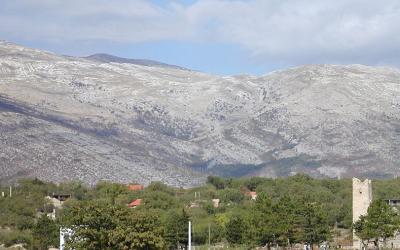
When you look from the coast toward the interior of Istria, your gaze almost always ends at the same point — on the vast, rounded ridge of Učka rising above the Opatija Riviera. For Istrians this mountain is not merely a backdrop; it is a protector, a landmark and a symbol, a mountain that for centuries fed, sheltered and inspired the people at its foot. It is even said that Opatija owes its mild climate precisely to Učka, which, like a vast wall, shields it from the fiercest summer heat.
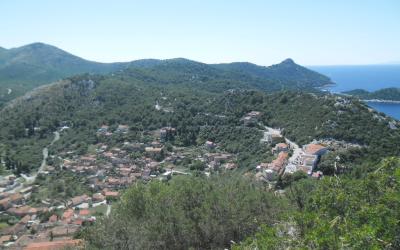
Protected as a nature park, Učka is the highest Istrian mountain and one of the greenest coastal mountains in Croatia. In this it differs from all the other Adriatic mountains: while Velebit and Biokovo are bare and stony on the seaward side, Učka is densely forested even toward the sea, wrapped in beech, chestnut and oak. That lush, almost Central European greenery gives it a special, gentler character — a mountain that combines Mediterranean warmth with mountain freshness.
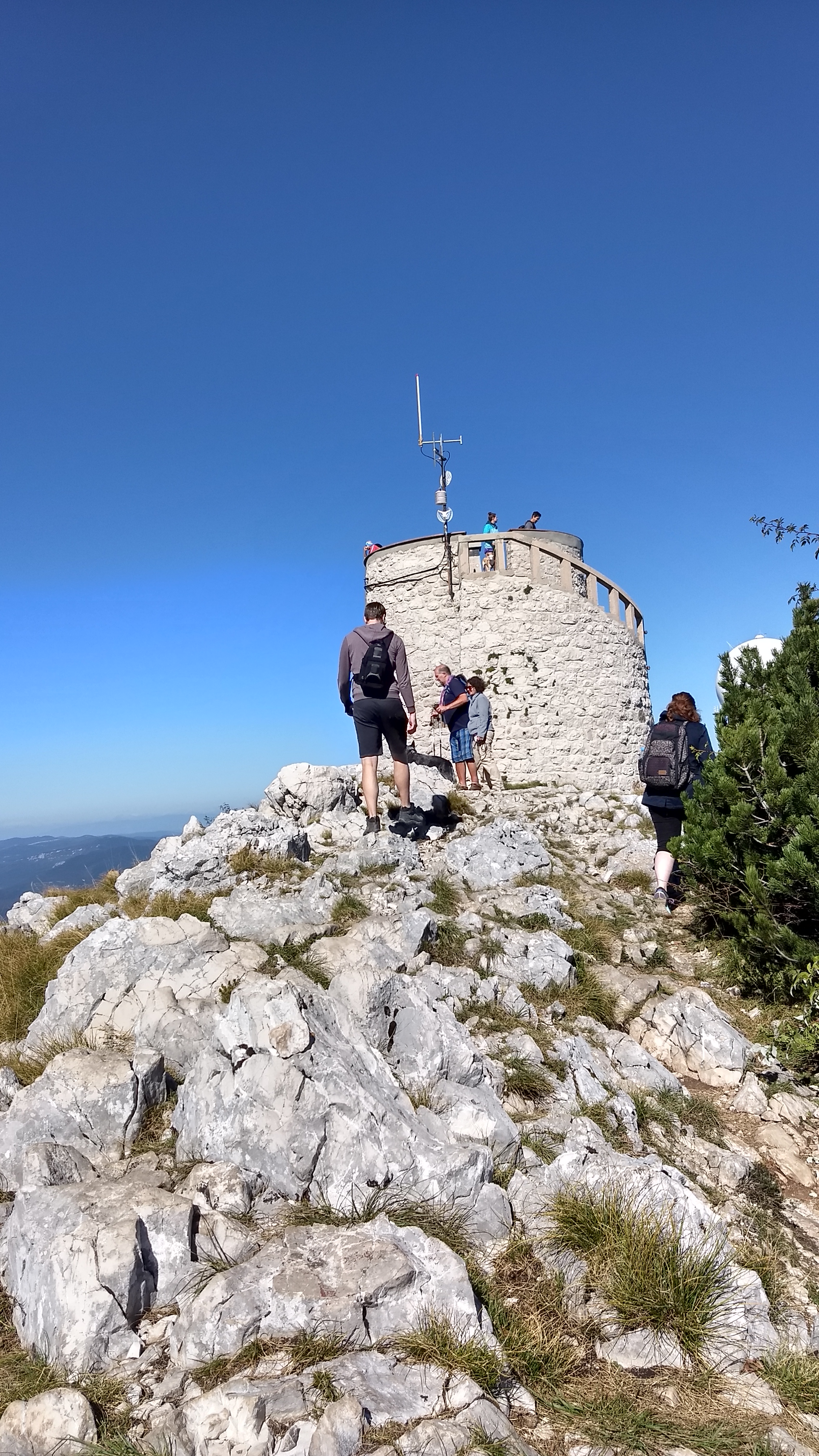
 The stone tower on the Vojak peak (1,396 m), the highest point of Učka. Photo: Wikimedia Commons, licence CC BY-SA 4.0
Vojak: a tower on the roof of Istria
The highest peak of Učka is Vojak, which rises to 1,396 metres. On it stands a stone tower built back at the start of the 20th century, from which, on a clear day, one of the finest panoramic views in this part of Europe opens up. From the summit the whole of Istria, the Kvarner Gulf with its islands, part of the Julian Alps and even distant Dugi Otok to the south can be seen at once.
The ascent of Vojak is one of the most beloved hiking goals in Istria, accessible even to the less experienced because a road leads to near the summit, and from there it is only a short walk to the tower. It is precisely that combination of easy access and a magnificent view that makes Vojak a place to remember — a point from which, in a single glance, almost the entire northern Croatian coast can be taken in.
The green mountain: why Učka is different
What makes Učka unique among the Croatian coastal mountains is its greenery. While other coastal mountains turn a bare, wind-scoured stone slope toward the sea, Učka is densely forested even on that side. The reason lies in its position and dampness: the mountain catches moisture from the sea and the air, so its slopes are covered by lush forests of beech, oak and especially sweet chestnut, for which the region is widely known.
That green splendour gives Učka a character not expected on the Adriatic — it recalls a Central European mountain more than a Mediterranean one. In autumn, when the chestnuts and beeches blaze gold and crimson, and the air smells of roast chestnuts, Učka shows one of its loveliest faces.
Karst, caves and Ćićarija
Beneath its green mantle Učka is, like most Croatian mountains, built of limestone — so it too is dotted with karst features, karren, sinkholes and caves. The neighbouring ridge of Ćićarija, which stretches toward the Gulf of Trieste, is morphologically connected to the mountain, forming with Učka a single mountain whole.
In that karst hide archaeological sites too — caves in which shepherds found shelter as far back as the Bronze and Iron Ages. Some of them are today arranged and accessible to visitors with information boards, so Učka is not only a natural but also a historical landscape, a place where traces of human presence stretch thousands of years back.
Chestnuts, birds and wilderness
The rich Učka forests are home to a diverse life. Alongside the sweet chestnuts, whose fruit the locals have gathered and processed for centuries, the mountain is a habitat for numerous birds — so on its eastern slopes an ornithological camp is held every autumn, in which birds are caught in special nets, ringed and released, to track their migrations. An important migration route passes through Učka, so thousands of birds are recorded here each year.
Alongside the birds, larger animals and birds of prey live in the forests and on the cliffs of Učka, while the lush vegetation hides a rich plant world with a number of rare and protected species. For nature-watchers Učka is therefore as interesting in the treetops as on the peaks.
Paragliding: the sky above Učka
Thanks to its shape, height and winds, Učka has for decades been one of Croatia's best-known destinations for free flight — paragliding and hang-gliding. From its launch sites, among them the one on Vojak itself, flyers set off above Kvarner, hovering over the sea, the islands and the green slopes.
Učka regularly hosts domestic and international flying competitions, and the sight of colourful gliders circling above the mountain has become part of its image. For those who dare, a flight from Učka is one of the most spectacular ways to experience the meeting of the Istrian mountain and the Adriatic sky.
The Istro-Romanians: guardians of a forgotten language
Učka also hides a unique human story. On its slopes live the Istro-Romanians, a small Romance ethnic community whose language is one of the most endangered in Europe. The mountain for centuries divided them into two groups — one in the village of Žejane in the north, the other around Šušnjevica in the south — so their villages are still found today on both sides of Učka.
That ancient language and customs, preserved in the shadow of the mountain, give Učka a cultural depth few parks possess. To visit the villages beneath Učka is to touch a living but fragile heritage that survives thanks precisely to the isolation the mountain imposed.
Myth and legend: the Perun trail
Učka is also a mountain of myth. Across its slopes runs the mythical-historical Trebišća–Perun trail, which follows the traces of Old Slavic beliefs inscribed in the very landscape — in the names of sites, springs and peaks connected with the gods of the ancient Slavs, such as the thunder god Perun. To walk that trail is to read the mountain as a page of ancient mythology.
Such stories, interwoven with real archaeological finds, give Učka an aura of sanctity acquired back in pre-Christian times. It was not only a source of wood and pasture but also a place of worship — a mountain on which, according to belief, the worlds of men and gods touched.
Opatija in the mountain's shadow
The story of Učka is inseparable from the story of Opatija, the elegant health resort at its foot. According to tradition, it is precisely Učka that is responsible for Opatija's popularity in the Austro-Hungarian era: by shielding the town from the fiercest summer heat and winds, the mountain gave it a mild, pleasant climate that drew emperors, nobility and the sick in search of health.
Thus the mountain and the town became inseparable — Učka gives Opatija shelter and greenery, and Opatija gives Učka a face to the world. That bond of mountain and coast, wilderness and refined resort, is one of the distinctive features of this nature park.
Through the seasons
Učka is a pleasant mountain almost all year round. Spring wakes the forests and meadows, and the slopes are covered with flowers. Summer offers freshness and shade while the coast bakes, so Učka is a favourite escape from the heat, with pleasant ascents and flying. Autumn is perhaps the loveliest — the chestnuts and beeches blaze with colour, and the air smells of roast chestnuts and mushrooms. Winter can turn the mountain white with snow, and Vojak occasionally becomes a small winter destination with a view of the sea.
A wealth easily missed
Although Učka is one of the most accessible Croatian parks — a road leads to its summit, and touristy Opatija is at its foot — many visitors reduce it to a short drive up to Vojak and a photograph with the tower. But Učka deserves much more. Its chestnut forests, hidden ponds and springs, archaeological sites and network of educational trails are revealed only to those who leave the road and set off on foot.
It is precisely in that silence, far from the viewpoint, that Učka shows its true wealth: the peace of the beech forest, the calls of migratory birds, the traces of old shepherds and that special smell of a damp, green mountain so untypical of the Adriatic. Unlike some more famous parks, Učka does not impose itself — it rewards the patient, those who approach it slowly and on foot.
A few curiosities to close
Učka abounds in details that surprise. It is the only Croatian coastal mountain that is densely forested even on the seaward side, in which it differs markedly from the bare Velebit and Biokovo. On its slopes lives the Istro-Romanian community, whose language is among the most endangered in the world. Through the mountain, back in 1981, the Učka tunnel was bored, which was long the longest road tunnel in Croatia. And its launch sites have for decades drawn paragliders and hang-gliders from all over Europe, turning the sky above Kvarner into a colourful stage.
All this makes Učka a park that combines nature, culture and adventure in a way few mountains can — and reminds us that sometimes the greatest treasure stands just above the busiest coasts.
A practical guide to visiting
- Getting there. The park lies above Opatija, at the very crossing from Istria toward Kvarner. A road leads to near the Vojak peak over the Poklon pass; from there it is a short walk to the tower.
- Tickets and information. Entry to the park is mostly free; seek information, maps and advice at the visitor centre and the park administration.
- Trails. Alongside the ascent of Vojak, the park offers a number of marked hiking and educational trails, including the mythical Perun trail and trails through the chestnut forests.
- Flying. For paragliding and hang-gliding, experience or a tandem flight with a licensed instructor is required; the launch sites are on Vojak and Brgud.
- Footwear and gear. For the higher trails sturdy shoes and a warmer layer of clothing are essential — the summit is considerably cooler than the coast.
- Rules. Move on marked trails, do not leave litter and respect the zones of stricter protection around the highest peaks.
- Combine with the surroundings. Opatija with its famous lungomare, the Istro-Romanian villages beneath Učka and nearby Kvarner and the islands make Učka a perfect blend of mountain, sea and culture.
Conclusion
Učka is a mountain that combines the seemingly incompatible — Mediterranean sun and mountain freshness, ancient myth and modern paragliding, elegant Opatija and the modest villages beneath Učka with the most endangered language in Europe. Its green, gentle nature makes it accessible to almost everyone, and the view from Vojak a reward that stays in the memory. Whether you climb to the tower, fly above Kvarner or seek the traces of the old gods, Učka welcomes you as it has welcomed Istrians for centuries — as a protector that quietly watches over the sea.