Velebit Nature Park: the spine of Croatia between sea and sky
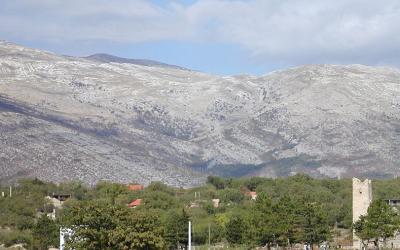
There are mountains, and there is Velebit. Nearly one hundred and fifty kilometres long, this vast stone ridge stretches along the Adriatic coast like the spine of the whole country, dividing the warm Mediterranean from the harsh, continental Lika in the hinterland. For Croatians Velebit is not merely a mountain but a symbol — a source of legends, a place of heroes and fairies, a mountain sung of in songs and carried in the heart.
It is precisely that vast massif, together with the valley of the karst river Zrmanja, that is protected as Velebit Nature Park — the largest protected area in all of Croatia. Within its boundaries hide as many as two national parks, Paklenica and Northern Velebit, but the nature park covers much more than them: endless forests and pastures, deep caves, fjord-like coves, endemic flowers and habitats of bears and wolves. It has also been declared an international biosphere reserve, a recognition that places it among the most naturally valuable areas in the world.
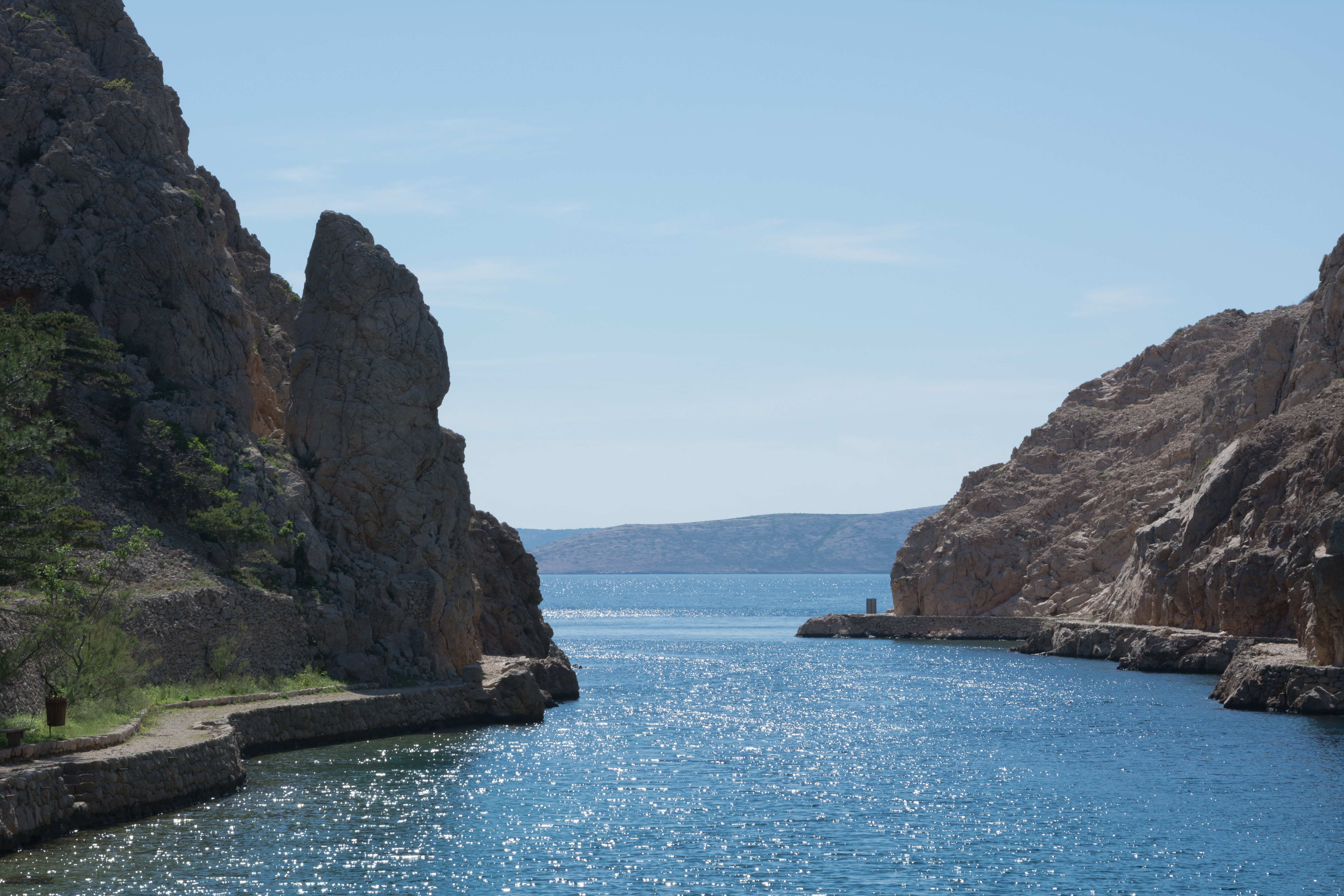
 The fjord-like Zavratnica cove, part of Velebit Nature Park. Photo: Wikimedia Commons (source file)
A mountain of three climates
What makes Velebit so biologically rich is its unique position. The mountain stands at the meeting of three climates — the mild Mediterranean on the seaward side, the harsh continental on the Lika side and the cold mountain climate on the peaks. These climates mix and collide on a single ridge, creating an incredible diversity of habitats in a small space.
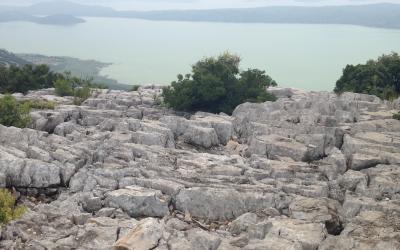
The result is an enormous biological wealth: around two thousand seven hundred plant species have been recorded on Velebit, of which as many as seventy or so are endemic — plants that grow only here. That is why Velebit is often called a "centre of endemism". The coastal slope of the mountain is bare and scoured by the bura, while the one facing the interior is densely forested — two completely different pictures of the same mountain, separated only by a ridge.
The Velebit degenia: a symbol flower
Among all the endemics of Velebit, one has become a true symbol — the Velebit degenia. This delicate, yellow plant grows on the Velebit screes and rocks and nowhere else in the world. It was discovered at the start of the 20th century and today is so prized that it has even found a place on Croatian coins.
Alongside the degenia, the mountain hides other rarities too — the Croatian sibiraea, a Tertiary relict millions of years old, and a number of other endemic plants, fish and bats. For botanists and nature lovers Velebit is therefore an inexhaustible treasury, a mountain where every stone and every crack may hide a species you will not find elsewhere.
Zavratnica: a fjord on the Adriatic
Although Velebit is above all a mountain, one of its loveliest places lies right on the coast — the Zavratnica cove near Jablanac, opposite the island of Rab. This narrow, deep cove, about nine hundred metres long and framed by cliffs up to a hundred metres high, looks like a fjord that has strayed from the north to the warm Adriatic sun — although there was never a glacier here.
Zavratnica is in fact a submerged torrent valley, and its turquoise water and steep rocks make it one of the most beautiful coves on the whole Croatian coast. It is reached by a pleasant half-hour walk along the sea from Jablanac, and at its bottom, below the surface, hides the wreck of a sunken ship that attracts divers. At the start of the 20th century a promenade and viewpoint were built beside the cove, so Zavratnica is today one of the park's most beloved outing spots.
The Cerovac caves: an underground world of bears
Velebit is spectacular not only toward the sky but also toward the depths. In its southern part are the Cerovac caves, the largest cave complex in Croatia — a system of three caves (Lower, Middle and Upper) with more than seven kilometres of explored passages, part of which is arranged for visitors.
The Cerovac caves are not only a geological wonder but also a treasury of the past. Numerous archaeological finds have been discovered in them, and the caves are also one of the largest sites of the cave bear in Croatia. On their walls one can still see the so-called polishing marks — smoothed spots formed by the friction of bears' bodies against the stone as these long-extinct beasts moved through the dark. The descent into the Cerovac caves is therefore also a journey into the mountain's deep past.
A kingdom of bears and wolves
Velebit is one of the last great refuges of large beasts in Europe. Through its forests move the brown bear and the wolf freely, two species endangered in Europe, along with the lynx, chamois, red deer and numerous other animals. Eagles and falcons circle the sky, and the mountain is also an important nesting ground for many birds.
It is precisely because of the bears that in the village of Kuterevo beneath Velebit a well-known refuge for bear cubs left without their mother operates — a place that saves the young and at the same time educates visitors about the coexistence of man and beast. That care for the large predators is part of what makes Velebit special: it is not only a landscape but a living ecosystem in which wilderness still has its place.
A mountain of legends and heroes
Velebit is deeply woven into Croatian identity and folklore. Its peaks are, in folk tradition, the dwelling of fairies, and its wilds were for centuries a refuge of outlaws and shepherds. Old paths and roads passed through the mountain — from Roman trails to the famous Majstorska cesta and the hiking paths of the 19th and 20th centuries — which testify to the effort to master this stone giant.
That cultural dimension gives Velebit a soul that surpasses geography. When you walk its trails, you tread not only through a landscape but through centuries of stories, songs and legends that made Velebit more than a mountain — made it a symbol.
Diversity at every step
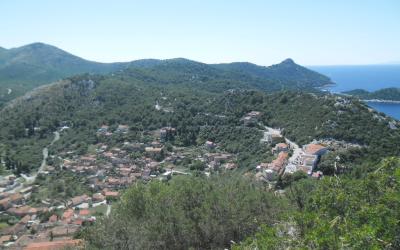
Thanks to its size and position, Velebit Nature Park offers an almost unbelievable range of experiences. At one end you can dive in a turquoise cove or bathe on the beaches beneath Velebit, and at the other hike through beech forests, descend into caves, cycle or climb rocks. There is also rafting and canoeing on the rivers, riding, birdwatching and walks along educational trails.
That diversity makes Velebit a park for everyone — from families seeking an easy outing to experienced hikers and adventurers. And since it is a nature park, not a strictly protected national park, here wilderness and human life intertwine: villages, herds, taverns and tradition are part of the landscape as much as stone and forest.
Through the seasons
Velebit is a mountain of distinct seasons. Spring wakes the endemic flowers and fills the streams, and the coastal slopes are then greenest. Summer is the main time for hiking and for combining sea and mountain — while the coast bakes, the ridge is pleasantly cool. Autumn colours the beech forests gold and brings clear air with the furthest views. Winter is harsh: snow, ice and a fierce bura make much of the mountain accessible only to the most experienced, while the foot and the coast remain milder.
The river Zrmanja and canyons
Velebit Nature Park covers not only the mountain but also the valley of the karst river Zrmanja, one of the most beautiful watercourses of the Croatian karst. The Zrmanja and its tributary the Krupa have carved deep, winding canyons with cliffs, waterfalls and tufa steps, creating a landscape so striking that it served as a film backdrop for popular westerns.
Today these canyons are a favourite destination for rafting, kayaking and canoeing — descending through the emerald water surrounded by high rocks is one of the most exciting experiences the park offers. Old stone bridges, watermills and villages hide along the rivers, so the Zrmanja valley is a blend of natural wilderness and quiet, almost forgotten human heritage. For many visitors it is precisely that watery world that is the surprising face of the otherwise stony and dry Velebit.
Why Velebit is more than a park
Velebit has a status few areas in Croatia can carry. Besides being the largest protected area in the country, it was declared, back in 1978, an international biosphere reserve within UNESCO's "Man and the Biosphere" programme — a recognition that places it among the world's valuable areas where the protection of nature and human life are sought to be reconciled.
Within its boundaries lie as many as two national parks (Paklenica and Northern Velebit) and a number of specially protected sites — from the Cerovac caves and Zavratnica cove to the Štirovača forest reserve. That layering of protection makes Velebit a kind of umbrella park, a mountain that gathers a multitude of smaller jewels under its wing. Rarely does any area over such a large space combine so many different values — geological, biological, scenic and cultural.
A few curiosities to close
Velebit abounds in facts that inspire awe. It is the largest protected area in Croatia by surface and one of the few places in Europe where bear, wolf and lynx live together. Its endemic, the Velebit degenia, is so prized that it has appeared on Croatian money. The Cerovac caves hide one of the largest cave-bear sites in the country, and Zavratnica cove is regularly ranked among the most beautiful coves on the whole Adriatic. The whole massif, moreover, was declared a biosphere reserve more than four decades ago.
All this makes Velebit a park not toured in a single day but discovered over years — a mountain that always has one more hidden peak, cave, cove or story.
A practical guide to visiting
- Getting there. The park stretches along the whole of Velebit, so it is approached from several sides — from the direction of Senj and Jablanac (coast), Gospić and Lika (hinterland) and over mountain roads. Zavratnica cove is accessible from Jablanac, and the Cerovac caves from the south of the mountain, near Gračac.
- Tickets and information. Certain sites (Zavratnica, the Cerovac caves) have their own tickets and opening hours; seek information from the park administration and visitor centres.
- Caves. A guided visit and warm clothing are essential for the Cerovac caves — it is cold in the caves all year round.
- Footwear and gear. For the hiking parts sturdy shoes and layered clothing are essential; the weather on Velebit changes quickly, and the bura can be dangerous.
- Activities. Alongside hiking, the park offers cycling, caving, diving in Zavratnica, rafting and canoeing on the rivers and wildlife watching.
- Rules. Move on marked trails, respect the zones of stricter protection (especially within the Paklenica and Northern Velebit national parks) and bear in mind that you are in the habitat of large beasts.
- Combine with the surroundings. The bear refuge in Kuterevo, the town of Senj with the Nehaj fortress, the island of Rab just offshore and the Paklenica and Northern Velebit national parks make Velebit the starting point for a whole journey.
Conclusion
Velebit is too large to tour at once and too rich to describe in a single article. It is at once a sea cove and a mountain peak, turquoise water and a dark cave, a delicate flower and a bear's track. Whether you get to know it by swimming in Zavratnica, descending into the Cerovac caves or walking its endless ridge, the same impression remains: that you have touched something greater than a mere landscape — the spine of Croatia, a mountain that joins sea and sky.