Zagorje Mountains Nature Park: Croatia's youngest park and the mountain heart of Zagorje
Many imagine Croatian Zagorje as a region of gentle hills, vineyards and fairy-tale castles. But above those rolling hills rises a more serious, mountainous face of northern Croatia too — ridges, forests, cliffs and peaks from which the view reaches all the way to the Alps. It was precisely this face, long insufficiently known and unprotected, that in March 2026 received the status it deserves: the Zagorje Mountains Nature Park was declared, the thirteenth and youngest Croatian nature park and the first of all in the north of the country.
The park covers as many as four mountain massifs — Ivanščica, Strahinjščica, Macelj and Ravna gora — and the valley of the river Bednja, over more than three hundred square kilometres in Krapina-Zagorje and Varaždin County, all the way to the Slovenian border. It is one of the naturally richest areas of continental Croatia, where in a small space forests, grasslands, river and marsh ecosystems and caves meet, interwoven with the rich cultural-historical heritage of old castles, manors and legends.
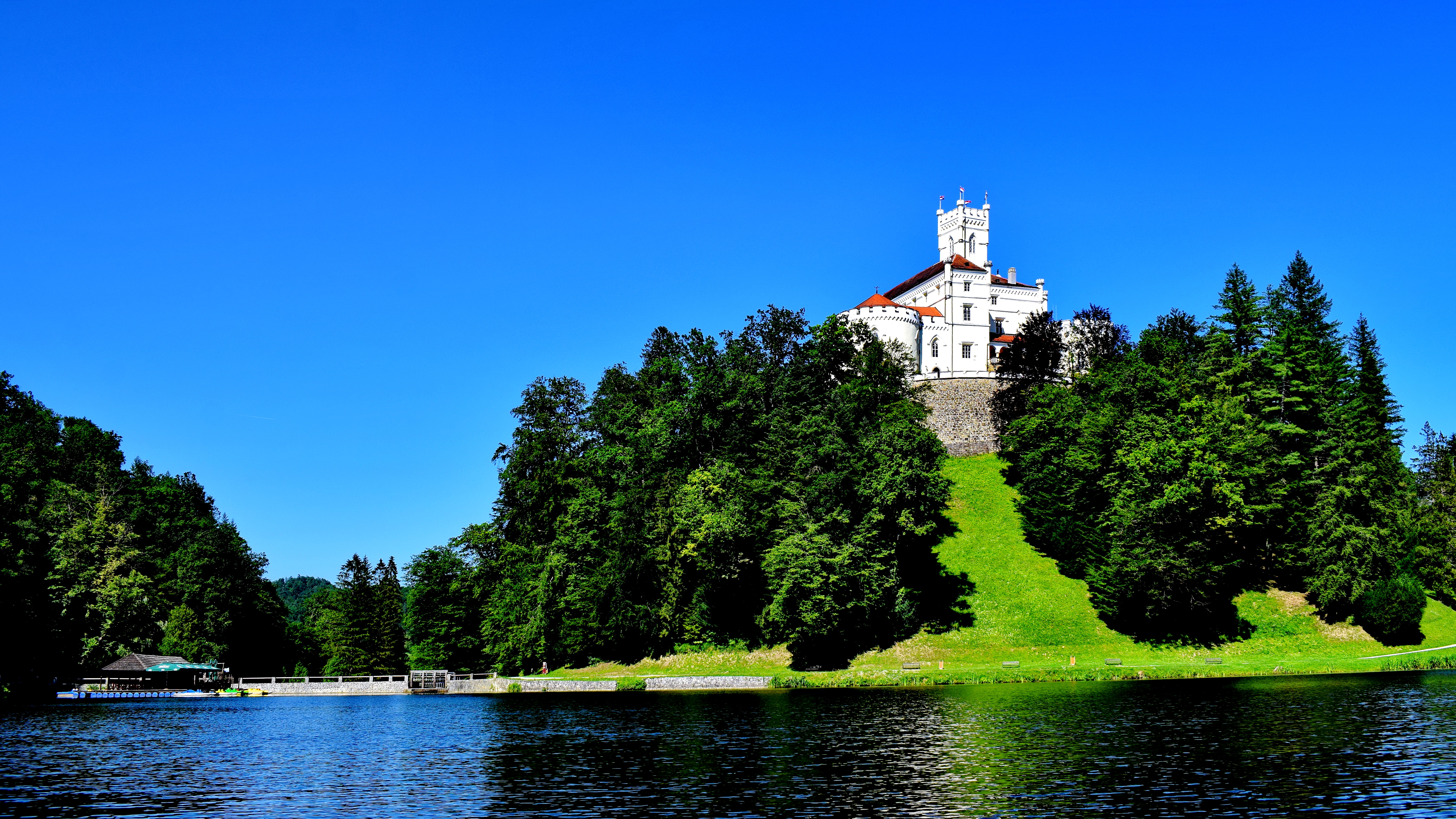
 The fairy-tale Trakošćan castle, a forest park within the new nature park. Photo: Wikimedia Commons (source file)
The thirteenth park after seventeen years
The declaration of the Zagorje Mountains was a historic moment. The Croatian Parliament unanimously passed the declaration law on 6 March 2026, concluding a process that began back in 2009 and lasted a full seventeen years. The initiative revived after Dinara became a nature park in 2021, and the expert groundwork was completed in 2024.
With that Croatia gained its thirteenth nature park and the first in the north of the country — proof that valuable nature does not exist only by the sea and in the mountains of the south, but also in the heart of continental Croatia. With the declaration, the share of protected areas in the country's land surface, together with the ecological network, grew to more than a third, placing Zagorje alongside Croatia's most valuable landscapes.
Ivanščica: the roof of Zagorje
The central and highest mountain of the park is Ivanščica, rightly called the "roof of Croatian Zagorje". Its highest peak reaches 1,061 metres, making Ivanščica the highest mountain of north-western Croatia. It stretches some thirty kilometres through the landscape of the country's north, and its slopes are covered by forests of oak, hornbeam and beech.
Ivanščica combines the gentle and the wild: on one side it is accessible to families and day-trippers, and on the other it offers serious ascents and steep rocks. From its peaks, especially from the famous Pyramid — an iron structure raised back in 1929 — a wide view opens over the Bednja valley, the surrounding villages and distant Varaždin. Popular hiking starting points such as Ivanec, Lobor and Belec make it one of the most beloved hiking destinations in northern Croatia.
A mountain of fairies, witches and old castles
Ivanščica is not only a natural phenomenon but also a mountain deeply woven into legend. It is called "the mountain of fairies and old castles", and its peaks and valleys were for centuries the stage of folk tales. One such place is Černe mlake, mentioned in tradition as a gathering place of witches — a place where, according to belief, witches assembled.
Alongside the legends, the mountain is also strewn with real traces of the past — the ruins of medieval fortresses scattered across its slopes. Among them are Pusti Lobor, Oštrcgrad, Belecgrad, Milengrad and Grebengrad, old castles that remember knights, nobles and turbulent times. To walk Ivanščica is therefore to pass through layers of stories and history, where every ridge and every ruin is tied to some legend.
Ravna gora: the last spur of the Alps
In the north of the park rises Ravna gora, which many consider the last spur of the Alps in this part of Europe. Despite its name (which means "flat mountain"), it is anything but flat — it hides caves, pits, steep slopes and even limestone cliffs about eighty metres high, known as the Velike pećine, which require real alpine skill.
Ravna gora, shaped like a horseshoe, is a favourite destination for hikers, especially its western part. There are also mountain lodges there, such as Pusti duh at 672 metres and the Filić lodge, where day-trippers refresh themselves with a view of the Bednja valley and the Macelj hills. Alongside Ivanščica, Ravna gora is the park's second great hiking heart — wild, forested and full of hidden natural jewels.
Vindija: a cave of Neanderthals
One of the park's most valuable treasures hides underground — the Vindija cave, a world-famous palaeontological and archaeological site. In its deposits the remains of Neanderthals and traces of human presence tens of thousands of years old have been found, which is why Vindija has become one of the most important sites of its kind in Europe.
Vindija is today protected as a natural monument, as is the nearby Mačkova pećina. These caves are not only geological but also scientific jewels — places where the earliest history of man in these lands is read. For a park that is only just beginning to tell its story, Vindija is a powerful reminder that the Zagorje Mountains were important and inhabited long before anyone thought of castles and fortresses.
Trakošćan: a fairy-tale castle
If the Zagorje Mountains have their most famous image, it is Trakošćan — perhaps the most fairy-tale castle in all of Croatia. Set on a hill above an artificial lake, surrounded by a forest park and dense greenery, Trakošćan looks as if it has jumped out of a picture book. Its forest park is protected and included in the new nature park.
The castle and its grounds are one of the most visited destinations in northern Croatia, a blend of cultural heritage and arranged nature. A walk around the lake, beneath the canopy of the forest park, with a view of the castle's towers and turrets, is one of the most idyllic experiences the park offers. Trakošćan thus perfectly embodies the dual nature of the Zagorje Mountains — a blend of untouched nature and a rich, romantic history.
A wealth of plants and life
The Zagorje Mountains are one of the naturally richest areas of continental Croatia. In their area around one thousand two hundred plant species have been recorded — roughly a fifth of the entire Croatian flora — of which about a dozen are considered endemic. Alongside them, more than thirty endemic animal species have been recorded, testifying to the exceptional value of this area.
That diversity arises from a mosaic of habitats: dense forests of beech, oak and fir, grasslands, the aquatic habitats of the river Bednja, marshes and caves. Each of them is home to its own species, and their proximity in a small space makes the park a true treasury of biodiversity. It was precisely that wealth, alongside the scenic beauty and cultural heritage, that was the fundamental reason for the protection of the Zagorje Mountains.
The river Bednja and the gentle region
Alongside the mountain ridges, the park also covers a gentler, lowland part — the Bednja region with the river Bednja. This river and its valley create damp and marshy habitats that further enrich the park, offering a home to aquatic and marsh species and connecting the mountain massifs into a single whole.
The Bednja region is also known for its culture and speech — the Bednja dialect is one of the most distinctive in Croatia. That combination of natural diversity and living tradition gives this part of the park a warm, inhabited character, different from the wilderness of the high ridges. The Zagorje Mountains thus join two worlds: mountain and lowland, wild and gentle, in a single protected landscape.
Through the seasons
The Zagorje Mountains are beautiful at any time. Spring wakes the forests and meadows and brings the rich flora into bloom, and the streams and the Bednja swell. Summer brings the pleasant shade of the forests, ideal for hiking and cycling, while Trakošćan is a favourite resting place. Autumn colours the beech and oak forests gold and copper and is the time of the harvest and Zagorje flavours. Winter can turn the ridges white with snow, transforming the mountains and castles into a quiet, fairy-tale picture of northern Croatia.
A forgotten jewel of the north
For a long time the Zagorje Mountains were known only to hikers, cyclists and nature lovers from the area, while the wider public barely knew their value. Although they lie near Zagreb and Varaždin, these mountains remained in the shadow of the more famous Croatian parks, and even in the shadow of Zagorje itself — a region the world associates more with castles and spas than with mountains.
The declaration of the nature park should change that. The new status gives this area visibility, a stronger framework of protection and an opportunity for sustainable development — through hiking, cycle tourism, educational trails and the promotion of local heritage and gastronomy. Experts see the future of the region precisely in such non-mass, sustainable tourism: high-quality, focused on nature and local culture. The Zagorje Mountains thus go from a forgotten jewel to a destination many are yet to discover.
A few curiosities to close
The Zagorje Mountains abound in peculiarities. It is the thirteenth and youngest Croatian nature park and the first in the north of the country, declared only in 2026 after seventeen years of effort. Its Ivanščica is the highest mountain of north-western Croatia, and on its peak the iron Pyramid has stood since 1929. In the Vindija cave the remains of Neanderthals were found, for which it is world-famous. In the park area roughly a fifth of the entire Croatian flora has been recorded. And its most picturesque jewel, Trakošćan castle, is one of the most fairy-tale and most visited castles in the country.
All this makes the Zagorje Mountains a park that combines the oldest and the newest — prehistoric caves and a just-declared protection, ancient legends and a fresh tourist future — and finally reveals the mountain heart of Croatian Zagorje to all of Croatia.
A practical guide to visiting
- Getting there. The park stretches across the north of the country, in Croatian Zagorje, between Ivanec, Lobor, Bednja and Krapina, up to the Slovenian border; it is easily reached from Zagreb, Varaždin and Krapina.
- Tickets and information. The park has only just been declared and its infrastructure is developing; entry is mostly free, and certain facilities (Trakošćan castle) have their own tickets and opening hours.
- Hiking. Ivanščica and Ravna gora offer a network of marked trails and mountain lodges; popular starting points are Ivanec, Lobor and Belec.
- Sights. Do not miss Trakošćan castle with its forest park and lake, the Ivanščica peak with the Pyramid and (by prior arrangement and respecting the protection) the surroundings of the Vindija palaeontological cave.
- Footwear and gear. For the mountain trails sturdy shoes and layered clothing are essential; bring water and tick protection in the warmer months.
- Rules. Move on marked trails, do not touch the cave sites or the old castles and respect the newly declared protection regime.
- Combine with the surroundings. The fairy-tale castles of Zagorje (Veliki Tabor, Bežanec), the spas, the Krapina Neanderthal museum and Zagorje gastronomy make the Zagorje Mountains a perfect part of a journey through northern Croatia.
Conclusion
The Zagorje Mountains Nature Park is the youngest Croatian park, yet it keeps some of the oldest stories — from the Neanderthals of Vindija, through medieval fortresses and legends of witches, to fairy-tale Trakošćan. It reveals the mountainous, wild face of Zagorje hidden behind its gentle hills, and finally places it on the map of Croatia's protected nature. Whether you climb Ivanščica, explore the cliffs of Ravna gora or walk around the lake beneath Trakošćan, the Zagorje Mountains will welcome you as a fresh, newly discovered jewel — proof that in the north of Croatia too, nature keeps its great treasures.