Zagorje štrukli: stretched dough, cheese and the soul of Zagorje
If you had to sum up north-western Croatia in a single dish, it would be Zagorje štrukli. Thin, almost transparent stretched dough, a generous filling of fresh cow's-milk cheese and cream, and all of it boiled in salted water or baked to a golden crust — simple on paper, and perfect on the plate. Štrukli are a dish of the Zagorje hills, villages and vineyard cottages, but of Zagreb restaurants too; a dish that has made it from the peasant kitchen to the status of a protected intangible cultural asset of Croatia.
In Zagorje štrukli are made for every occasion: boiled in soup as a starter, baked with cream as a main course, savoury or sweet as a dessert. The art of stretching the dough across the whole table, "until you can read a newspaper through it", is passed from grandmother to granddaughter over generations and is a real little rite. In this recipe we guide you through that process step by step — from kneading to a baked, golden tray.
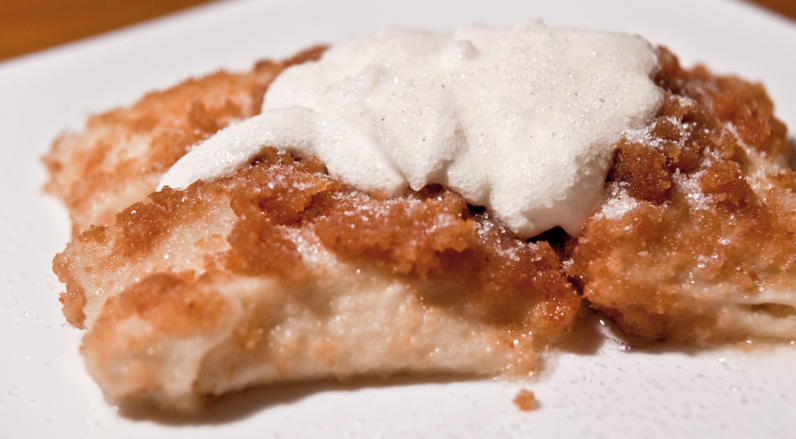
 Boiled Zagorje štrukli. Photo: Wikimedia Commons (source file)
From the peasant table to cultural heritage
Štrukli belong to the great Central European family of dishes made from stretched dough — they are relatives of strudel and similar dishes that spread for centuries across the space of the former Habsburg Monarchy. In Croatian Zagorje and around Zagreb that dough was joined with what a region full of cows always had plenty of: fresh cheese and cream — and so the štrukli we know today were born.
For centuries they were a festive dish of village households, made for weddings, church fairs and great holidays. Their value has been recognised officially as well: the preparation of Zagorje štrukli is inscribed on the list of protected intangible cultural heritage of Croatia, and few dishes so directly connect grandma's kitchen with top restaurants, where modern versions are served today — with truffles, as štrukli buns or in the form of a dessert.
Boiled or baked?
The eternal Zagorje dilemma: boiled or baked? Boiled štrukli are dropped into boiling salted water and served doused with cream or a roux, and can also float in a clear soup — the so-called "soup with štrukli" is a classic of Zagorje celebrations. Baked štrukli are arranged in a tray, poured over with cream and baked until they get a golden, crisp crust with a soft, creamy inside.
There is, of course, no answer to the dilemma — a true person of Zagorje loves both. The good news is that the same recipe covers both versions: you first briefly boil the štrukli, and then bake them if you like. There is also a sweet variant, with sugar and raisins added to the filling, which turns štrukli into a lavish dessert.
Ingredients
For the dough:
- 500 g plain flour
- 1 egg
- 2 tablespoons oil + a little for brushing
- about 2.5 dl warm water
- a teaspoon of vinegar (makes the dough more elastic)
- a pinch of salt
For the filling:
- 750 g fresh cow's-milk cheese
- 3 dl sour cream
- 2 eggs
- salt (for savoury) or 3 tablespoons sugar (for sweet)
For baking:
- 3 dl sweet or sour cream
- 30 g butter
Preparation
- Make the dough. From the flour, egg, oil, vinegar, salt and warm water knead a smooth, soft dough. Knead it for about ten minutes until it is elastic, brush with oil, cover and leave it to rest for half an hour.
- Prepare the filling. Mix the fresh cheese with the cream, eggs and salt (or sugar) into a creamy but not too runny mixture.
- Stretch the dough. Cover the table with a clean tablecloth and flour it. Roll out the dough, then carefully stretch it with the backs of your hands from the centre toward the edges — patiently, until it is thin almost to transparency and covers the table.
- Fill. Along the nearer edge of the dough spread the filling with a spoon in an unbroken strip. Using the tablecloth, roll the dough over the filling into a firm roll (a strudel).
- Cut the štrukli. With the edge of a plate or your palm, "tear off" štrukli from the roll — the plate simultaneously cuts and seals the edges. You get palm-sized pillows.
- Boil. Drop the štrukli into a large pot of boiling salted water and cook for 10–12 minutes; they are done when they float and the dough softens. Lift them out with a slotted spoon.
- For the boiled version: serve them at once, doused with melted butter and cream — or serve them in hot clear soup.
- For the baked version: arrange the boiled štrukli in a greased tray, pour over the cream, add flakes of butter and bake for 15–20 minutes at 200 °C, until they get a golden crust.
Tips for perfect štrukli
- The dough must rest — without half an hour's rest you will not be able to stretch it thin, it will tear.
- Stretch with the backs of your hands, not your fingers; fingers pierce, the backs of the hands stretch. Take off rings and watches.
- Let the cheese be richer and well drained; watery cheese soaks the dough, and lean cheese gives a dry filling.
- A plate for cutting is an old Zagorje trick — it cuts and seals the edges in one stroke, so the filling does not leak out.
- Do not skimp on the cream when baking; it is precisely this that creates that creamy, golden glaze by which štrukli are remembered.
What to serve with them
Savoury štrukli are a dish in their own right — with a green salad they make a complete lunch, and as a starter in soup they open every festive Zagorje meal. With them a glass of graševina or sparkling wine from the Plešivica and Zagorje vineyards goes excellently. Sweet štrukli, dusted with icing sugar, are a lavish dessert with coffee.
In Zagorje štrukli are often served in earthenware dishes, hot straight from the oven, with the host's obligatory remark to "wait a little because they are hot" — advice that, with the smell of baked cream in the air, no one ever heeds.
The most common mistakes
The greatest stumbling block is the dough: too-stiff or unrested dough cannot be stretched and tears. Knead it longer than you think you need, and be sure to let it rest. The second mistake is a watery filling — always drain the cheese well, because a wet filling breaks through the dough and the štrukli fall apart in the water. The third is too-fierce cooking: the water should simmer gently, not boil wildly, or the štrukli break.
When baking, do not skimp on the cream or overdo the temperature — the goal is a golden crust and a creamy centre, not dried-out pillows. And remember: the first štrukli rarely turn out perfect. Stretching the dough is a skill that is learned, and each subsequent batch will be better — just as all the Zagorje grandmothers learned too.
Conclusion
Zagorje štrukli are simplicity brought to perfection: flour, cheese, cream — and generations of knowledge in the hands that stretch the dough across the table. They are the taste of the Zagorje hills, of Sunday lunches and grandma's kitchen, but also a proud representative of Croatian cuisine in the best restaurants. Set aside an afternoon, stretch the dough (the first time with a little laughter and a lot of flour) and bake a tray of štrukli with cream. When it fills the kitchen with its scent, you will understand why they of all things became protected heritage — because some things simply must be preserved.